Sometimes shelves look a bit gloomy, even when everything is nicely arranged. With the right LED strip, the whole room can feel warmer and more alive.
LED lighting can highlight your favorite items, make storage easier, and add a style boost without major renovations. It’s an easy upgrade that shows up every day you walk past it.
1. Warm Under-Shelf Glow for Cozy Reading Corners
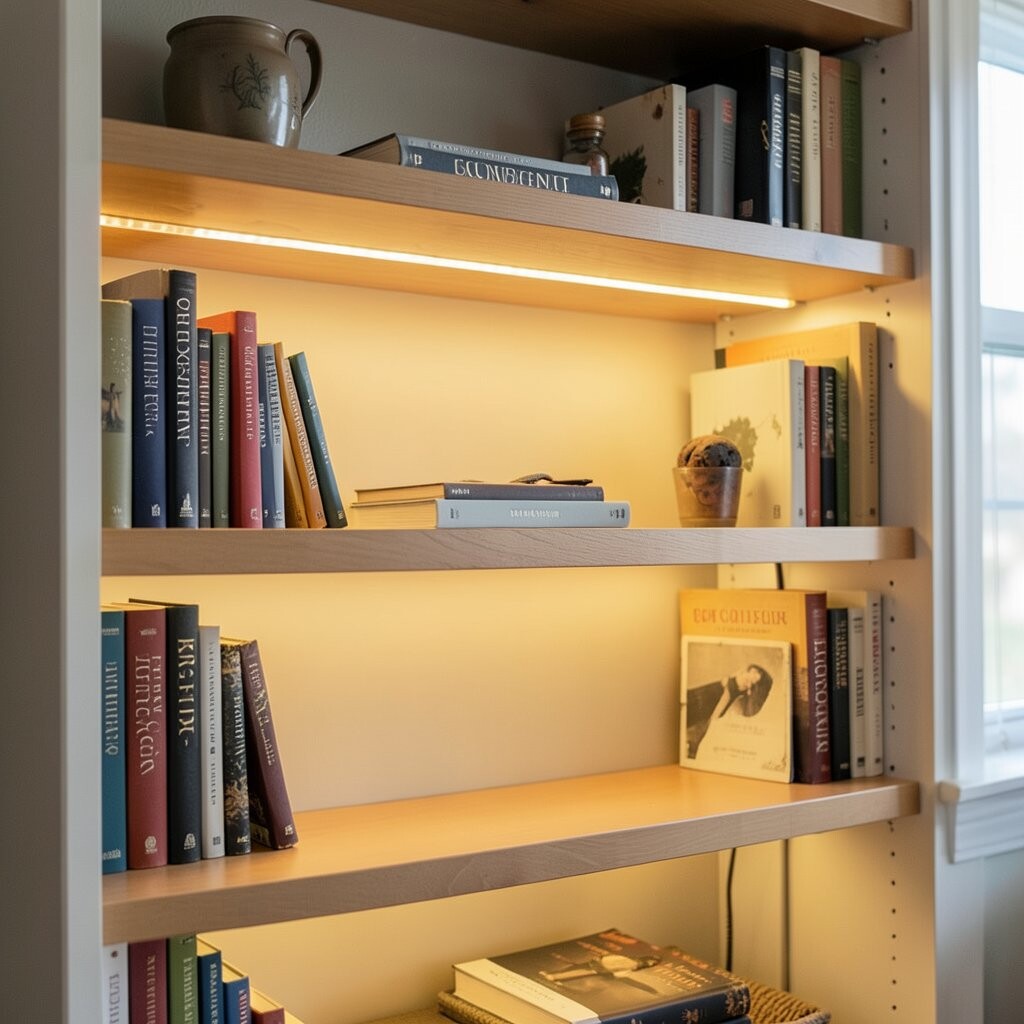
Picture a gentle band of light right under the shelf lip, like a soft sunrise for your books. It makes spines and covers pop without harsh glare.
This setup is great for living rooms, home libraries, and calm corners where you actually spend time. Choose warm white LED strips so the light feels inviting, especially in the evening.
Install the strip along the underside edge and aim it so it washes across the shelf surface, not straight toward eye level. Use an adhesive-backed strip rated for the surface you’re mounting on, and press firmly along the full length for solid hold.
2. Hidden Edge Lighting for a Clean, Floating Shelf Look
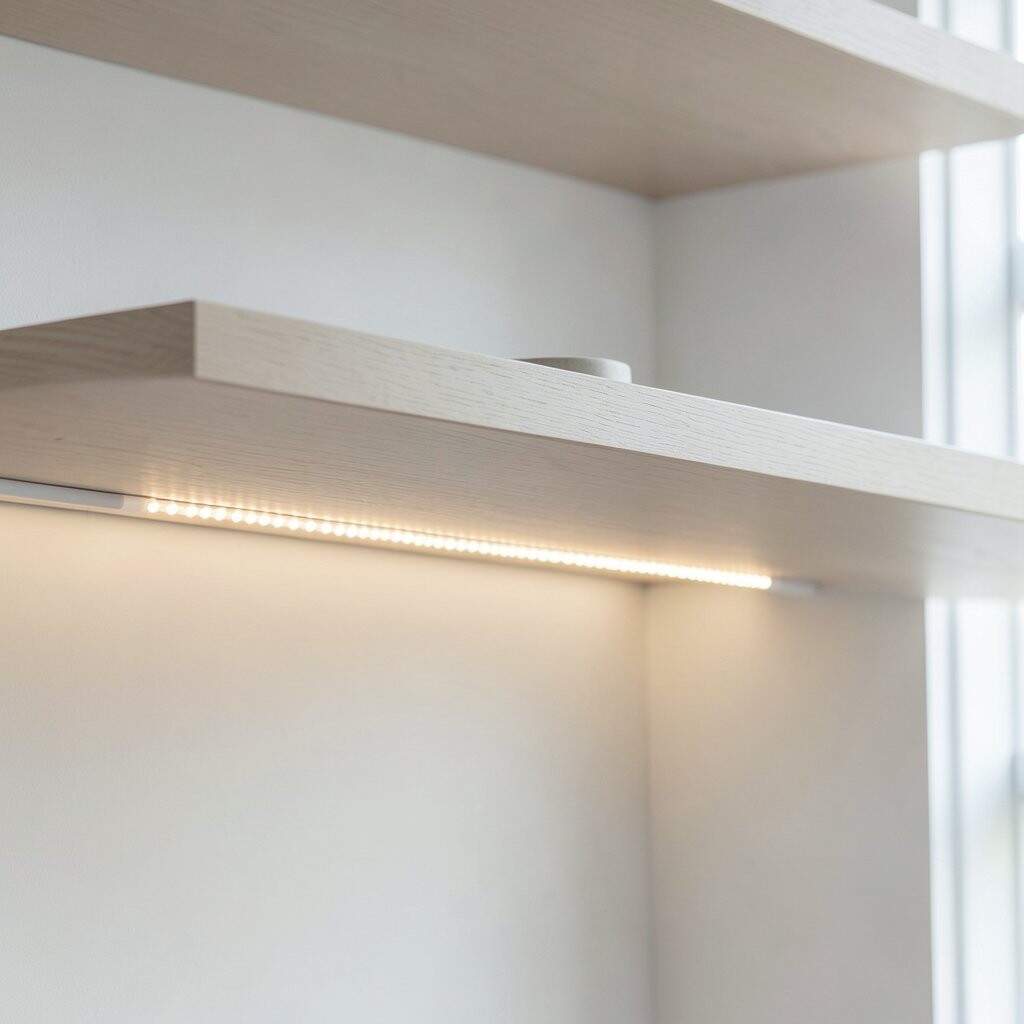
When shelves look like they’re floating, the room instantly feels more modern. Edge lighting tucked into the back of the shelf creates that sleek glow with no visible light source.
You’ll also get a more even look because the light travels across surfaces instead of shining from the front. It’s perfect for minimalist decor where you want everything to feel tidy.
For a clean installation, mount the LED strip inside a recessed channel or along the back lip where it’s partly blocked. If you’re working with open shelving, keep a small gap between the strip and the back panel to prevent hotspots.
3. Color-Changing Strip Effects for Displays That Feel Alive
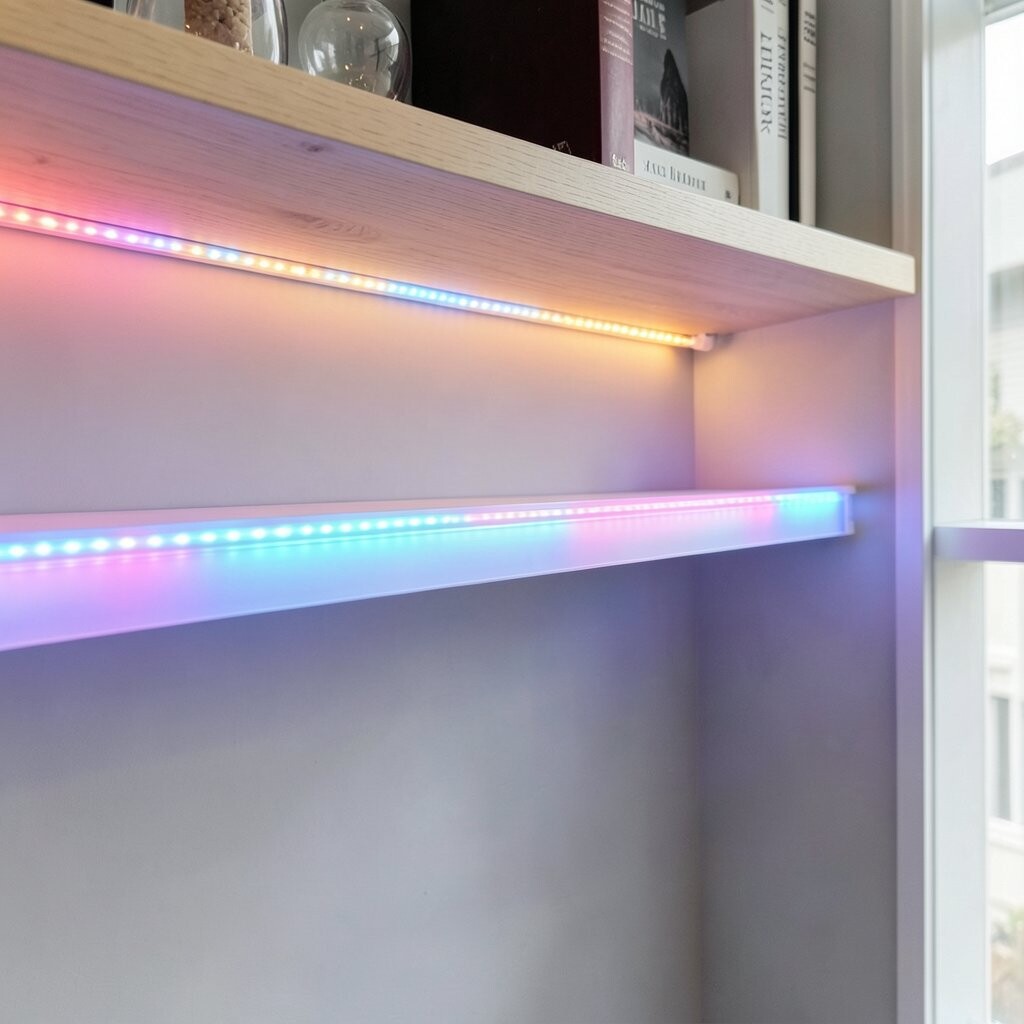
Imagine stepping into a room where your shelves shift from calm amber to playful colors. A color-changing LED strip can make décor feel fresh every time you change the mood.
It’s especially fun for game shelves, hobby areas, and seasonal displays where you like variety. You can dim it for movie nights or brighten it for daytime browsing.
Pick a model with a reliable controller and a smooth color transition so it doesn’t look jumpy. Mount the strip behind translucent shelves or along the inner border to help the colors spread evenly.
To personalize it, pair certain colors with specific shelves, like cool tones for tech items and warm tones for framed photos. If you’re adding it to a long shelf run, measure carefully and plan power placement so the far end stays bright.
4. Back-of-Shelf Illumination for Instant “Gallery” Vibes
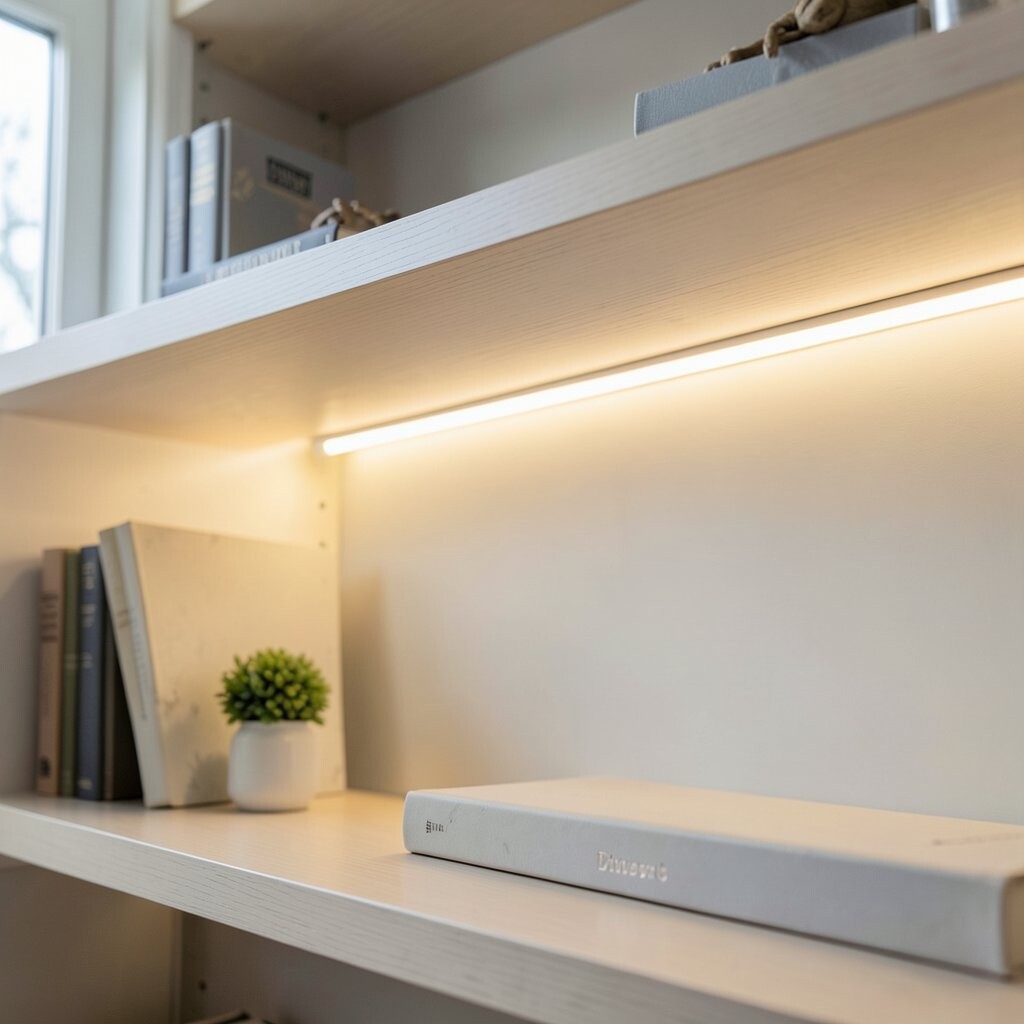
Putting LED strips at the back of a shelf is like giving your items a stage. You’ll notice how glass, ceramics, and small collectibles look more vivid right away.
This approach works well for wall-mounted shelving and deep bookcases. It also helps you see details faster, which is handy when you’re grabbing something quickly.
Run the strip along the back panel and leave the light to bounce forward across the front edges. If you want softer results, add a diffuser cover or choose a strip with a wider beam angle.
5. Under-Glass or Acrylic Diffuser for No-Spot Lighting
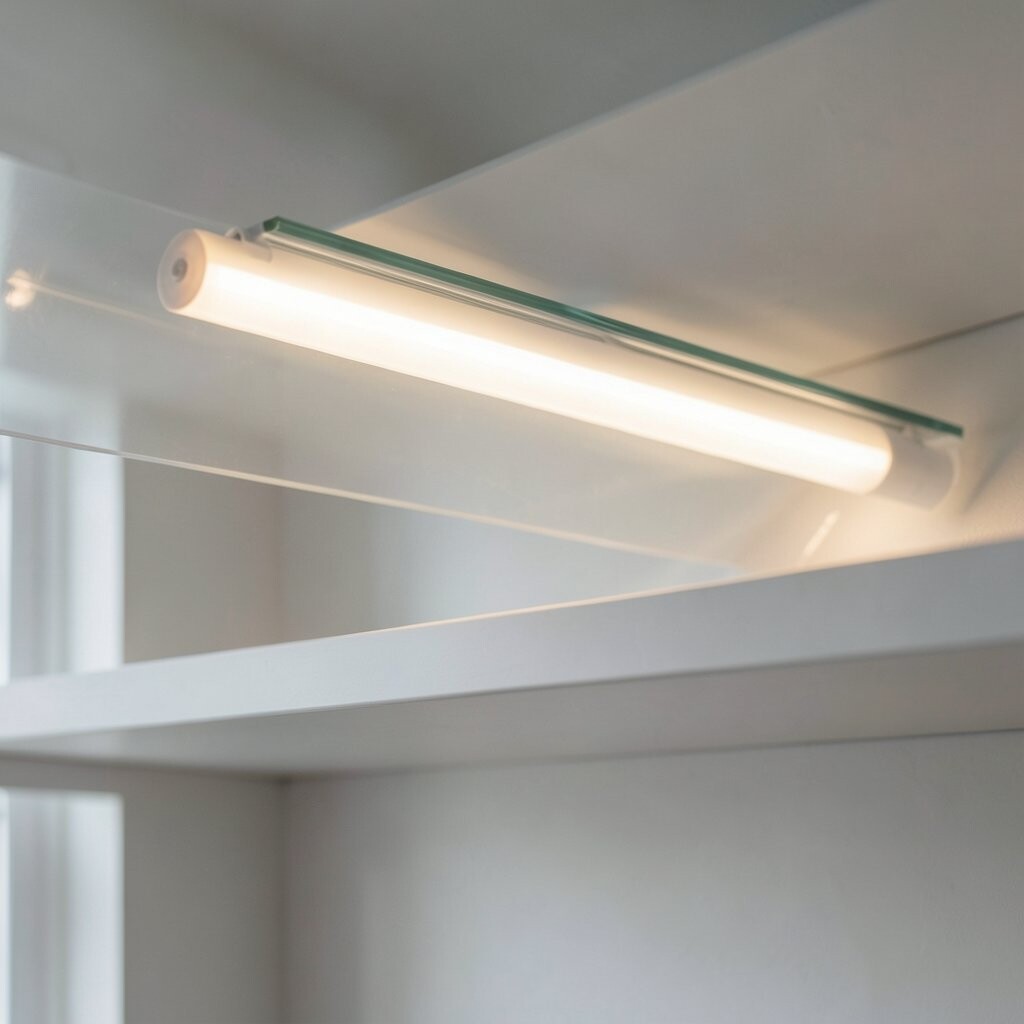
If you’ve ever seen LED dots or bright pinpoints, you know it can ruin the polished look. A diffuser helps spread the light so the shelf looks smoothly lit.
This kind of finish is great for shelves holding artwork, trophies, or anything with a glossy surface. You’ll also reduce glare, which makes it more comfortable to look at your display for long periods.
Use an aluminum channel with a frosted diffuser, then mount the strip inside so you don’t see the individual LEDs. Consider the shelf depth and aim the diffuser so it lights the objects without lighting up the wall behind them too strongly.
6. Channel-Back Installation for Art Frames and Shadow-Free Styling
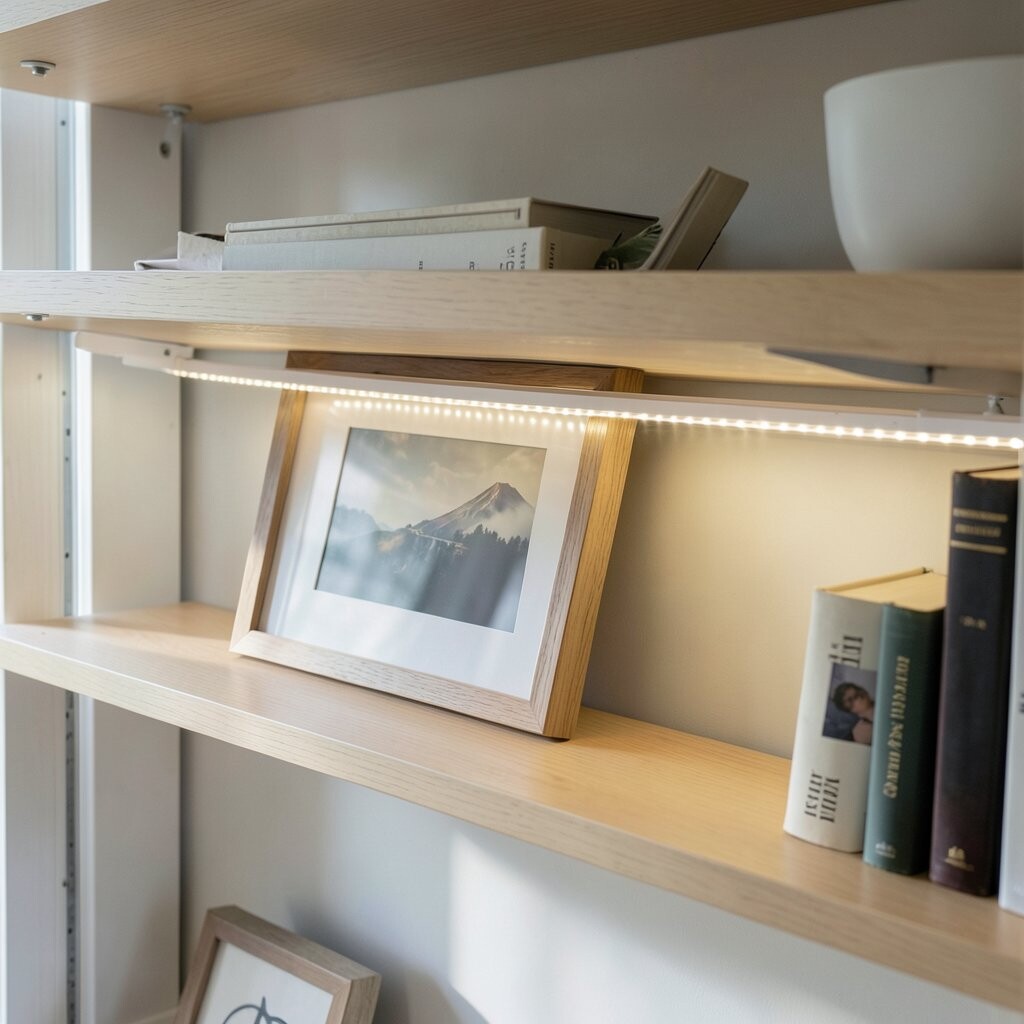
Some shelves have backs that look too dark, which hides frames and keepsakes. A channel-backed LED strip brightens the whole story while keeping shadows under control.
This idea is unique because it’s made for framed photos, prints, and flat collectibles. The light stays more consistent across the shelf, so spacing looks intentional instead of accidental.
Mount the strip inside a slim channel and route the wiring neatly to the side. To personalize, test a few brightness levels and match them to the colors in your frames so everything feels balanced.
For cost considerations, start with one shelf as a pilot, then expand once you see how your decor responds. You’ll likely enjoy the upgrade more because you’ll dial in the exact look before committing to longer runs.
7. LED Strip Corners for Warm L-Shaped Light on Shelving Units
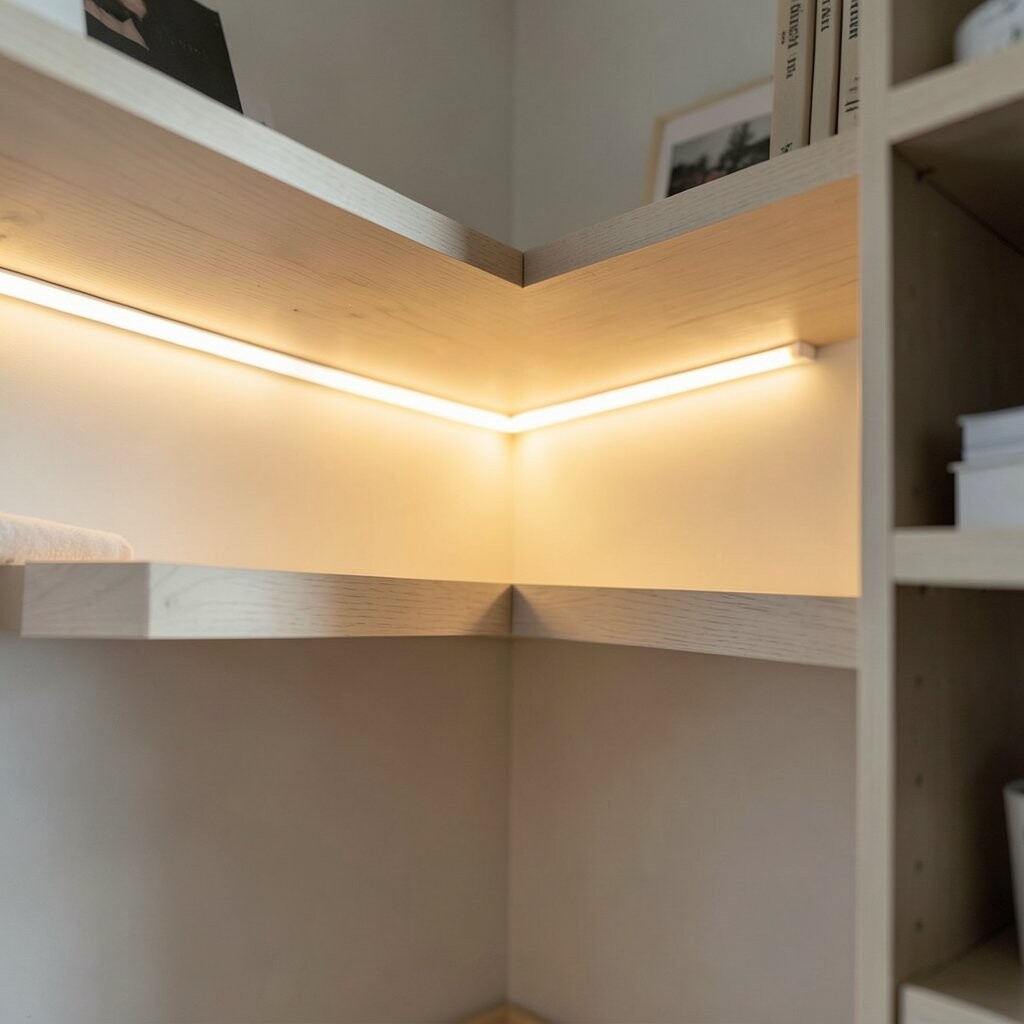
Corners often feel gloomy, especially inside tall shelving. Corner-mounted strips create a warm L-shaped glow that makes the space feel bigger and brighter.
This is a practical trick when you have tall units where light falls off with depth. You get better visibility on the back portion, which is where items usually end up forgotten.
Install strips along both vertical and horizontal inner corners so the light bounces from one surface to the other. If you’re using corner shelves, measure the angles and choose flexible strips that can follow curves smoothly.
To personalize, rotate the color temperature slightly warmer near wooden decor and slightly cooler near metals. Many people find this balance makes mixed materials look more cohesive.
8. Motion-Sensing Shelf Lighting for Late-Night Convenience
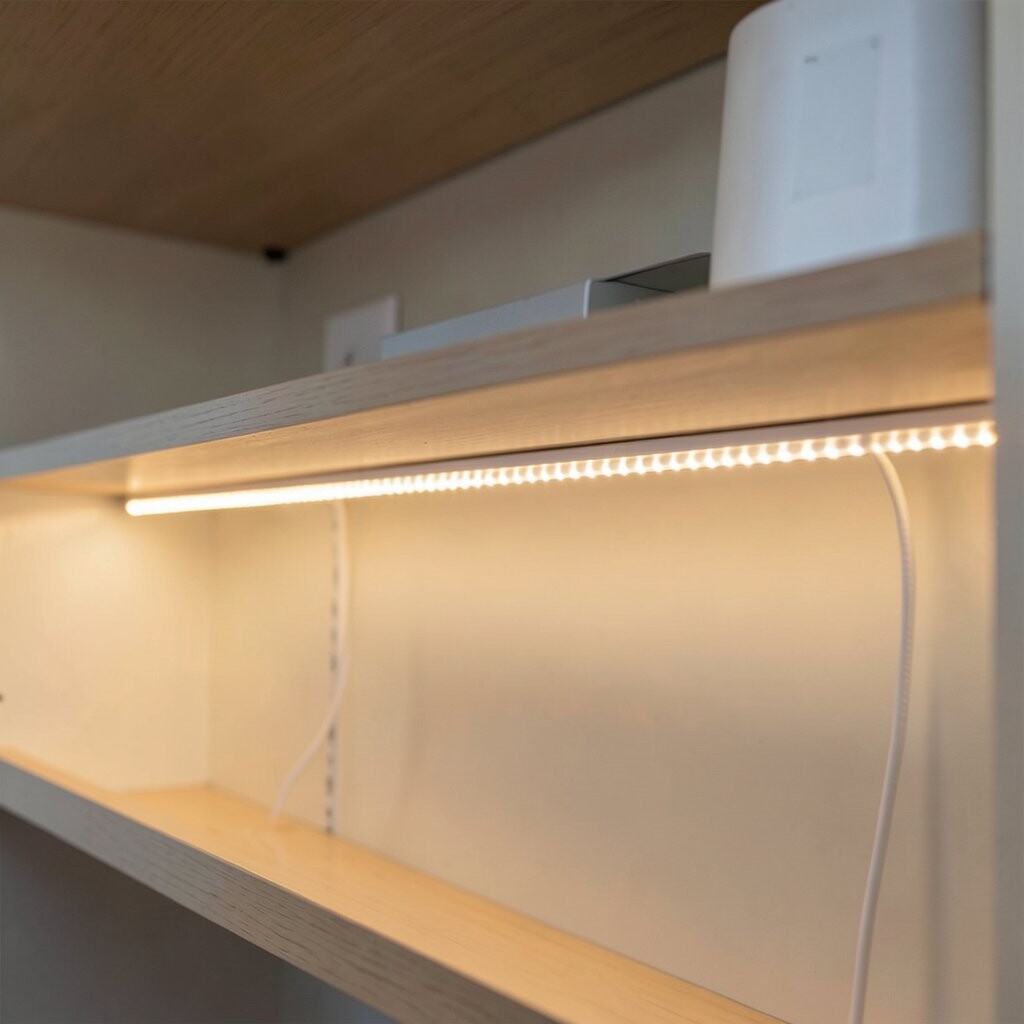
It’s a little magical when shelves light up the moment you approach. Motion-sensing LED strips are perfect for hallways, kitchens, or bedrooms where you want low-stress visibility.
You’ll appreciate how it helps you find items without turning on bright overhead lights. This setup also supports energy savings because the strip runs only when you need it.
Place the sensor where it has clear sight from your usual walking path, and keep the light aimed toward the shelf surface. Set the timeout so the lights stay on long enough to pick items up, but don’t keep shining too long.
9. Shelf Lighting in Micro-Hubs for Small Decor Groupings
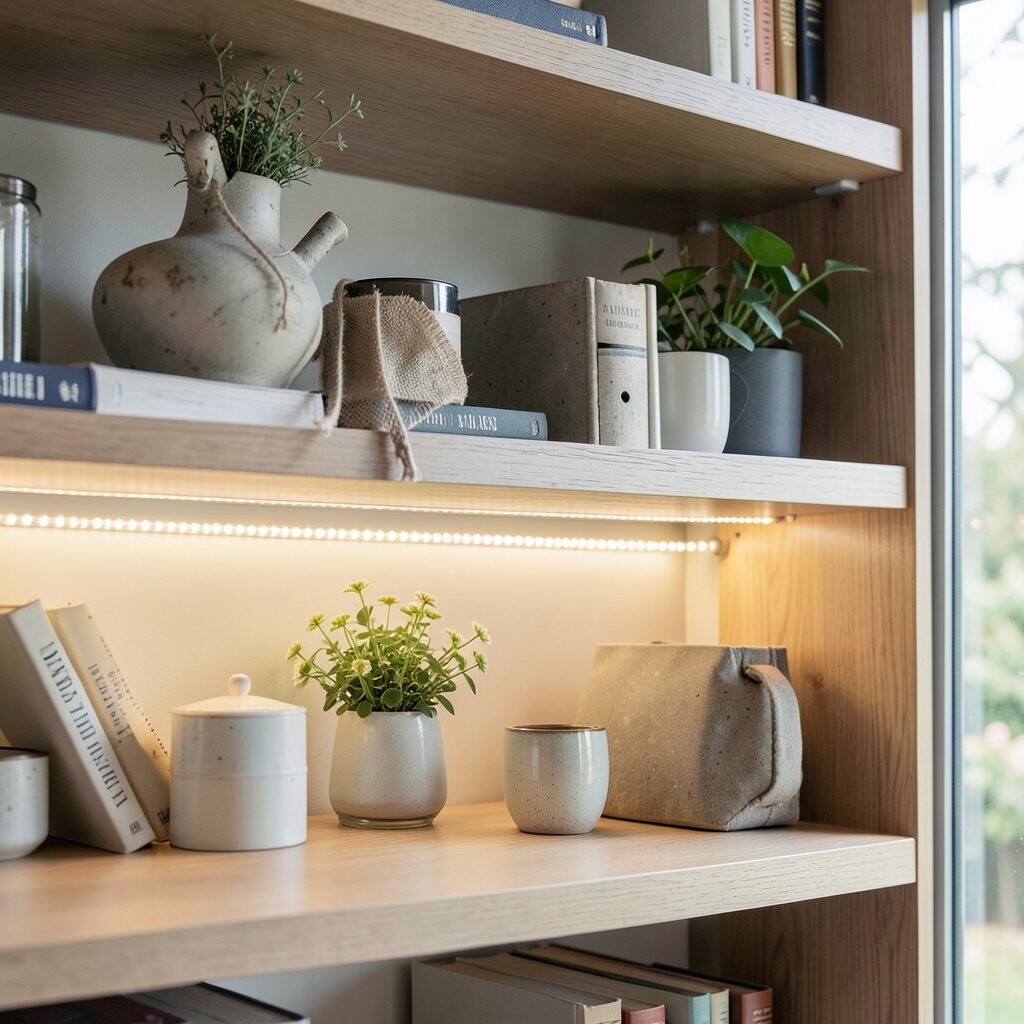
Instead of lighting an entire long run, you can create tiny “light hubs” for the pieces you love most. Small sections make your display feel curated and intentional.
This idea is especially good for shelves with mixed sizes, like books plus framed photos plus small plants. The light highlights each cluster without flooding everything at once.
Cut the strip at the marked sections and mount only where the items sit, then tidy the wiring with slim clips. To personalize, match the brightness of each hub so your tallest objects don’t overpower the rest.
For cost, this approach can be budget-friendly because you’re using less strip length overall. You can also start with one shelf section and add more later when you’re ready.
10. Color-Temperature Pairing for Books, Plants, and Photos
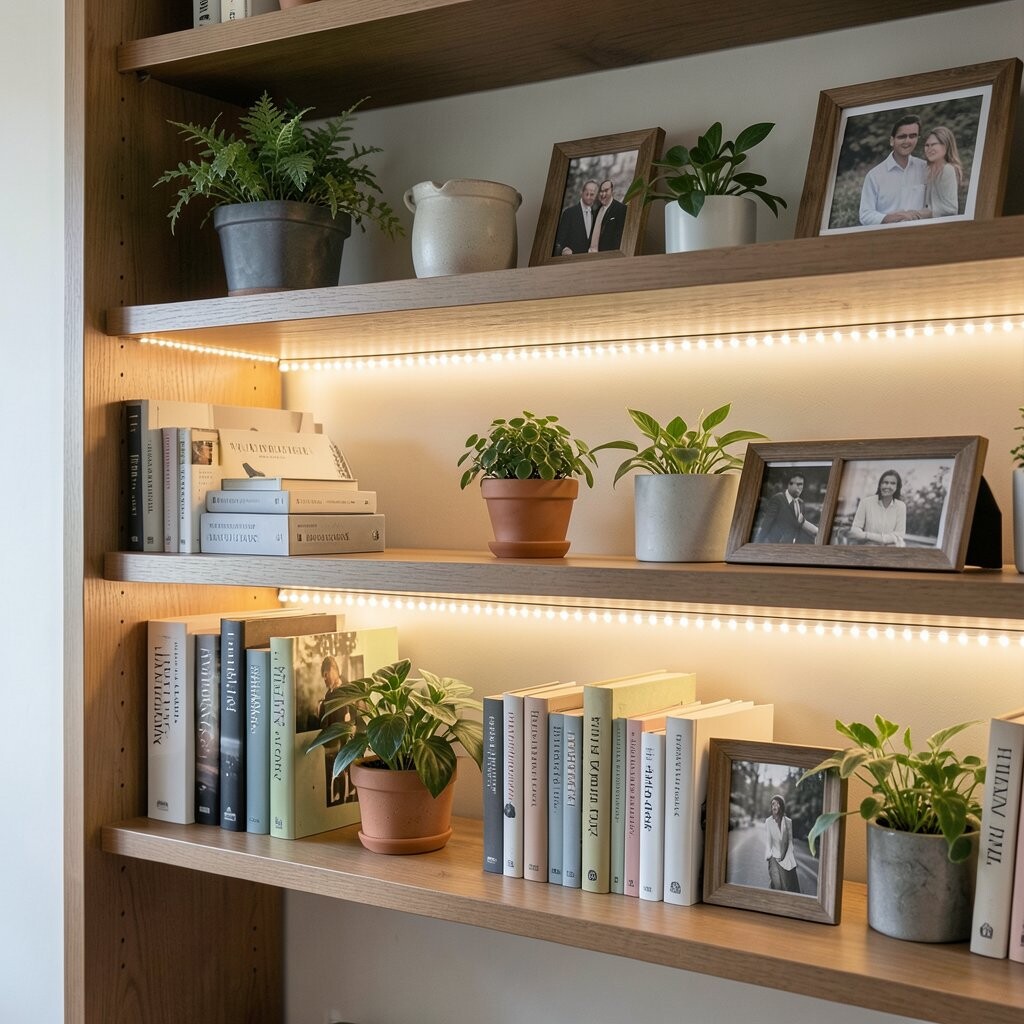
Different things look better under different lighting, and LED strips make that easy. Pair warm and neutral whites so books feel cozy, photos look crisp, and plants look healthy.
What makes this idea stand out is the layering effect across the same shelf. You can create a natural look that mirrors daylight, especially in rooms with mixed decor.
Use one strip strip segment for photo frames and another for plant areas, keeping color temperature consistent within each zone. Check how your plants respond, since some greens look richer with slightly cooler tones.
To keep it practical, use labels on the wires during setup so you don’t get confused later. Many current setups also use smart controllers, so you can fine-tune each shelf scene with simple phone taps.
11. Smart-Control Scenes for Evenings, Weekdays, and Weeknight Wind-Down
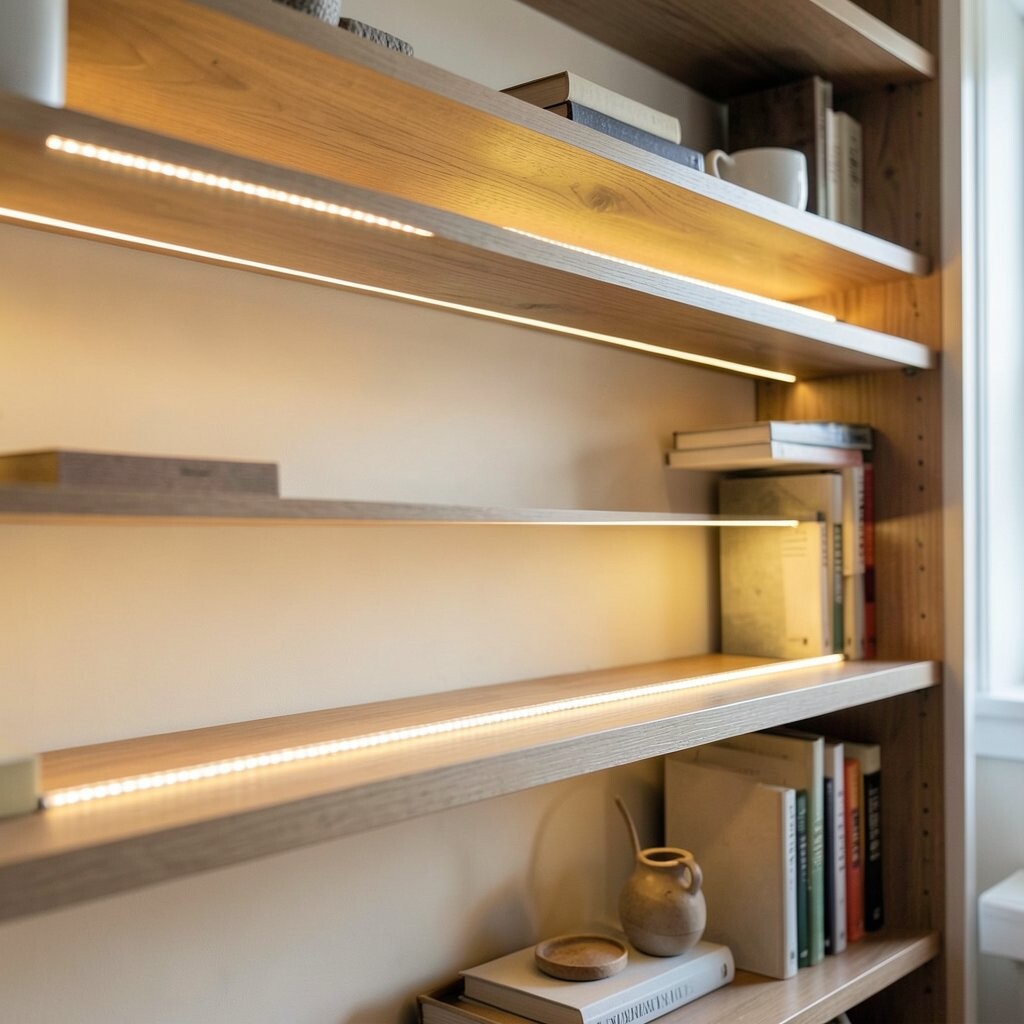
Smart LED strips let you set lighting to match your schedule instead of guessing. When your shelves glow at just the right level, everything feels more comfortable and more “you.”
This approach is perfect for people who like to switch between energizing mornings and calm evenings. You can also automate when lights come on, which is great for routine and guests.
Create a few scenes, such as a bright “reading” mood and a softer “relax” mood. Many people also like a gentle ramp-up so the lights don’t switch on suddenly.
For cost considerations, smart strips cost more upfront, but they can save time and reduce wear because you use fewer manual switches. If you’re on a budget, choose smart controls for just one shelf first, then expand when it feels worth it.
12. Rope-Style Aesthetic with Flexible Strips Along Shelf Edges
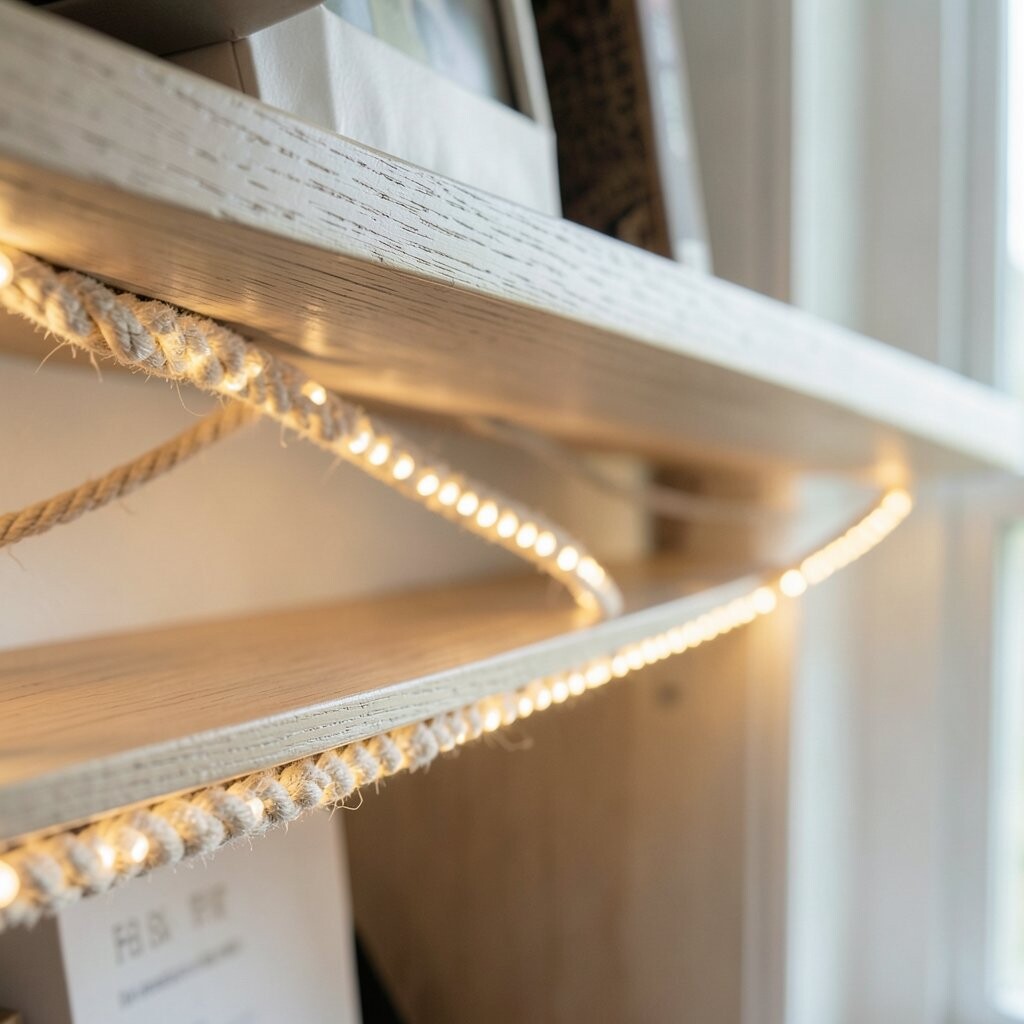
Not all shelf lighting has to look ultra-modern and hidden. Some designs look playful when LED strips are routed along edges like a guided glow line.
This is unique because it combines practical visibility with a decorative vibe. When done well, it frames your shelf like a picture frame and makes your items feel intentionally styled.
Use flexible strips with a cover that keeps the look smooth, then follow the outline of the shelf edges. Keep the spacing consistent so the “rope” effect stays clean, and tuck the connectors where they won’t interrupt the visual flow.
To personalize, blend the edge lighting with themed decor like cozy textures, seasonal colors, or a mini collection spotlight. Check current trends too, since more people are pairing warm edge glows with mixed materials like wood, black metal, and glass for a layered look.