Your home office should feel like a place you want to return to every day. A cork board wall can make it pretty while keeping your work organized.
When you see the warm texture of cork next to your desk, it instantly feels calmer and more inviting. The right layout can also save you time, reduce clutter, and make your planning feel more personal.
1. Classic Full-Wall Cork Backdrop for Daily Planning
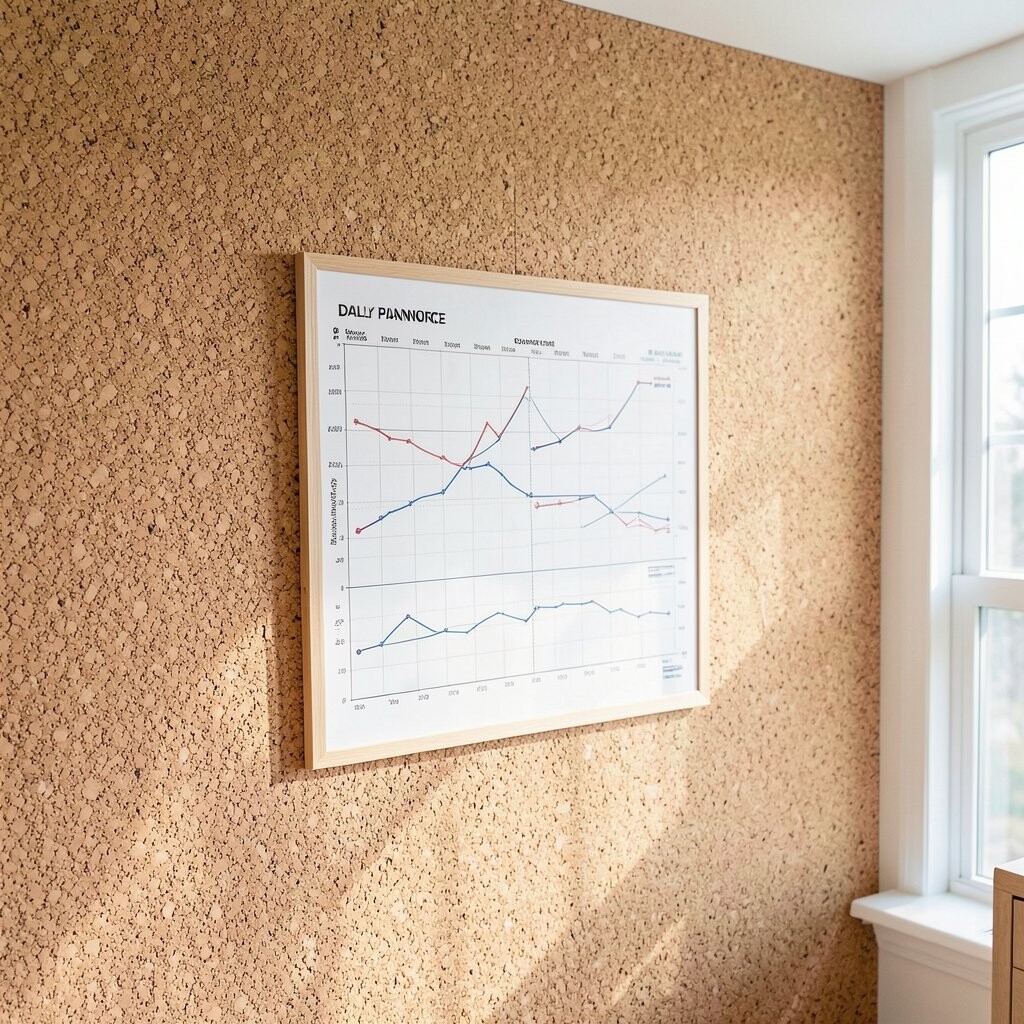
A full-wall cork backdrop looks warm and steady, like a cozy background for your ideas. Pins create small “constellations” of tasks, goals, and reminders that you can scan in seconds.
One of the best benefits is how easy it is to stay on top of paper clutter, because everything has a home. Use push pins for quick notes, and swap items as your schedule changes without making the wall messy.
2. Framed Cork Panels for a Clean, Gallery Feel
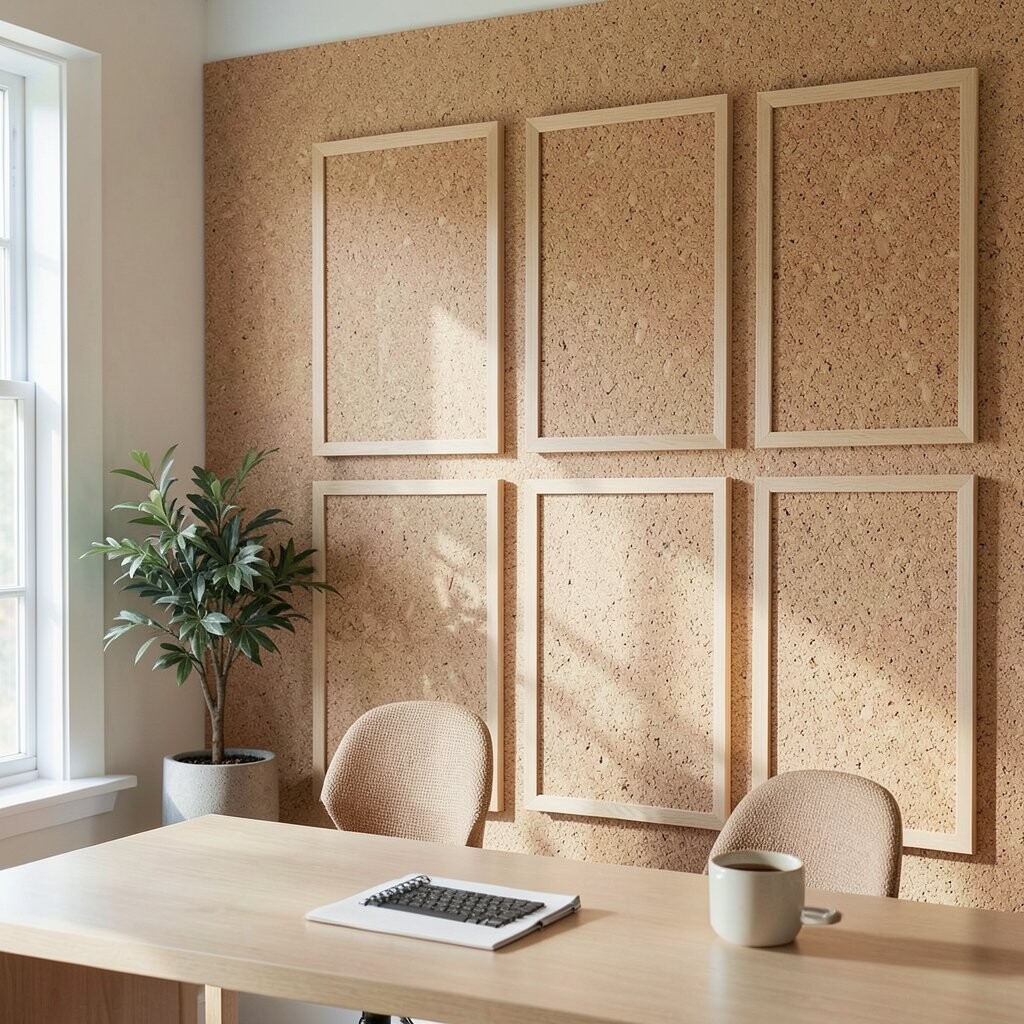
Framed cork panels give your wall a neat, finished look that feels more designed than random pin boards. You’ll see the cork texture through the frames, and the edges make the layout feel intentional.
Choose frames in white, black, or natural wood to match your desk and shelves. This setup is also practical because you can replace one panel at a time if you ever rework your system.
To personalize, lay out panels in a pattern like a grid, then dedicate one panel for weekly goals, one for project steps, and one for inspiration clippings. If you’re watching cost, start with a single framed section near your workspace and expand later.
3. Minimalist Cork Strip Wall for Small Spaces
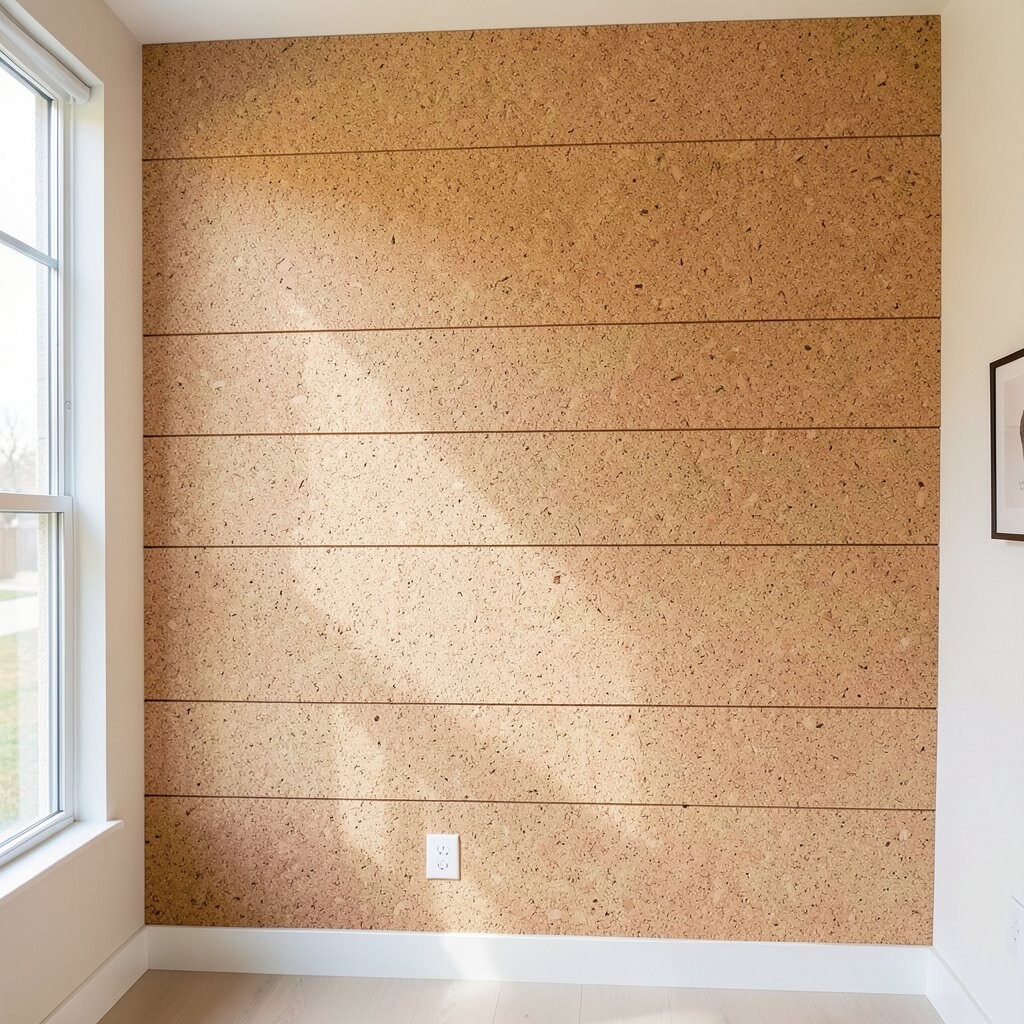
If your office is tight, cork strips can still bring order without taking over every inch of wall. You get a tidy line where messages, sticky notes, and printed documents live in one visible spot.
With less surface area, you also make better choices about what stays out. Try using two or three horizontal strips so the eye moves smoothly from planning notes to reference materials.
For practical use, keep a small tray or ledge underneath for pens and tape so you are not hunting for supplies. This is a budget-friendly approach because you can buy fewer boards while still getting that cork warmth.
4. Cork + Floating Shelves for Reference at Eye Level
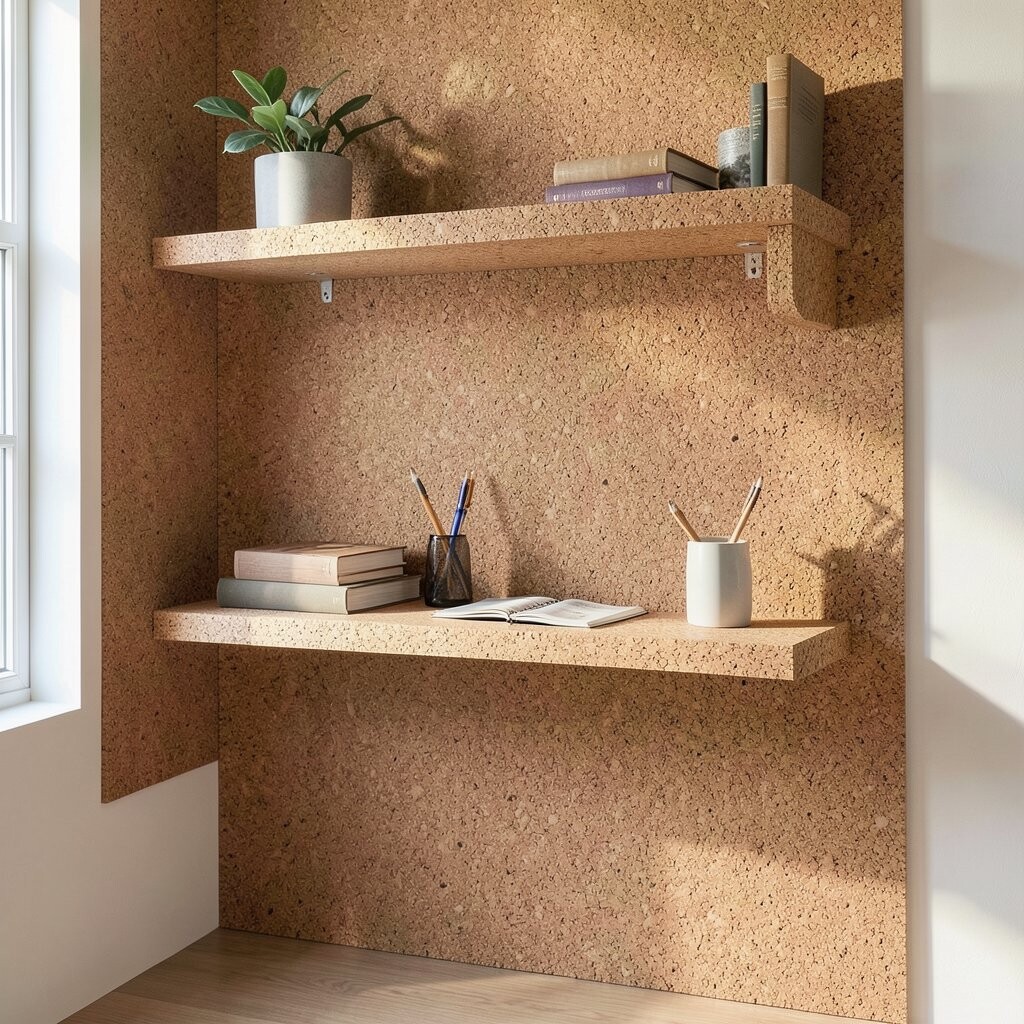
Cork boards look even better when you pair them with floating shelves above or beside them. Your wall becomes a mix of visuals and function, with pins holding papers and shelves holding books you reach for often.
When items are at eye level, you waste less time flipping between drawers and cabinets. A setup like this also helps you keep cables and devices organized, since you can reserve the desk surface for only what you use every day.
5. Textured Cork Accent Behind the Desk for Warm Lighting Vibes
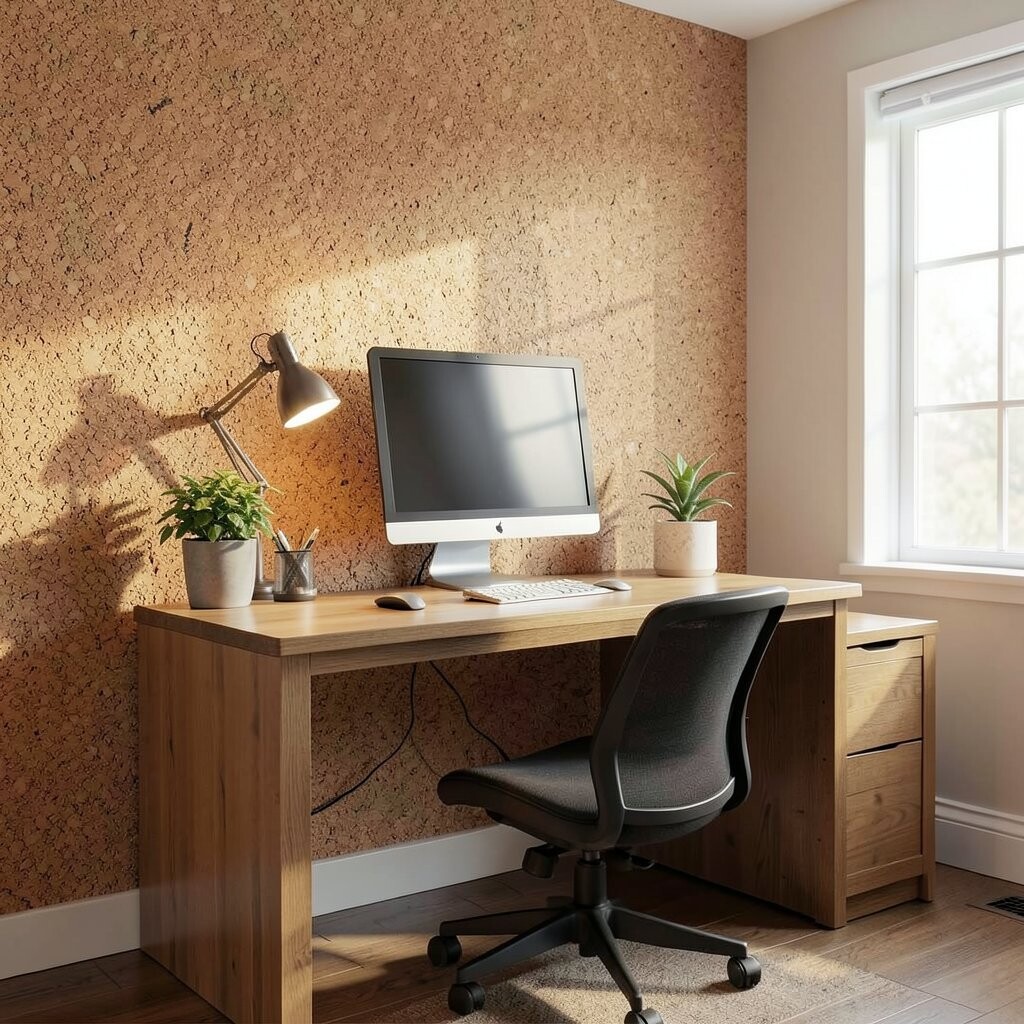
Placing a cork board behind your desk gives you a soft, textured backdrop that looks great in daylight. Even when your office lighting changes, cork tends to keep the scene feeling calm and balanced.
It’s a simple way to make your workspace feel layered without adding heavy decor. Pin a rotating mix of calendar pages, a few photos, and color-coded sticky notes for a system that stays readable.
If you want to keep costs reasonable, choose a smaller size board first and position it only where your camera view or line of sight catches it most. As you get comfortable, you can expand the wall with matching boards.
6. Color-Matched Cork Boards to Match Your Office Theme
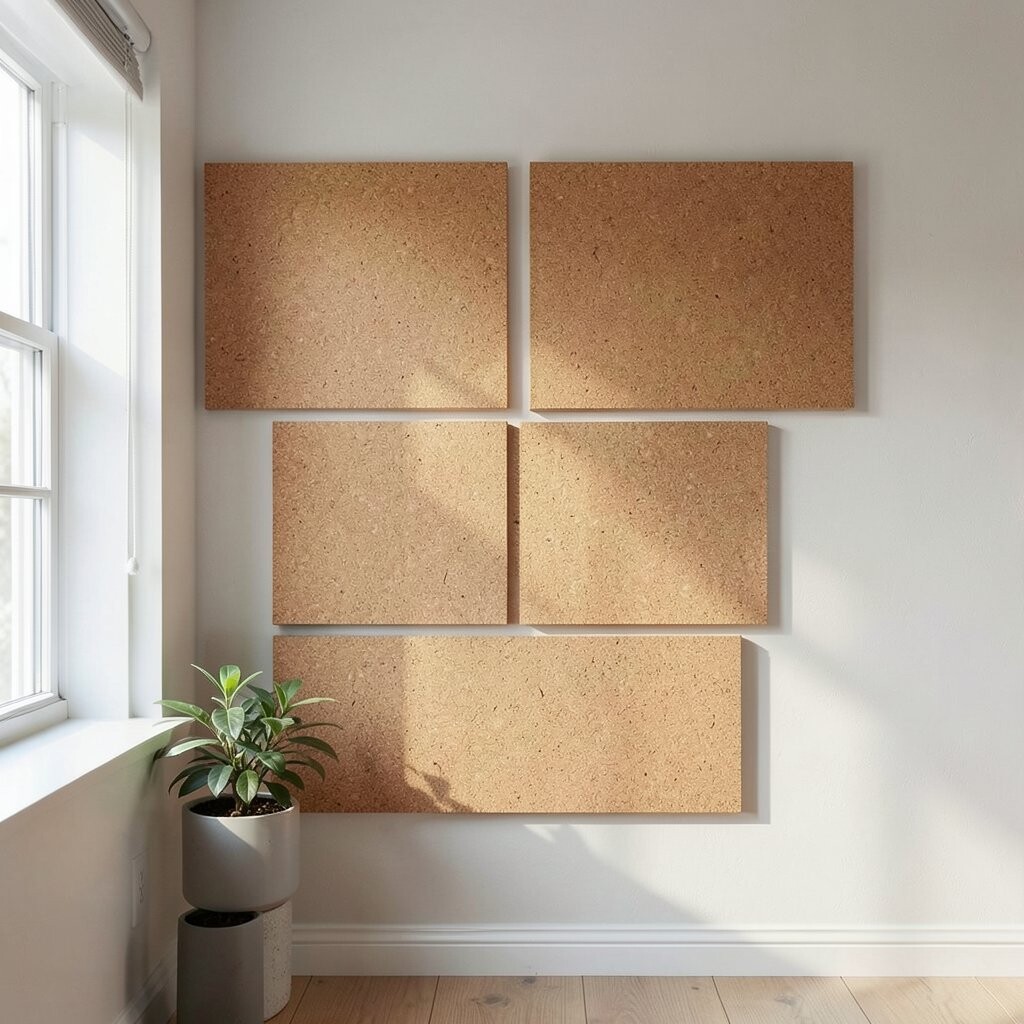
Cork doesn’t have to be only one shade, and colored cork boards can make your office feel styled. Think muted sage, soft blush, or deep charcoal, depending on the vibe you want while you work.
Color-matching helps your brain feel calmer because the space looks less chaotic. Pair a warm cork tone with natural wood furniture, or match a cooler cork shade with modern metal accents.
For personalization, dedicate colors to different roles, like blue for finance documents and green for client updates. If cost matters, buy one colored board for the main view and use standard cork elsewhere.
7. Cork Board Wall With Magnetic-Friendly Surfaces for Flexible Systems
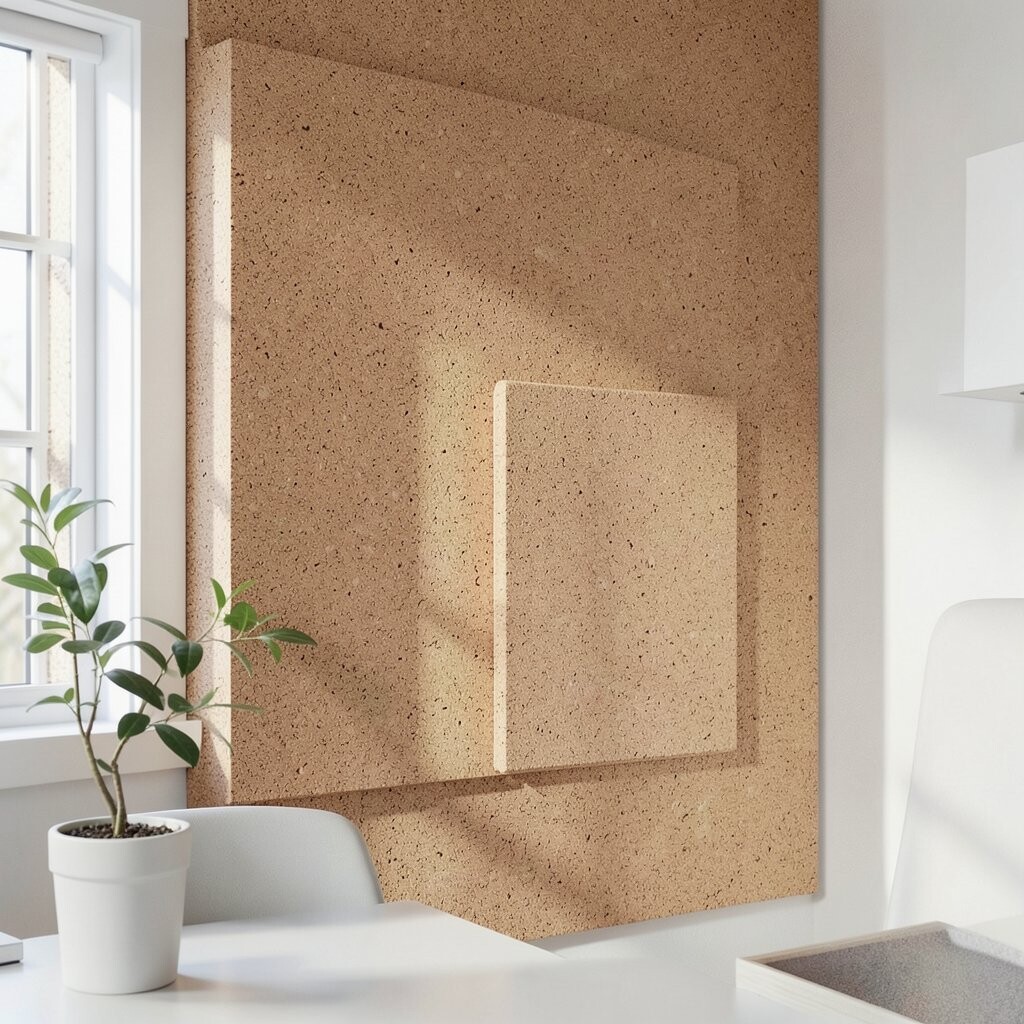
Some cork wall setups include magnetic-friendly layers or compatible finishes that make your notes easier to move. Instead of only using pins, you can attach items using magnets and swap them faster.
This flexibility is helpful when you work with schedules that change often. You can also use it for lightweight items like printouts, cards, and small labels without punching holes in everything.
Try creating a “weekly rotation” zone where you update deadlines every Monday, then keep a “reference zone” for things you consult regularly. If you’re budget-aware, start with the magnetic-friendly section where your most frequent updates happen.
8. Cork Board Wall With Grid Overlay for Neat Layouts
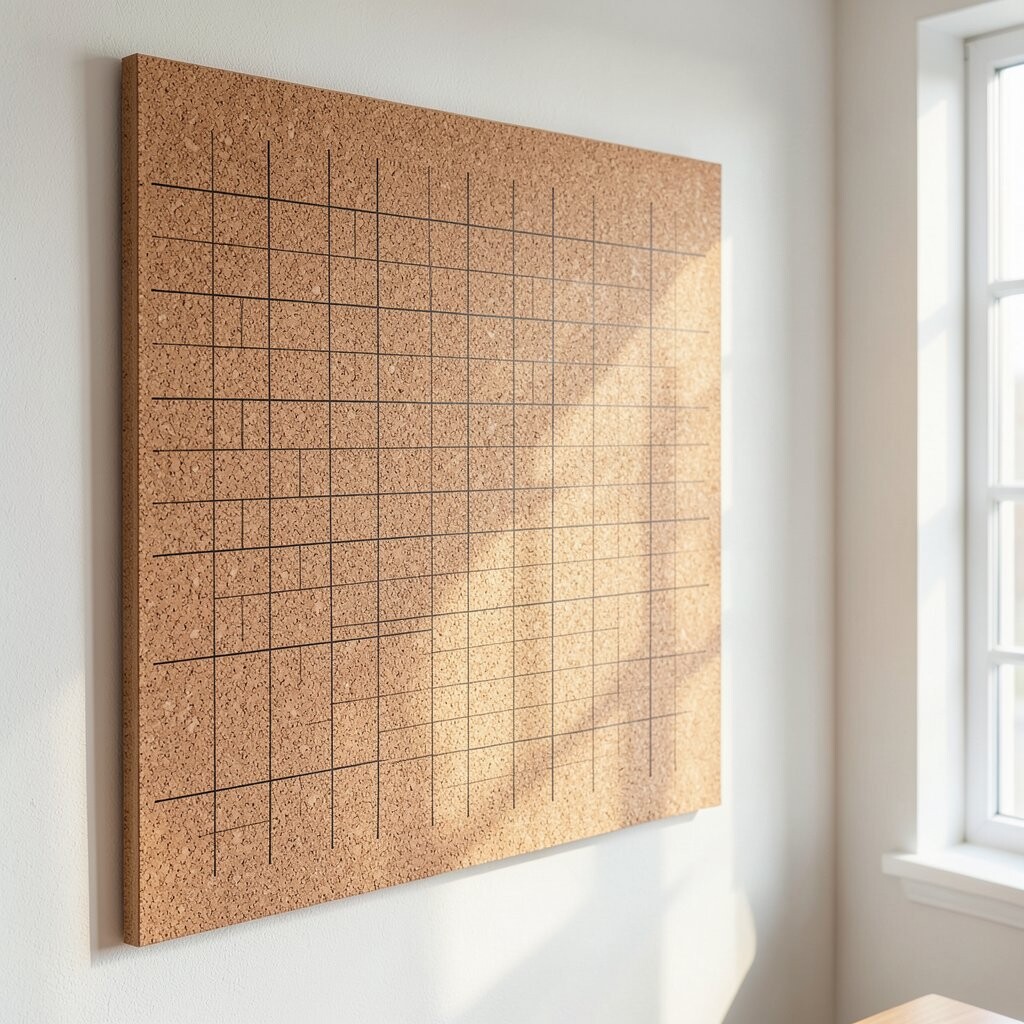
A cork board wall with a subtle grid overlay looks tidy and makes your documents easier to align. The pattern gives you a gentle structure, like graph paper, so everything feels organized even when you add new notes quickly.
That small visual order can reduce stress during busy weeks. Use the grid to create consistent spacing for project plans, meeting notes, and pinned inspiration.
For a practical twist, outline areas for “today,” “this week,” and “ideas to try,” then update each zone as tasks shift. The cost can be a bit higher for specialized overlays, but you save time because your system stays clear.
9. Corner Cork Board Wall for a Screen-Friendly Setup
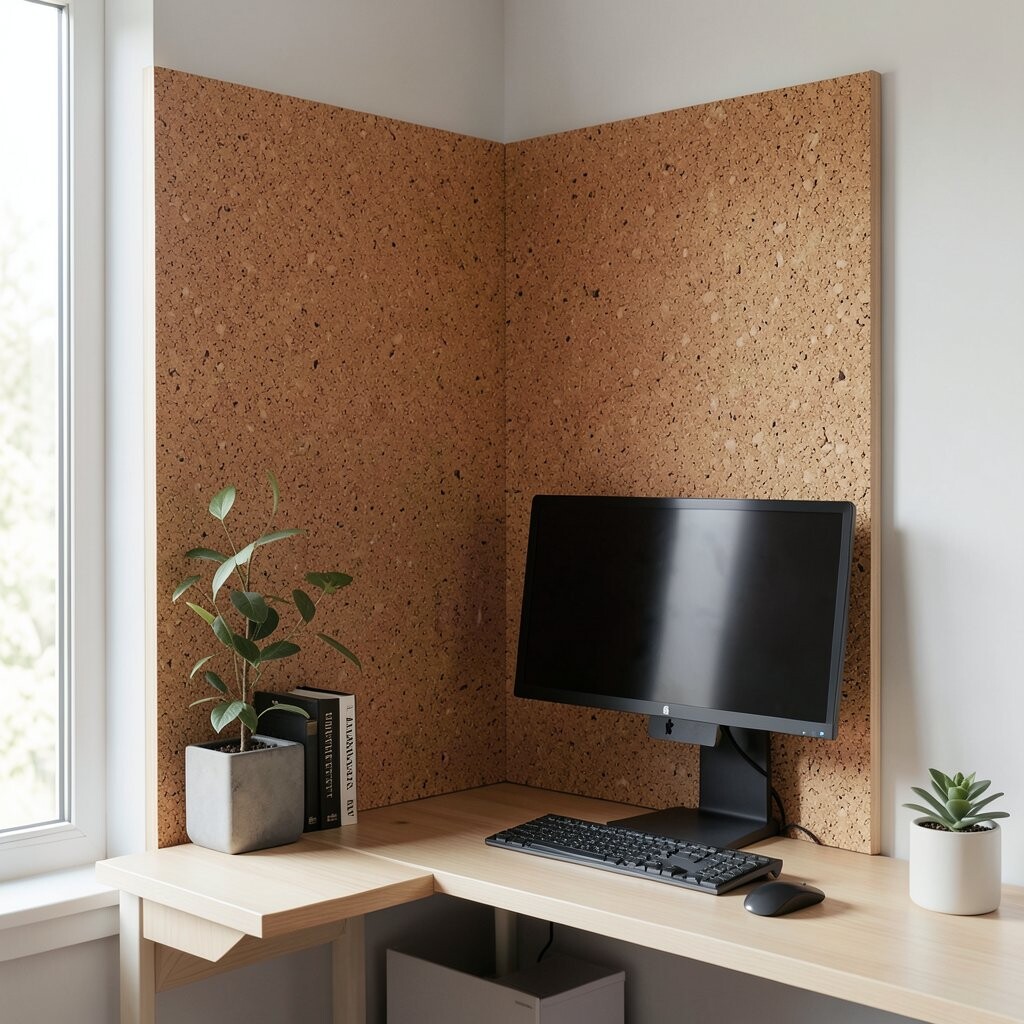
Putting a cork board in a corner helps you use space that often goes unused, and it frames your workspace nicely. The angle also keeps glare down compared to some reflective wall decor.
This placement is great for organizing notes around your chair or near a standing desk, so you can look without twisting your whole body. It also keeps your desk surface calmer, since you can pin what you would normally stack on the desk.
To personalize, hang a few small visual cues like color swatches for branding work or a mini mood collage. If cost considerations are tight, focus on one corner zone first, then add a second section only if you need more space.
10. Modular Cork Tiles for Easy Expansion and DIY Style
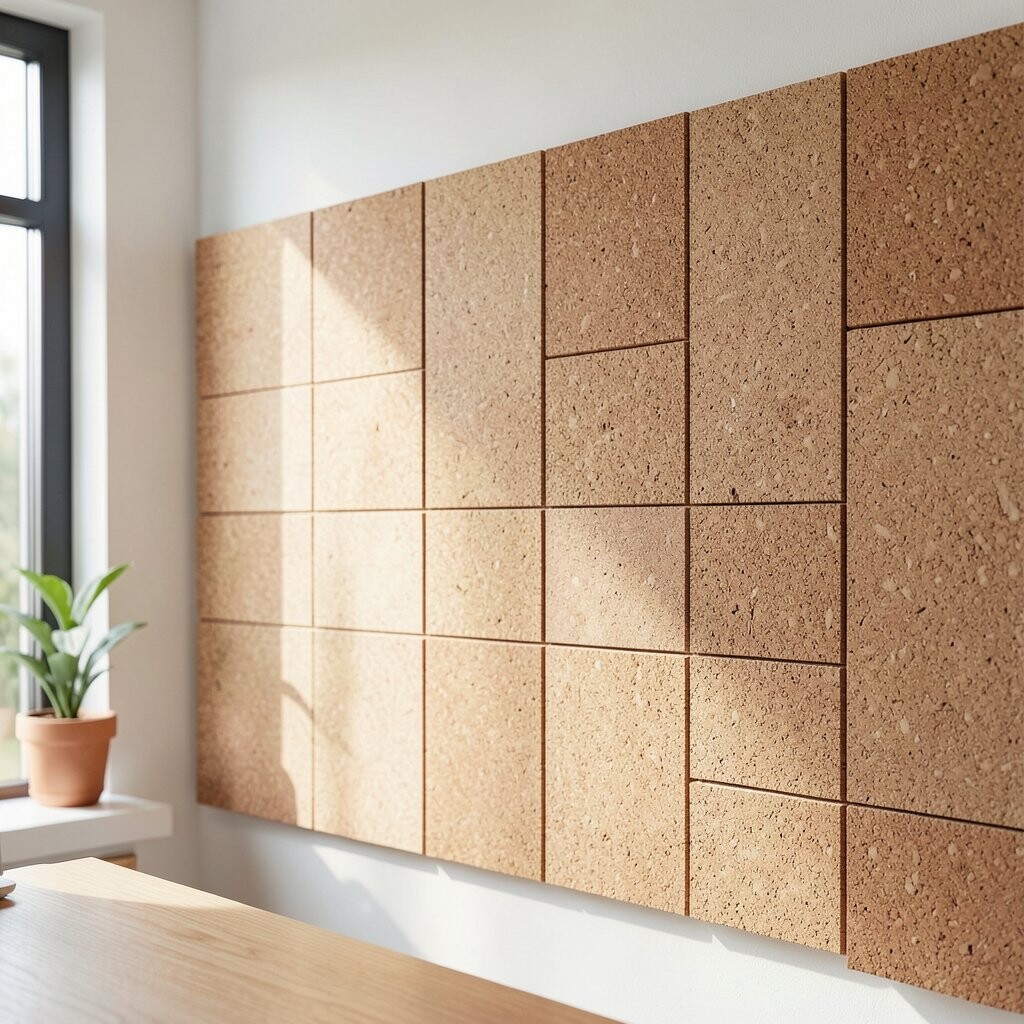
Modular cork tiles are perfect if you like DIY because you can build your cork wall step by step. Each tile looks slightly different in texture, and the repeating pieces create a lively, handmade feel.
They also make it easy to expand later, so you won’t need to replace everything when your office layout changes. This is a smart choice for people who like trying new organization styles each season.
For practical use, plan a border around the main board area so your layout looks clean and intentional. If you’re watching spending, start with a simple patch near your desk, then match the pattern as you add more tiles.
11. Cork Board Wall With Pin-Free Inserts for Printed Templates
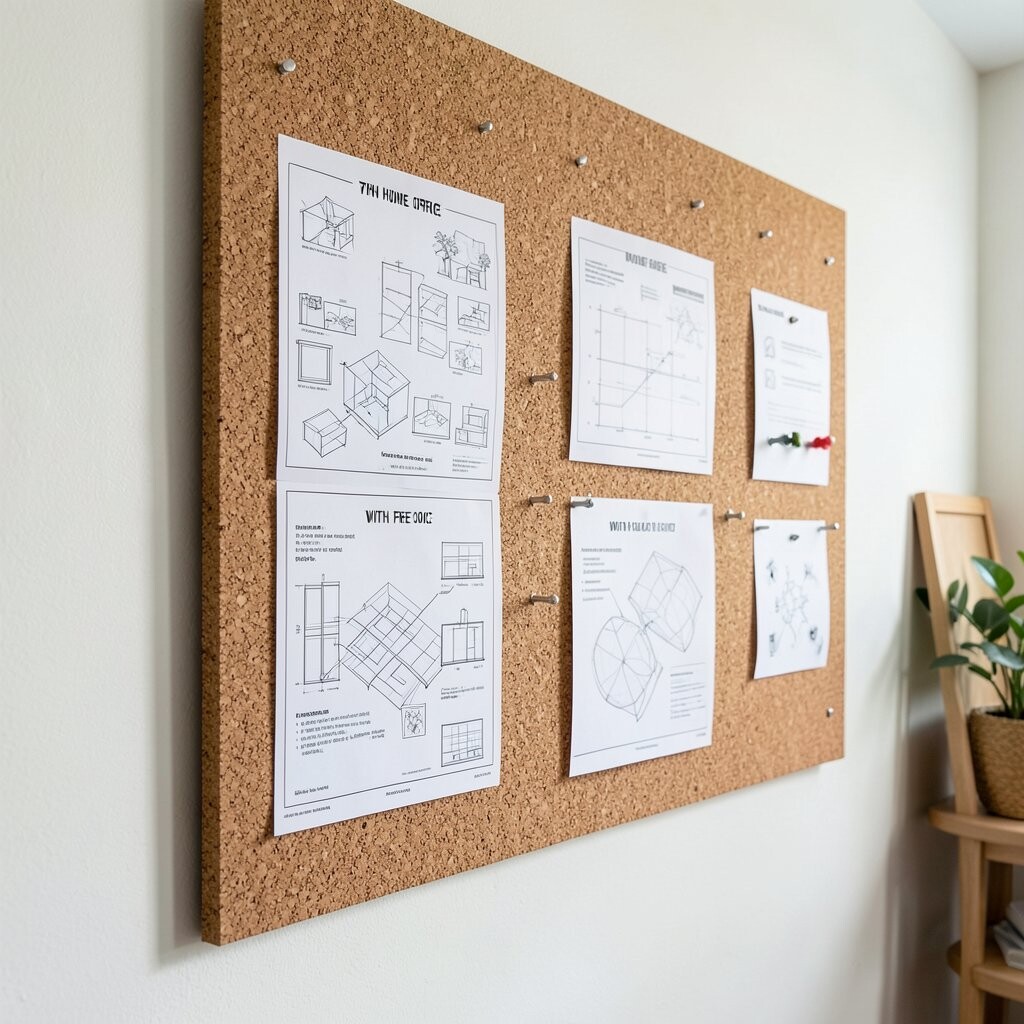
Some cork wall designs work with insert frames or pin-free pockets that hold printed templates neatly. Instead of cluttering the board with lots of pins, your documents stay crisp and easy to swap.
This approach is great for forms you use all the time, like meeting agendas, budgeting sheets, or daily checklists. It also helps your wall look tidy, even when you have a busy workload.
To personalize, choose insert colors that match your branding or your favorite stationery set. If cost matters, buy a mix of insert types for the most-used pages, and keep the rest of the cork surface simple.
12. Vertical Cork Board Wall for Standing Desks and Taller Layouts
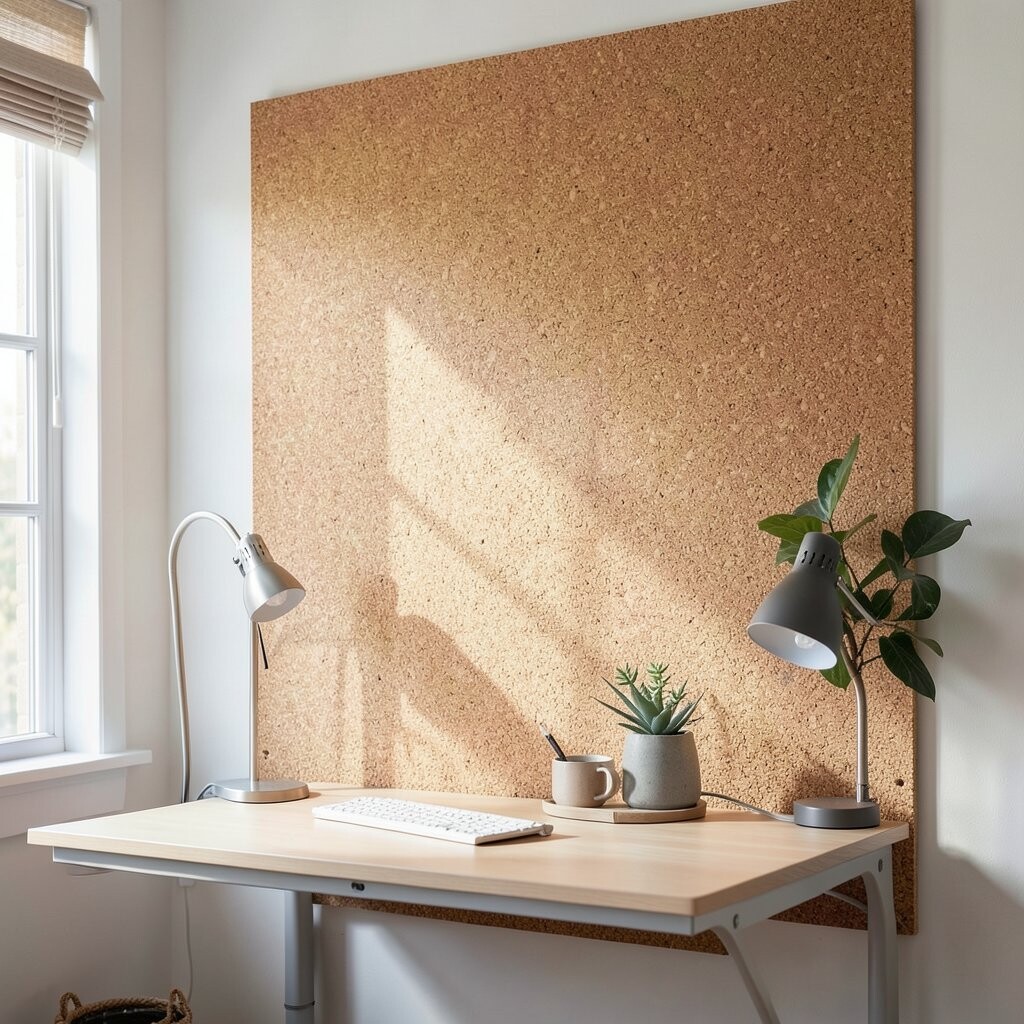
A vertical cork board wall is a strong match for standing desks because it sits where your eyes naturally land. You can pin reminders at the right height, and you’ll feel more in control of your day.
When your board is vertical and positioned well, you can check tasks quickly during short breaks without leaning or looking away too long. It’s also a nice way to keep your space feeling intentional, especially in offices with tall shelving.
For personalization ideas, add a row for “movement goals” like stretch reminders, plus a row for project priorities. This setup can fit many budgets because you can choose a tall, narrow board to get function without buying a huge surface.
13. Decorative Cork Board Wall With Artwork-Friendly Placement
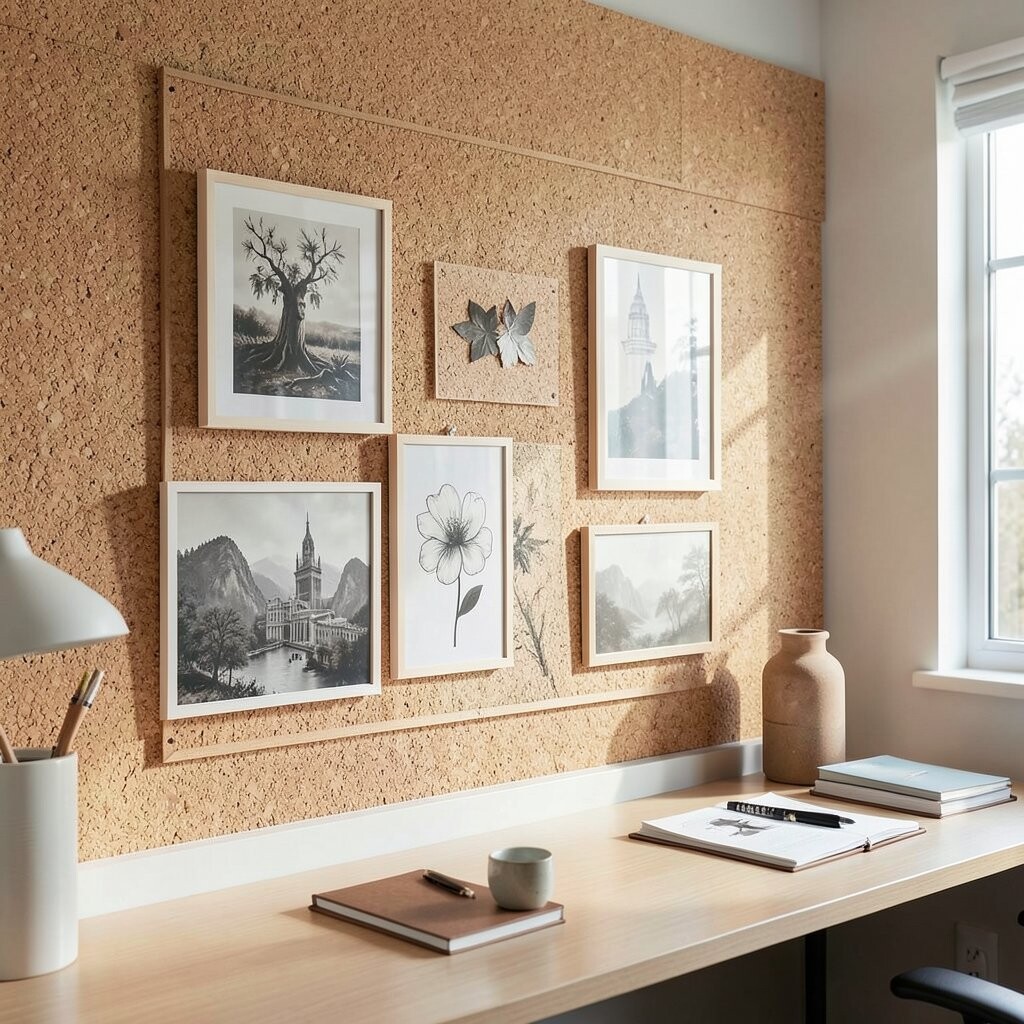
A decorative cork board wall can look like artwork while still doing the job of a planning center. Place larger cork sections as the main background, then add framed photos or small art pieces around it for a curated look.
This style helps your home office feel less like a storage space and more like a creative studio. You can also combine different push pin colors, like brass or black, to match your accessories and make the pins part of the design.
For practical tips, keep one section for important documents, keep another section for inspiration, and leave a small open area for new notes as they appear. Cost considerations are easier when you treat cork as the foundation and add affordable accents, so the wall feels high-end without the big price tag.