The right mural can make a community center feel like a welcome home. It also turns everyday walls into stories people can share.
1. Heritage Map in Living Color
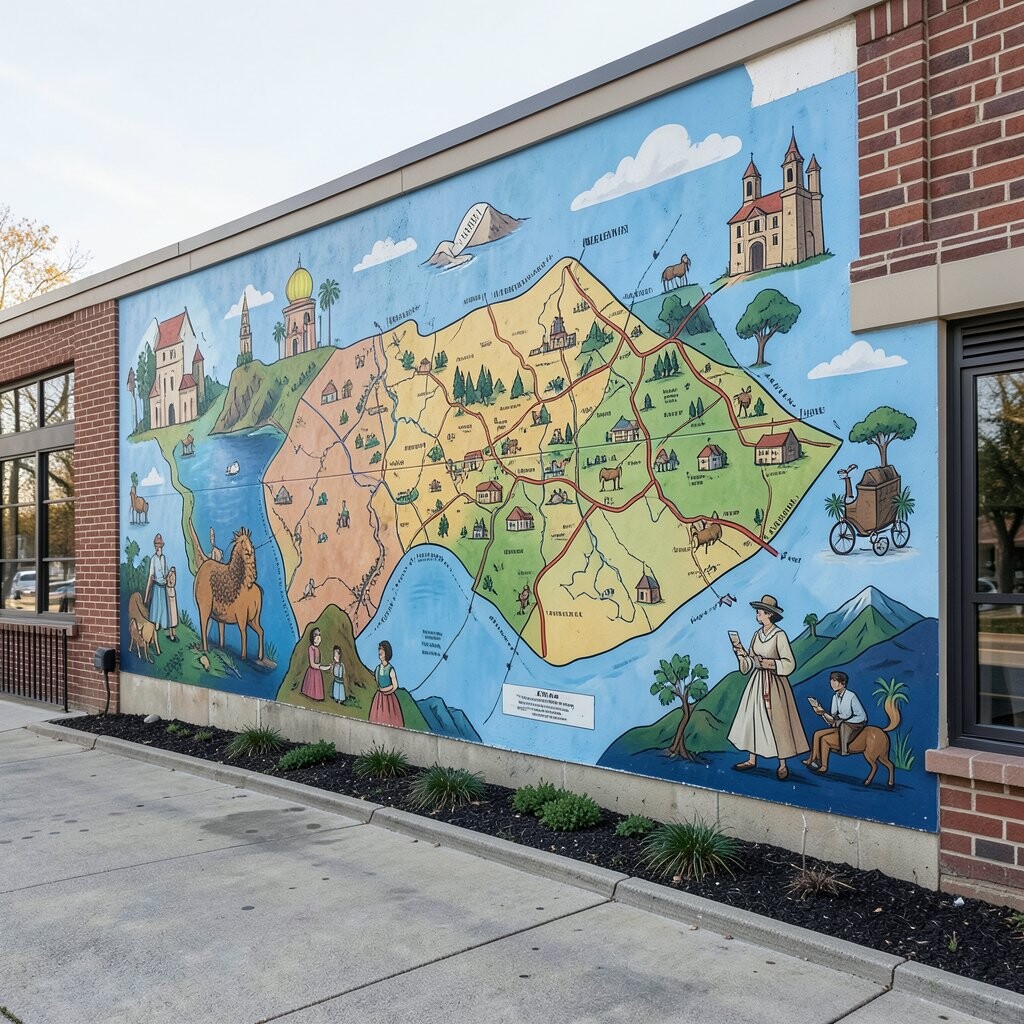
Paint a big “neighborhood map” that blends real streets with soft, imaginative shapes. Include landmarks, rivers, parks, and local features with warm colors that feel inviting.
Add small scenes along the routes, like a corner store, a schoolyard game, or a bus stop at sunset. This helps visitors connect the artwork to familiar places, making the space feel more personal and easy to remember.
Use stencils for street lines and let kids or volunteers fill in simple icons after a paint demonstration. A budget-friendly approach is to start with a limited palette and expand only where you have extra time.
2. Community Welcome Banner in Many Languages
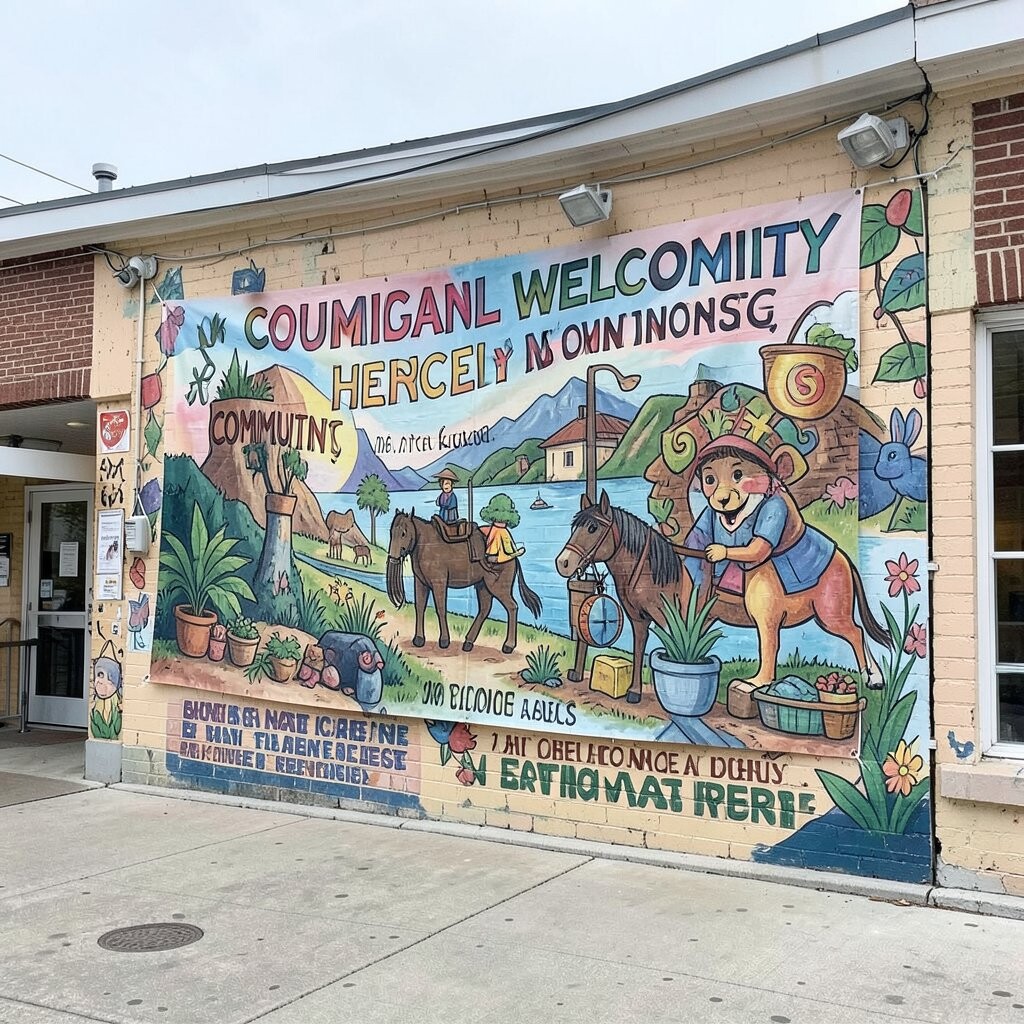
Design a flowing banner that repeats “welcome” in multiple local languages and dialects. Choose letters that match the culture’s style, from bold calligraphy to friendly block lettering.
Surround the words with tiny patterns like woven borders or repeating motifs from local textiles. When people can read greetings in their own language, they feel seen right away, and the center becomes more welcoming.
Keep the message readable from a distance by using high contrast colors, such as dark text on light backgrounds. If paint costs feel tight, you can do a first layer with affordable base paint, then add details later with acrylic craft paint.
3. Seasonal Foods and Harvest Traditions
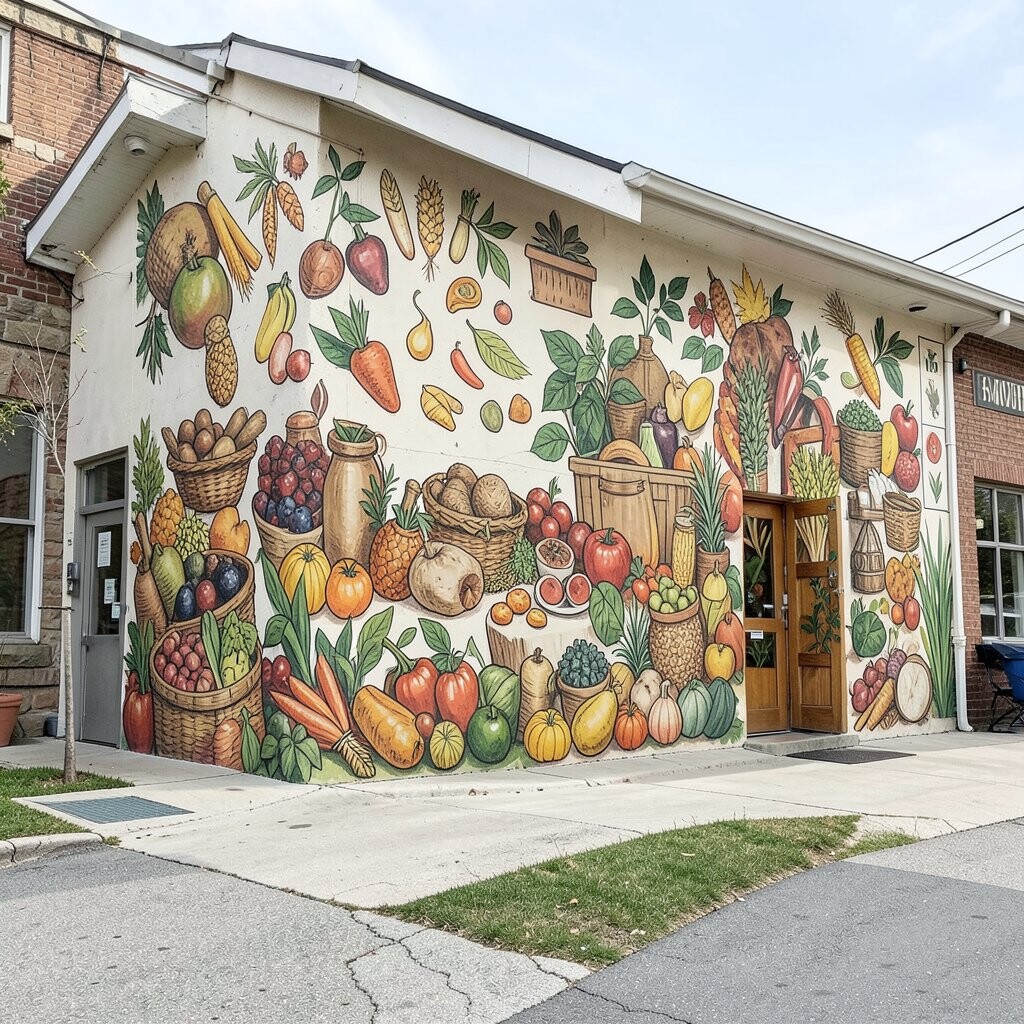
Create a wall panel that shows the year through foods and harvest moments. Think bright produce, shared meals, and baskets in every season, drawn with gentle shapes and real-life colors.
Place small plates or bowls near the feet of the artwork so it feels like guests are being offered a visual feast. This mural can spark conversations at events and make seasonal programs feel extra meaningful.
Have local cooks bring in photos of family recipes or market stalls, then translate those details into simpler drawings. For practicality, use a clear design grid so volunteers can help fill sections without confusion.
If you want a trendy look, consider adding subtle watercolor textures around the illustrations to match modern social-media art styles. Even a modest color upgrade, like adding metallic accents sparingly, can make the mural feel fresh.
4. Artistic Timeline of Local Milestones
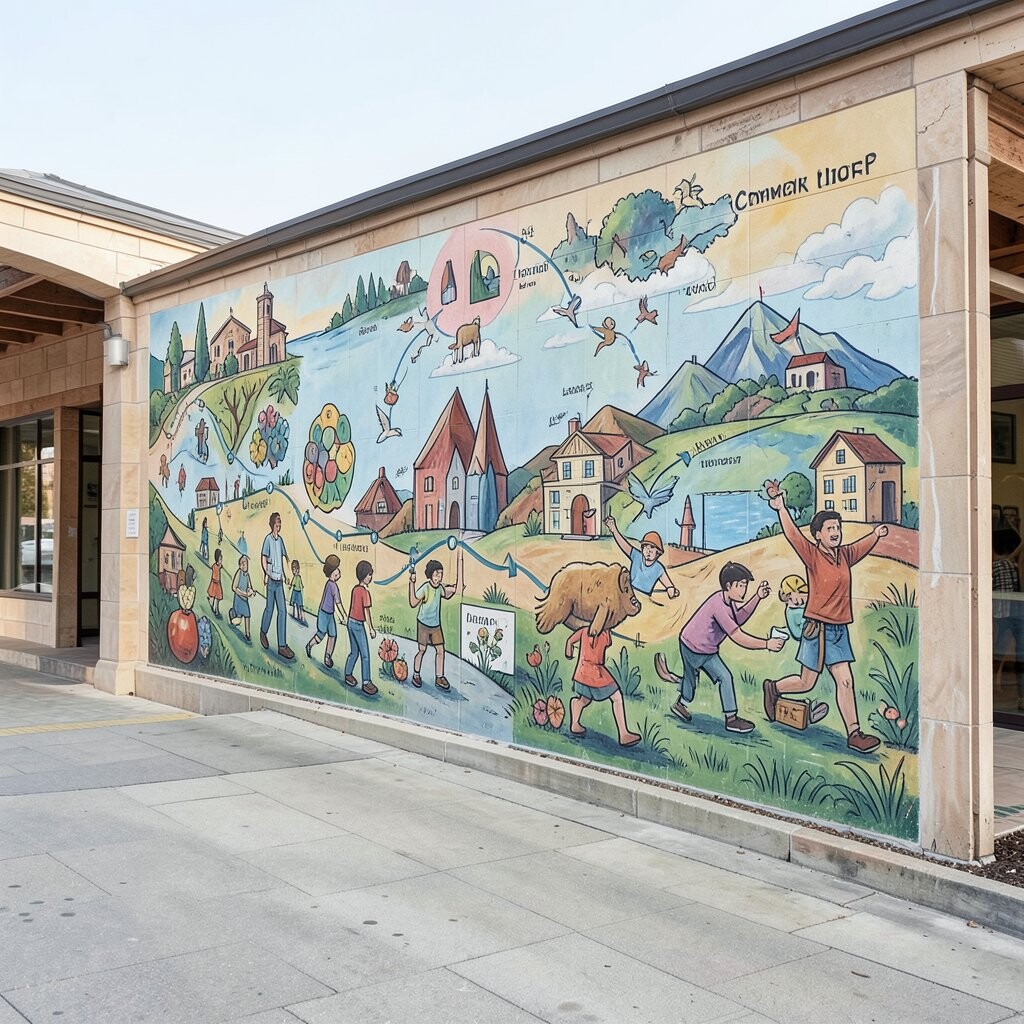
Paint a horizontal timeline with calm, graceful scenes that cover key moments in the community’s history. Use dates only where needed, and focus more on what people did and built.
Show everyday highlights such as founding events, school milestones, and community celebrations. This benefits visitors who may be new to the area, because the wall answers silent questions and builds shared pride.
To keep costs manageable, start with a limited number of scenes and expand as funding grows. You can also paint older elements first with durable house paint, then add finer art details later.
Try mixing styles for a layered, current feel, like combining flat silhouettes with a few realistic faces. Personalize the timeline by adding names of local elders or organizations in small text bubbles.
5. Folk Patterns From Shared Textile Traditions
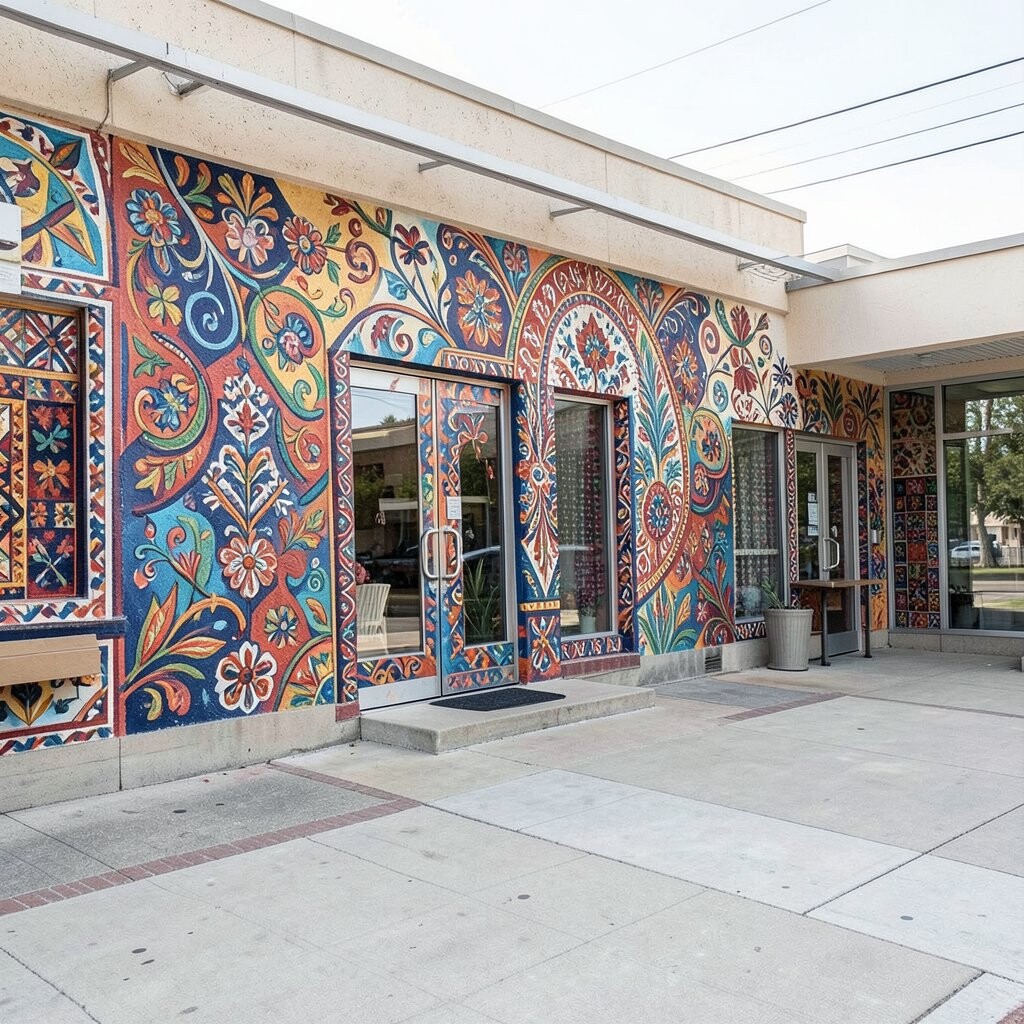
Fill the mural with repeating folk patterns inspired by local textiles, quilting, and weaving. Choose motifs that you can draw easily, such as waves, diamonds, stars, and simple plant shapes.
Place the patterns in flowing bands so they wrap around the wall like fabric. Visual rhythm like this feels soothing, and it can make the center feel warmer without needing a complex story.
Borrow from real fabric designs by photographing swatches and matching colors to the nearest paint shades. For practical help, create a small “pattern key” so volunteers know how to scale each element.
6. Mural of Local Heroes and Mentors
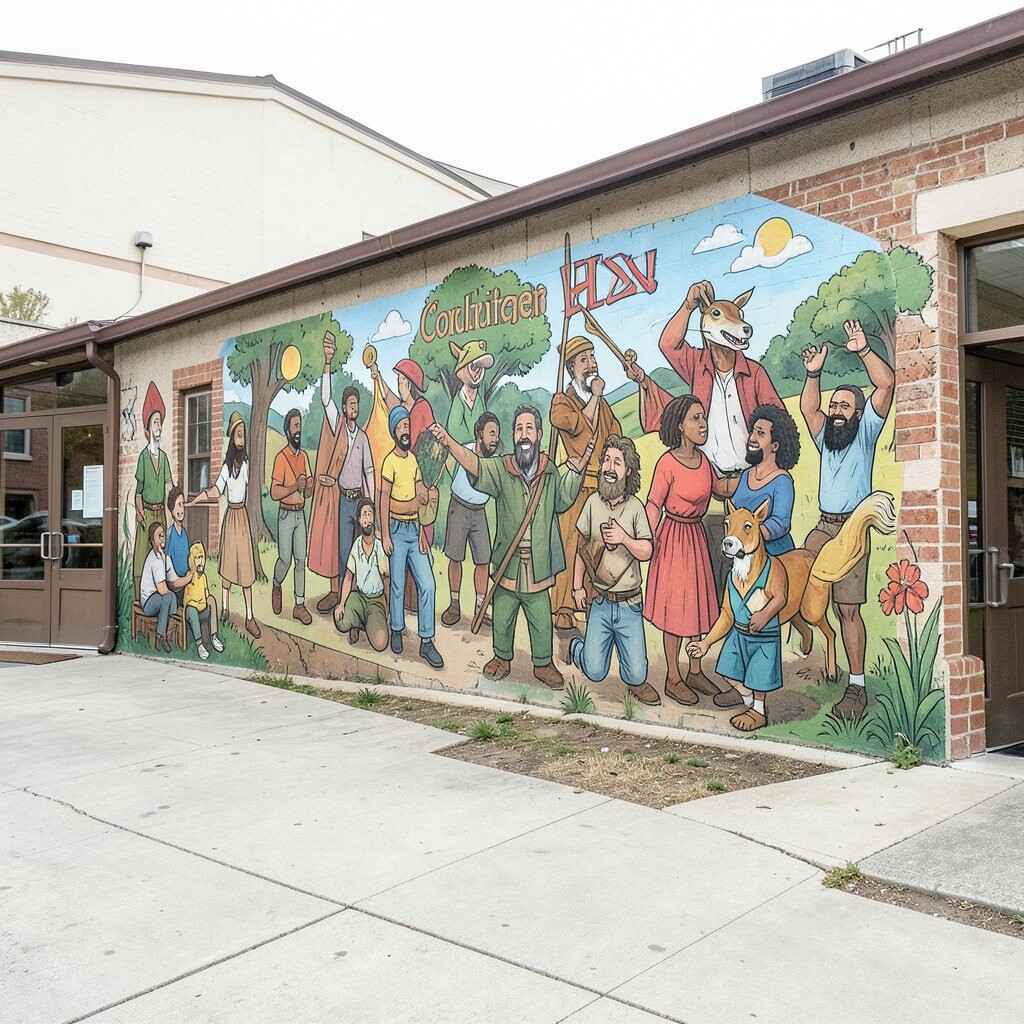
Paint respectful portraits of community mentors, artists, volunteers, and elders. Show them doing the thing they love, like coaching, teaching, gardening, or organizing neighborhood events.
Give each portrait a small background scene that reflects their impact, such as a classroom chalkboard or a community garden gate. This creates benefits beyond beauty by encouraging visitors to value mentorship and service.
Make it unique by blending styles, like using a realistic face with stylized clothing patterns that echo local heritage. If you’re worried about likeness accuracy, use participant photos as guides and keep facial details softer and more painterly.
7. The River, Sky, and Weather Stories Wall
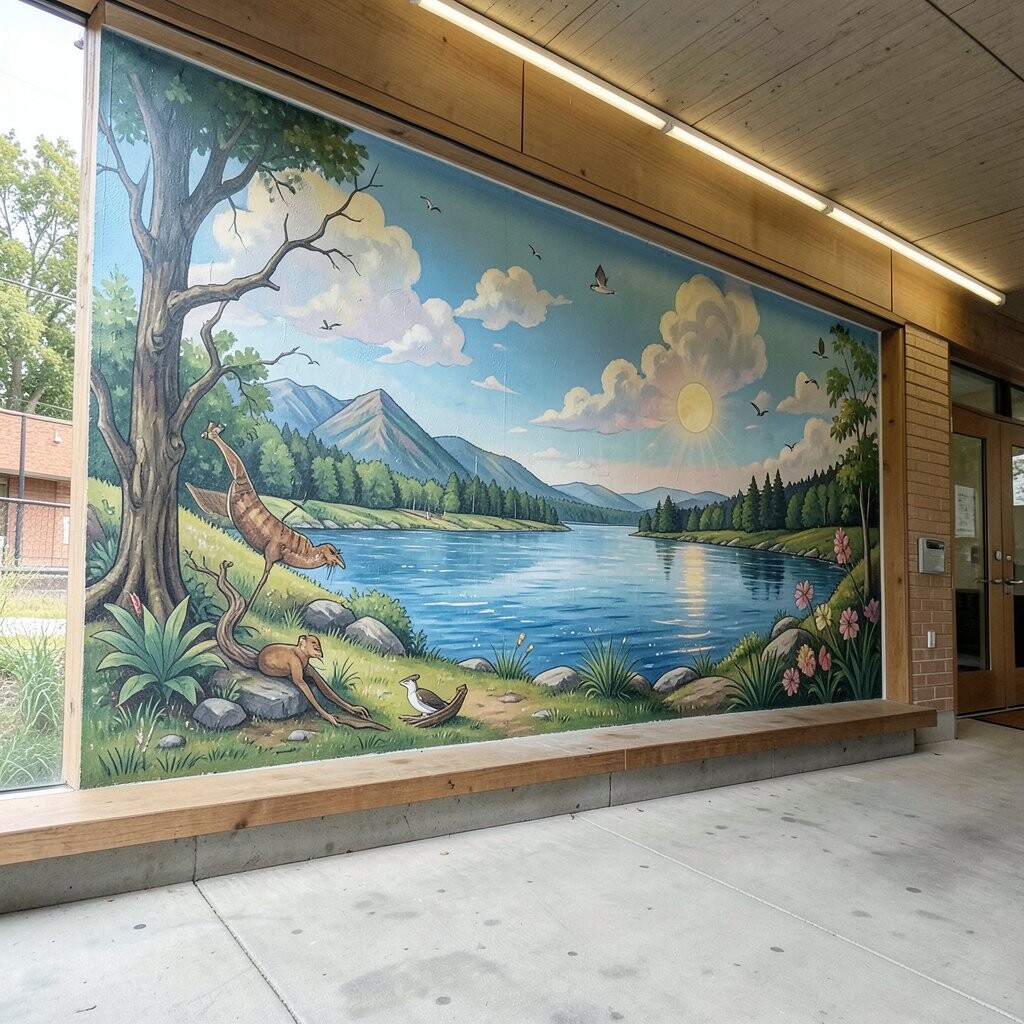
Turn the wall into a sky-and-river scene that shows how weather shapes daily life. Use layered blues and greens, then add small characters such as fishers, farmers, and kids flying kites.
Weather themes feel current because people are talking more about climate and community resilience. A mural like this can raise awareness without being heavy, especially when you include hopeful symbols such as new growth.
Personalize it by asking residents what sounds they associate with the area, like rain on leaves or morning birds. You can sketch those moments in tiny corner vignettes to add charm and local flavor.
For cost considerations, large color fields can be painted quickly with rollers, while fine details can be added with brushes during volunteer days. Choose weather-resistant paint if the mural faces direct sun or humidity.
8. Cultural Dance and Music Notation in Motion
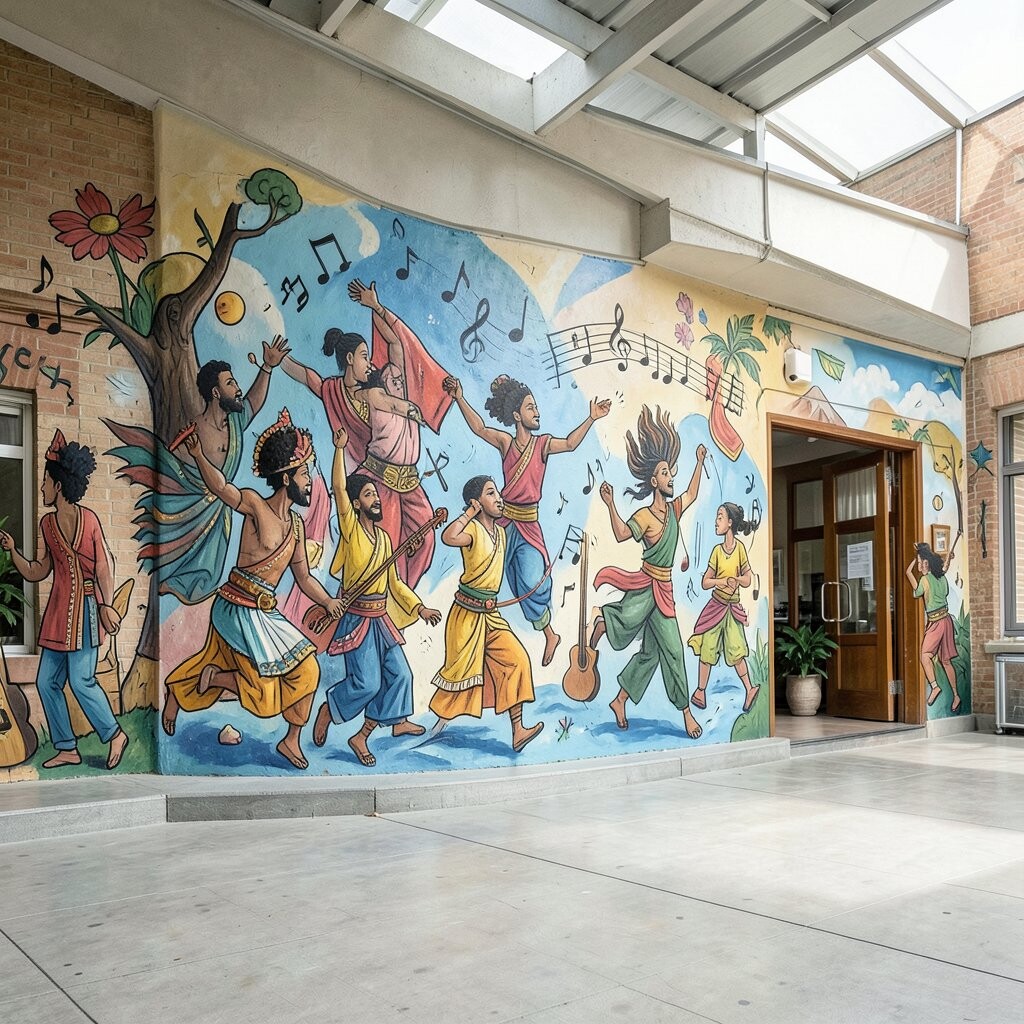
Depict dances and music as movement trails that wrap across the wall. Use flowing lines, hand shapes, and rhythmic swirls to show how people move during celebrations.
Include musical notes, drum shapes, and simple instruments around the edges like a frame. This brings visual energy to the center, helping it feel lively on days when events are happening.
To keep it practical, create a few repeatable “motion motifs” that you can scale across the wall. That way, volunteer artists can help paint sections without needing to draw everything from scratch.
For personalization, add silhouettes of community members practicing in a studio corner. If you want a modern trend, try adding faint linework that looks like sketch marks beneath the final color.
9. Storybook Characters From Local Legends
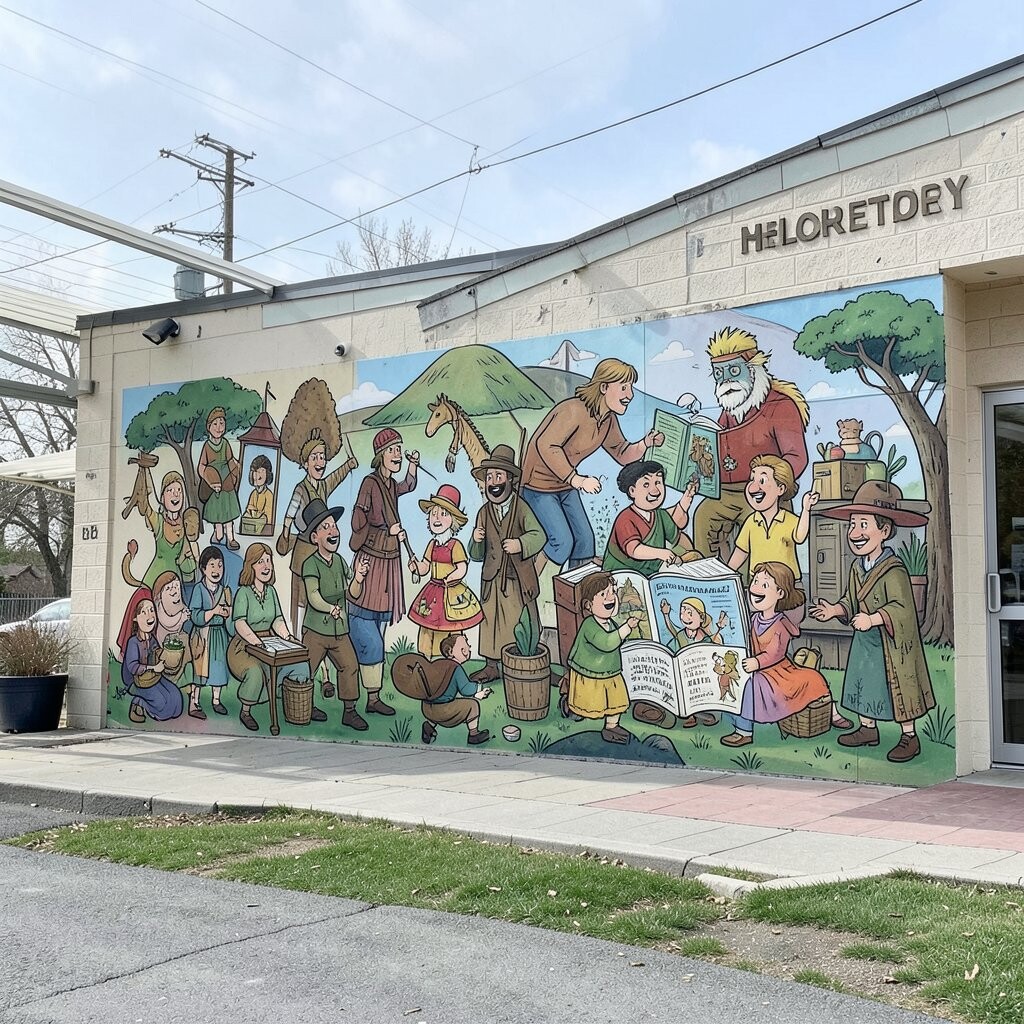
Borrow characters from local myths and legends, but present them gently for all ages. Choose a few favorites, then paint them in friendly poses rather than scary ways.
Add surrounding details like forests, village paths, and symbols that help explain the story visually. This uniqueness helps the center feel like it has its own cultural library right on the wall.
Make the mural actionable by turning it into a reading companion for the lobby. You can pair the images with small printed story cards at the entrance that visitors can take home.
When thinking about cost, keep characters to a manageable number and fill the rest with background texture. This reduces labor time while still giving a rich, story-filled look.
10. Festival Parade Scene With Community Faces
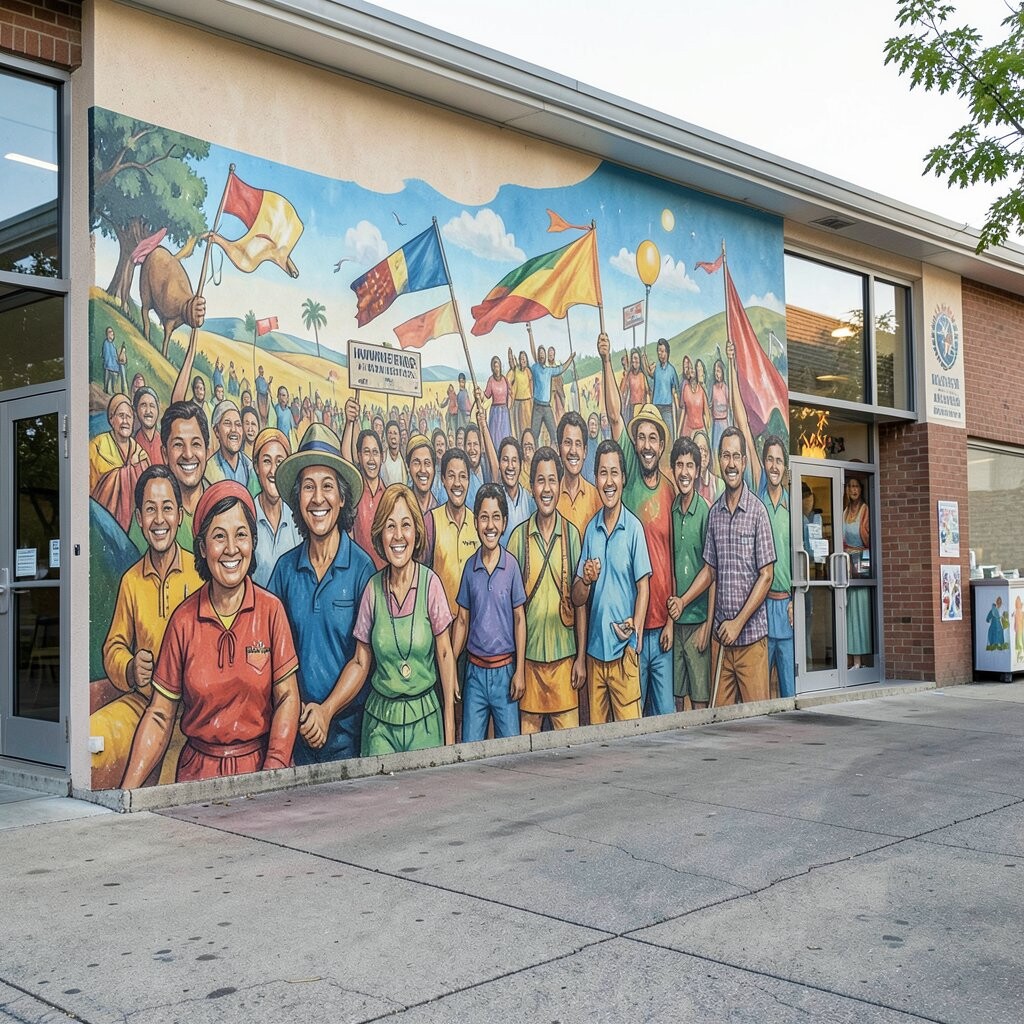
Create a parade scene filled with floats, banners, and crowd energy. Use bright colors and show people in everyday clothing celebrating, not only in formal attire.
Include details like festival hats, handmade signs, and balloons to make it feel real. The mural becomes a memory anchor, and that emotional connection is a big benefit for repeat visitors.
Personalize the crowd by gathering short photo submissions from residents, then blend them into a collage style. A pro-friendly approach is to set up one painting day for the base coat, then schedule a second day for face and accessory details.
If the wall gets direct light, use UV-resistant paint to protect the vivid colors. This also matches current mural best practices for longevity.
11. Native Plant Garden With Wildlife Neighbors
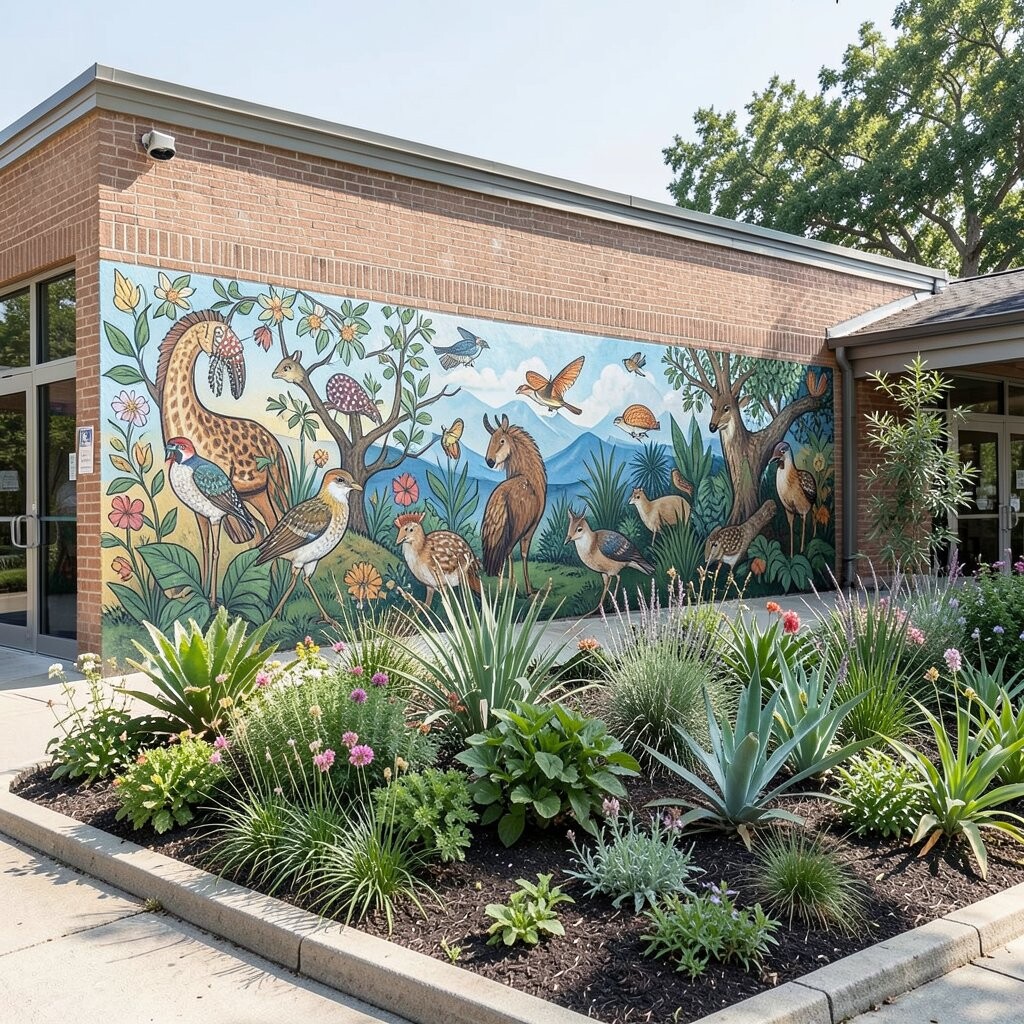
Paint a garden mural showing native plants and the wildlife that depends on them. Include flowers, grasses, and pollinators like butterflies and small birds.
Place the plants in layers, from tall background stems to smaller foreground blossoms, so the mural looks dimensional. This supports practical learning because it visually teaches people what grows locally and why it matters.
To keep costs down, use a simple repeating leaf pattern and focus your detail time on the flowers and a few wildlife features. You can also ask a local garden club for plant photos and help with color matching.
For personalization, add a small “seed packet” ribbon that includes names of plants people have grown at home. This makes the mural feel like an active community project, not a finished-only artwork.
12. Cultural Crafts Wall With Tools and Materials
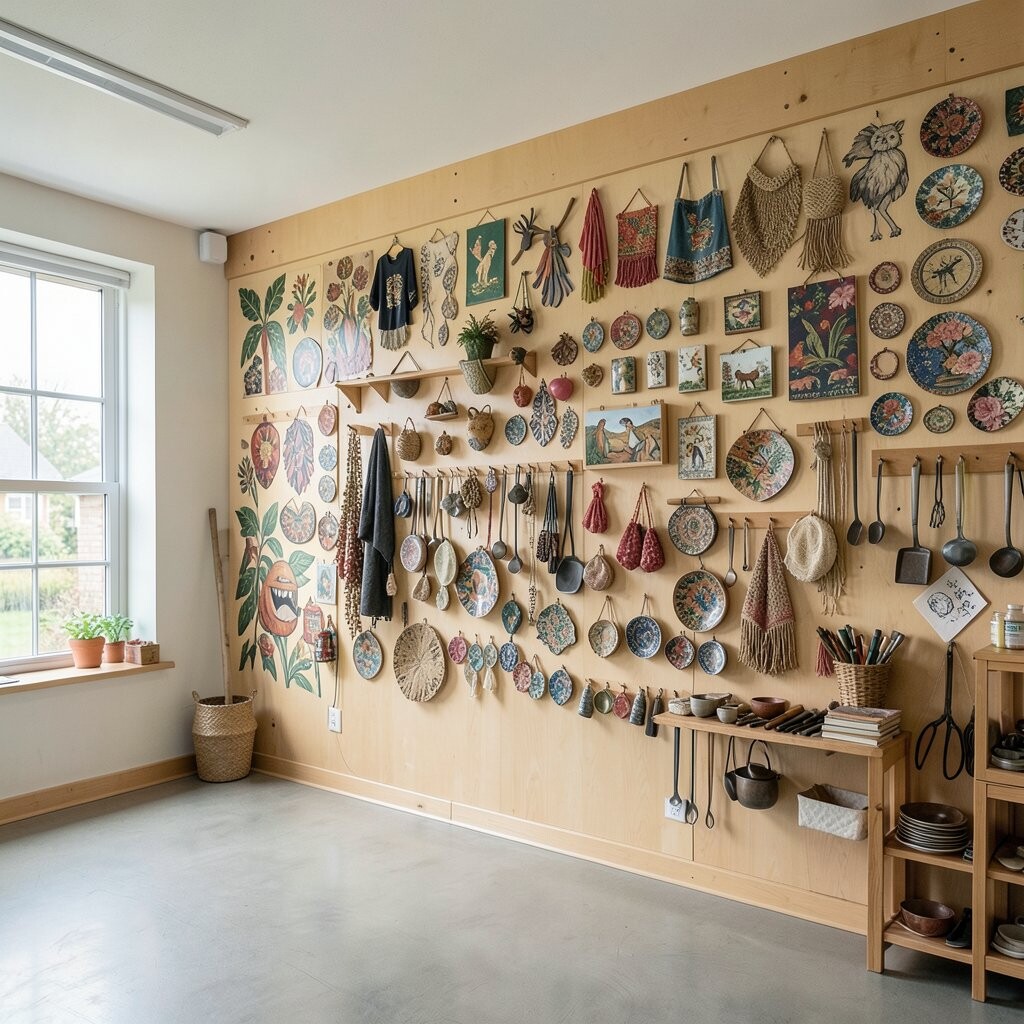
Design a mural that celebrates crafts by showing tools, materials, and hands at work. Depict scenes like weaving, carving, pottery shaping, or sewing patterns with simple charm.
Use bold outlines and clear shapes so the craft details are easy to spot from across a room. This can motivate visitors to join classes, because they can see themselves doing something meaningful.
Make it unique by blending crafts from different traditions into one connected design layout. For example, connect a pottery bowl motif to a textile pattern border so the whole wall feels unified.
Consider cost by focusing on fewer craft scenes and adding texture with paint techniques like dry brushing. If supplies are limited, even a careful black outline plus color fills can look strong and modern.
13. Architecture and Skyline of the Neighborhood Past and Present
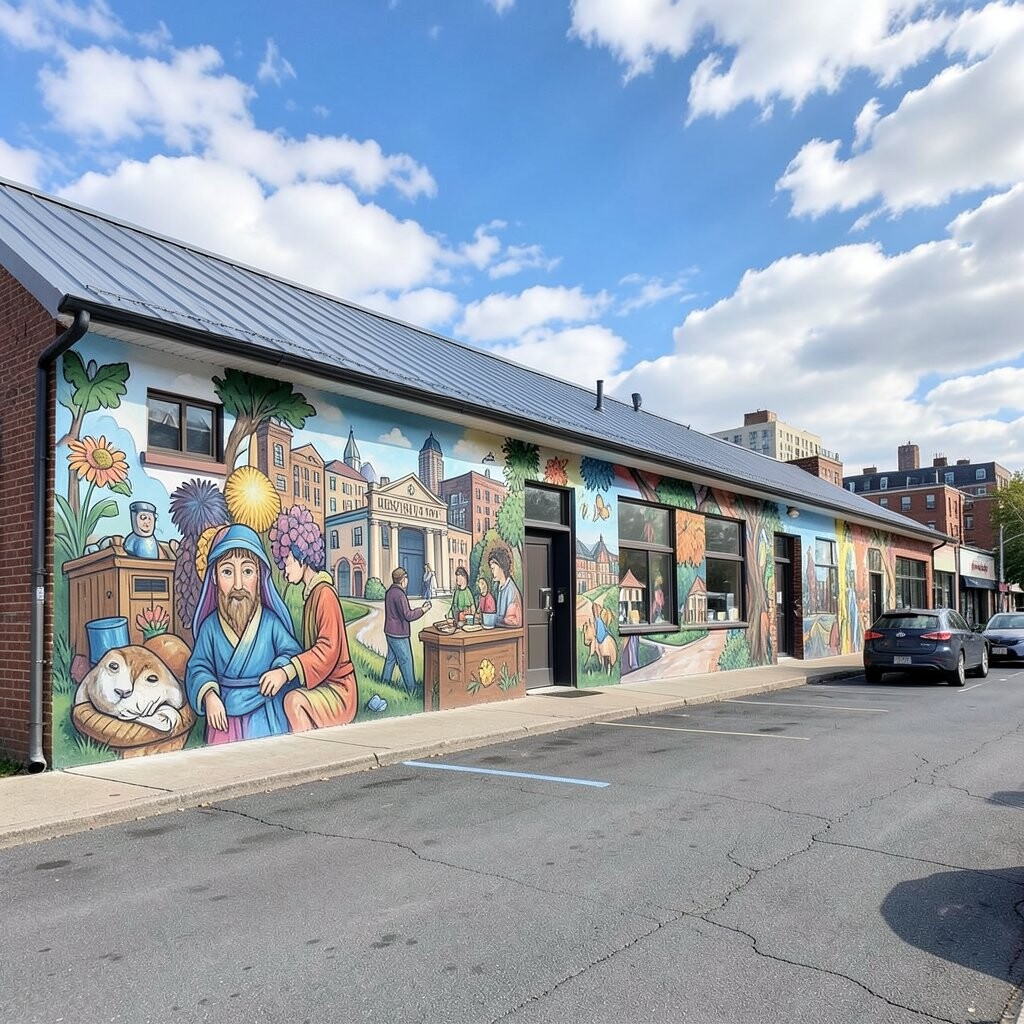
Paint two layers of the neighborhood skyline, with older buildings on one side and newer growth on the other. Use color fading to show change over time while keeping the overall vibe balanced.
Add windows, street trees, and small people moving through the streets so the mural feels like a lived-in place. This helps visitors feel continuity, and it gives the center a sense of place that’s hard to achieve with plain paint.
Personalize by including a few recognizable buildings residents mention most often. If you want a modern touch, incorporate subtle perspective lines, like faint guide rays, to make the buildings feel taller.
For practical tips, measure the wall and sketch a light grid so tall buildings fit neatly. You can also paint the skyline in layers so each section dries while others are worked on.
14. Cultural Symbols Garden With Meaningful Icons
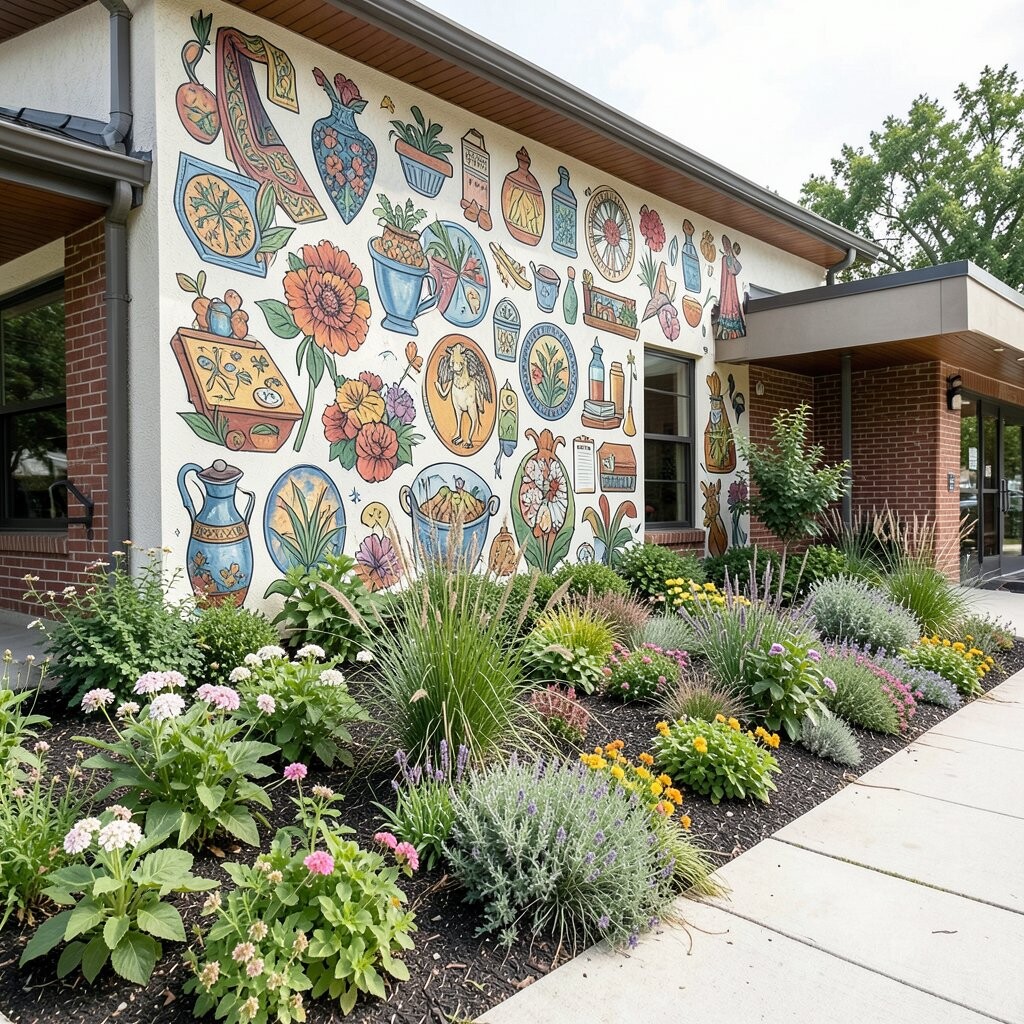
Create a mural that places meaningful symbols in a garden-like arrangement. Choose icons that represent values such as community, courage, friendship, or gratitude, using cultural accuracy as your guide.
Surround icons with leaves and curling vines to make the layout feel soft rather than strict. This benefits the space by offering a calming visual theme that works for many events and ages.
To ensure uniqueness, use a color scheme tied to the center’s brand colors, then add a few accent shades that represent cultural stories. Ask residents to vote on which symbols feel most meaningful so the mural reflects shared ownership.
Cost considerations can stay low by using limited icon types and repeating them in different sizes. If you need durability, choose exterior-grade paint when the mural is exposed to sun or moisture.
15. Mural of Local Rivers, Trails, and Walkable Routes
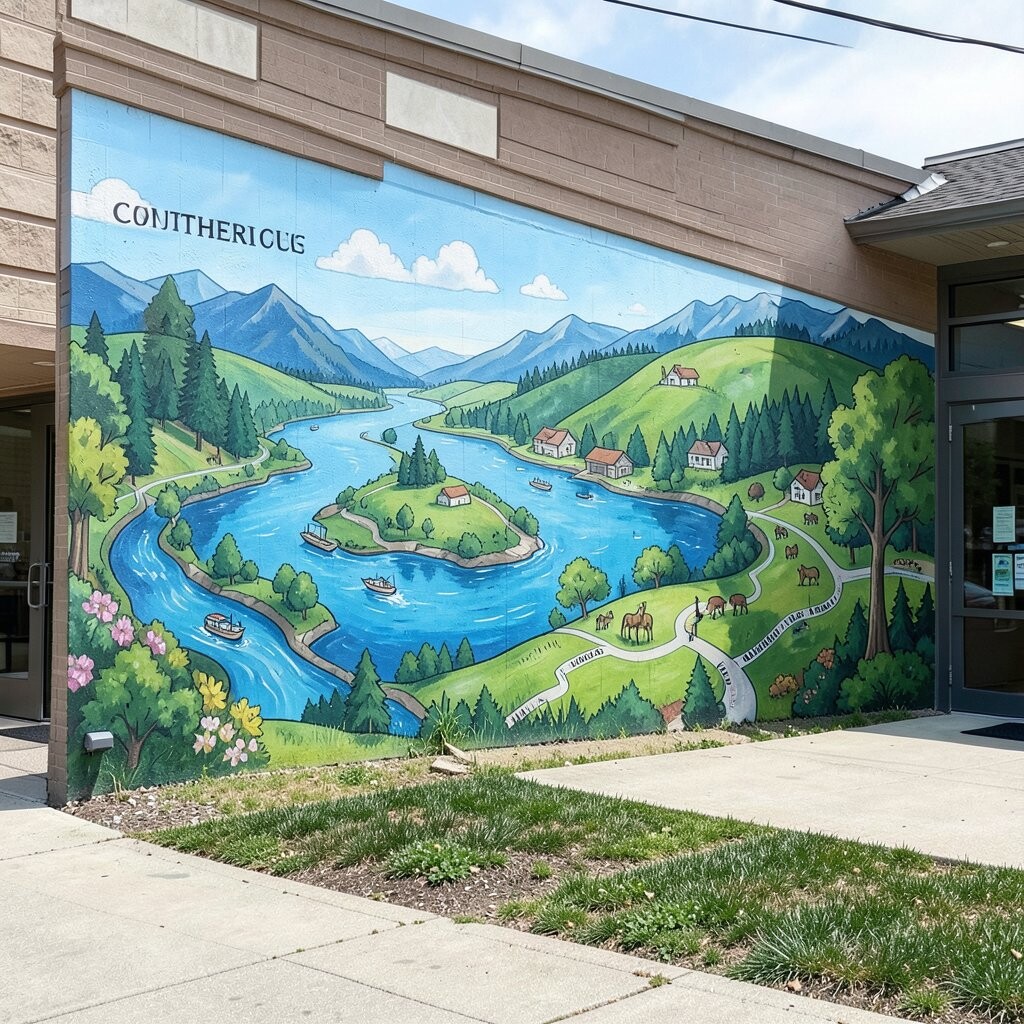
Paint a trail map that looks like a path turning into art, with winding lines leading to scenic scenes. Include bridges, trail markers, and small nature details like stones and reeds.
This encourages healthy routines and community connection by visually inviting people to get outside. It’s also a practical way to share how to move safely through the area, especially for newcomers.
Personalize the mural by featuring favorite route points residents name, like a view spot or a playground. If you want a current trend, add watercolor-like washes in the background so it feels light and airy.
For practical tips, keep the text minimal and focus on shapes and landmarks. That reduces the risk of spelling issues and keeps the artwork looking clean.
16. Hands and Shared Promise Wall for Community Values
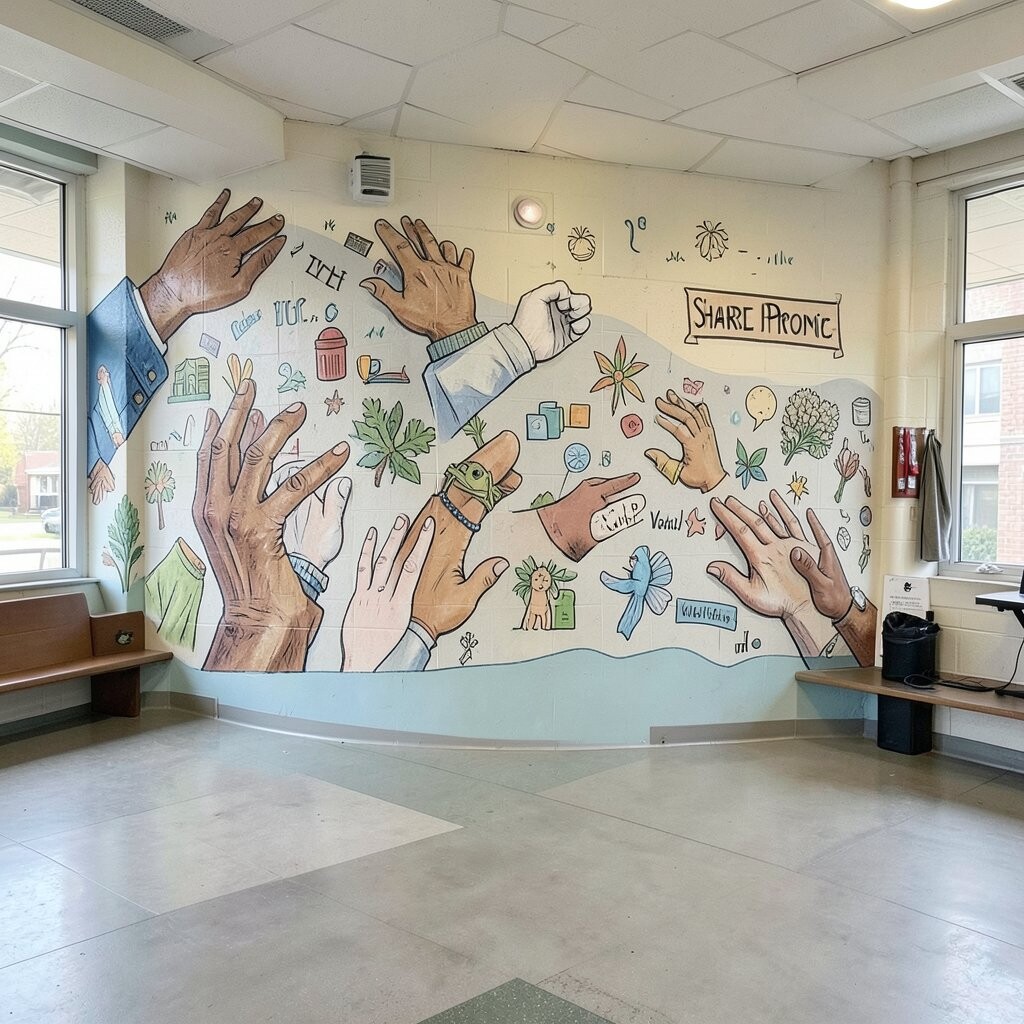
Design a mural with large handprints or painted hands reaching toward a shared symbol, like a circle or rising sun. Use colors that represent different backgrounds, with each hand showing unique pattern details.
Under the hands, add subtle artwork that hints at shared work, such as community gardening tools or school supplies. This mural builds belonging because it shows people contributing together, not just observing.
To make it unique, invite residents to paint a section of the hands using safe, washable paint on an approved plan. You can then seal the final mural with a protective coat for long-lasting color.
For cost considerations, the large shapes are quick to paint, while small pattern details can be scheduled for community workshops. That approach helps you manage time and budget while still producing a powerful, personal result.