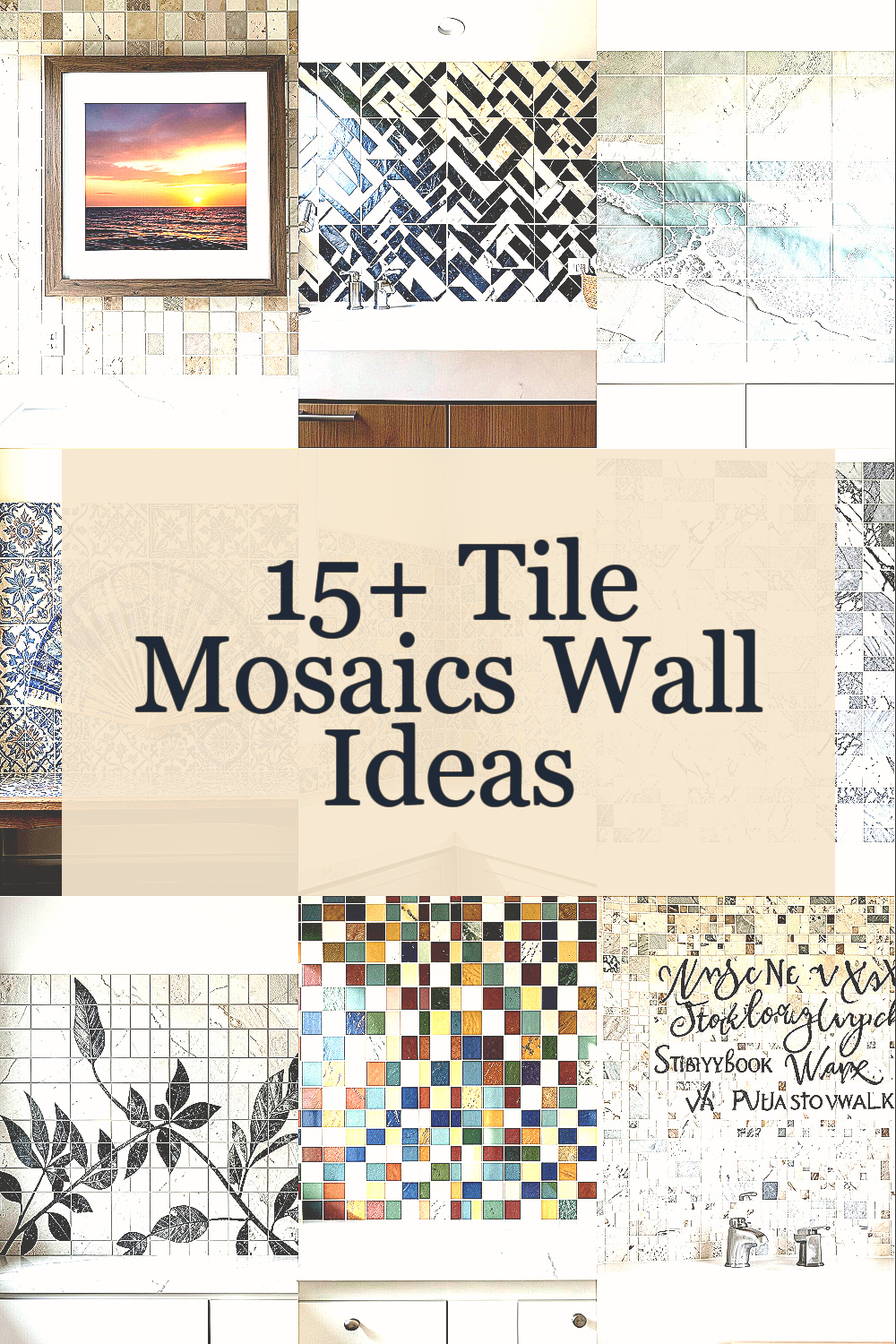
The right mosaic can make a plain wall feel like a gallery. Small pieces, big style, and surprisingly personal results are what make tile mosaics so loved.
Once you pick a direction, the rest gets fun fast. From kitchens to hallways, these wall ideas help you create texture, color, and charm that fits your life.
1. Sunset Gradient Photo-Frame Accent

Imagine a soft sunset glow built from tiny tiles, like a warm postcard pinned to your wall. A thin border of tiles around a center panel makes it feel framed, even when the wall is just flat.
This idea adds instant mood, especially in entryways where you want a welcoming first impression. Use a gradient from coral to gold to peach so your eye naturally moves across the wall.
2. Geometric Linework in Bold Contrast

Clean lines made from mosaic strips can look modern and sharp without feeling cold. Try a pattern of angled lines that meets at points, so the design feels energetic and intentional.
Choose two contrasting colors, like matte black with warm white, for a crisp look that reads well from across the room. For extra depth, mix tile finishes so some lines catch light while others stay calm.
Keep the spacing consistent by using spacers and planning your layout on the wall first. If you’re worried about cost, focus the bold pattern on one wall section and fill the rest with simpler tile or paint.
3. Coastal Wave Relief With Textured Tiles

Think of sea foam and rolling waves, but made out of tile that actually sticks out. Using slightly raised pieces creates movement you can feel, not just see.
That texture helps hide minor wall imperfections and makes the space feel lively. A palette of soft blues, sea greens, and sandy neutrals keeps it soothing and not overly themed.
Use a template or paper sketch to map wave curves so they look balanced across the wall. For practicality, seal the finished grout if the area gets moisture, especially near kitchens or baths.
To personalize it, add a few “sparkle” tiles in glass or metallic specks along the crests. This small detail makes the wall feel custom without requiring a huge budget.
4. Mediterranean Patterned Fan Over a Bench

A fan-shaped mosaic can bring Mediterranean warmth to a small wall area. Picture repeating tile arcs that widen and then gently taper, like an old-world window design.
It feels unique because the shape can be scaled to match your space, from a narrow hallway to a cozy nook. Pair it with warm terracotta tones and cream tiles for a look that feels inviting.
Before you buy anything, measure the bench or the wall space you want to cover so the fan lands right where people will notice it. If you want to keep costs down, use full tiles for the main base and reserve small cuts for the fan center.
5. Citrus Zest Tile Cluster in Kitchen Corners

Small clusters of mosaic tiles can mimic citrus slices and bright peels on a kitchen wall. Even a limited area can look playful when the colors include sunny yellows, soft oranges, and light greens.
This is a fun way to add personality without turning the whole room into a theme. If you want it to stay classy, use a simple repeating motif rather than covering every inch.
Plan the cluster near places you already look, like beside a coffee bar or above a backsplash border. Consider using pre-cut mosaic sheets to save time and reduce tile misalignment.
6. Monochrome Marble-Look Patchwork

If you love a calm look, build a mosaic wall that mimics stone veining in grayscale. Mix smaller pieces with varied tones so it feels like natural marble, even on a budget.
The benefit is that monochrome patterns stay timeless and easy to style with almost any decor. Add thin grout lines in a light gray to keep the movement subtle but visible.
For cost control, use the most detailed tile in the center focus area and use simpler neutral tiles on the outer sections. This gives the wall a high-end feel while using fewer specialty pieces.
7. Botanical Leaf Silhouette With Dark Accents

A leaf silhouette mosaic can look elegant and still feel whimsical. Try a large single leaf shape behind a doorway or above a console, then repeat smaller leaf fragments along the edges.
Deep green or even near-black leaves against a pale background make the design pop. It’s a great way to bring the outdoors in without needing real plants that may need constant care.
Personalize it by choosing leaf styles that match your taste, like monstera-inspired shapes, olive branches, or delicate ferns. Use smaller tiles for the leaf veins so the texture reads clearly from a normal standing distance.
8. Retro Checkerboard With Modern Color Spots

A classic checkerboard becomes fresh when you add a few modern color “hits.” Start with a mostly neutral grid, then swap a small set of squares for bright tiles like teal, mustard, or dusty rose.
This creates a retro vibe with a contemporary feel, which is very current in home styling. Keep the palette tight so the wall looks coordinated, not random.
Use painter’s tape to mark the grid before you apply thinset, because straight lines are the secret to making checker patterns look expensive. If you’re unsure, practice a test layout on the floor first.
9. Storybook Alphabet Name Wall

A name wall made from letter-shaped mosaic tiles feels warm and personal. You can create initials with small rounded tiles for a soft look or use sharp geometric tiles for a crisp style.
This idea is great for making a hallway feel meaningful, especially near a child’s room or a reading corner. It also helps guests remember whose home it is, in the best way.
Personalize by matching the colors to your room theme, like ocean blues for a coastal room or warm pastels for a calmer vibe. For practicality, keep the letters large enough to read easily and avoid tiny cuts that can increase labor.
To manage cost, consider using tile sheets for the background and letter pieces made from fewer specialty tiles. That way you spend more where it counts.
10. Art Deco Sunburst in Metallic Glaze Tiles

Art Deco sunbursts bring drama and glamour without needing loud furniture. Picture layered triangular tiles radiating from a center point, often with metallic or glossy finishes catching light.
The benefit of this design is how it frames wall space, making it feel like a focal point even when the room is simple. Use warm gold tones, champagne, or copper accents for that classic era glow.
For clean lines, plan your rays carefully and cut tiles with the right tools. If you want a more budget-friendly approach, use metallic tiles only in the center layers and keep the outer rays in matte neutrals.
11. Ombré Brick-Style Mosaic for Feature Walls

Brick-style mosaics look cozy when you add an ombré effect from light to dark. Imagine stacked rows that gradually shift, like color fading into shadow as your eye travels across.
This creates a smooth visual flow and helps a feature wall feel larger. Choose a palette that matches your room, such as warm grays, cream to caramel, or soft blues for a relaxed vibe.
Practical planning matters here, so mark the height changes on the wall before you start. Using pre-assembled mosaic sheets can help keep the row spacing consistent.
To personalize, include one thin stripe of contrasting color that runs the full length like a highlight. That small detail can make the design feel custom while staying easy to maintain.
12. Tile Map Coordinates for a Travel-Themed Corner

If you love travel, a mosaic “coordinates” design adds a thoughtful story to your home. Use tiny tiles to create a dotted pattern and include coordinate-style numbering or simplified map symbols.
This wall feels unique because it connects with real memories, like a favorite trip or a special place where you met. Keep the layout minimal so it reads clearly and doesn’t overwhelm the room.
Choose grout in a color that supports your dots, like light gray for dark tiles or off-white for darker tiles. For cost, you can make the main dots with a few colors and use one background tile type to keep materials simple.
13. Patchwork Countryside With Scrap-Tile Randomness

Not all mosaics need to be perfect; some look best when they feel like a collected patchwork. Use scrap tiles from past projects or small offcuts to build an organic pattern across a portion of a wall.
This gives your space a lived-in charm, and it can save money because you’re reusing what you already have. Mix sizes carefully so the wall still looks intentional, not chaotic.
Personalize the patchwork by favoring certain colors, like warm cream and sage with a few terracotta accents. Seal and finish well, because grout lines and uneven tiles can become noticeable if the surface isn’t prepped right.
14. Floating Shelf Backdrop With Tiny Tiles

A mosaic wall behind floating shelves makes even simple decor feel styled. Tiny tiles act like a backdrop, so candles, books, and small plants look more vibrant and layered.
This design helps shelves feel built-in, which many people crave when aiming for a finished, custom look. Use a subtle pattern, like small repeating squares or a gentle diagonal, so the shelves stay the star.
Practical tip for installation is to build the mosaic first if possible, then mount shelves carefully afterward. If you’re tiling around shelf brackets, plan the layout so your design doesn’t end up cut in awkward spots.
To keep costs steady, choose inexpensive ceramic mosaics for most of the area and reserve glass tiles for tiny border details only.
15. Serene Spa Spa-Like Tiles for a Small Bathroom Wall

In a bathroom, tile mosaics can make the space feel like a calm spa. Think soft gradients, small wave motifs, and neutral tones that pair nicely with white fixtures.
The benefit is that tile is practical and easy to clean, while the mosaic design adds visual warmth. Use water-resistant grout and seal the right areas so the wall stays looking fresh.
Personalize by adding a narrow accent band near the mirror, like a thin mosaic strip that catches light. Current trends lean toward natural textures, so consider using stone-look tiles or matte finishes instead of high gloss everywhere.
16. Sunset Skyline Silhouette With Night-Blue Base

A skyline silhouette made from mosaic tiles can look like a nighttime city poster on your wall. Start with a deep night-blue background, then build buildings in darker shades with a few tiny “window” highlights.
This feels unique because silhouettes can be customized to your favorite city or a fictional skyline that matches your aesthetic. The wall also adds mood, especially in living rooms where you want a relaxing vibe.
For practical results, sketch the silhouette first and keep the building shapes varied so it doesn’t look flat. Use smaller tiles for the skyline edges and slightly larger pieces for the larger background blocks to save time.
To manage cost, limit the highlight tiles to the window areas and keep the rest in one or two simple tile types. That way your wall still feels magical without overspending.