
Even a simple cork wall can make your dining room feel styled and warm. The texture catches light in a way that turns everyday art into something you want to linger on.
When you frame art with cork, you get a look that feels cozy, practical, and very you. Below are ideas that balance beauty, function, and easy upgrades for real life.
1. Warm Cork Picture Ledge Frames
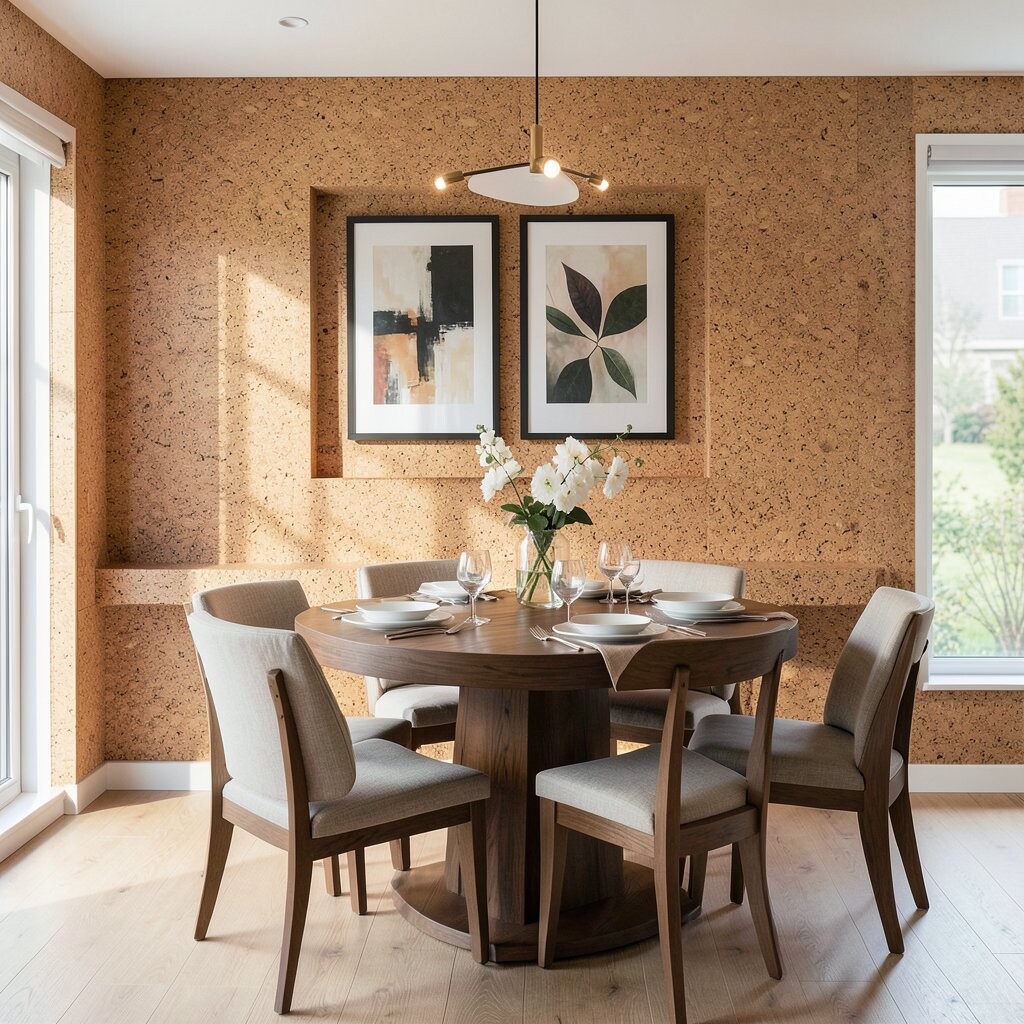
Cork can be used like a soft, padded backdrop behind art, then supported with a slim ledge shelf. When dinner plates are set nearby, the warm color of cork keeps the wall looking inviting instead of harsh.
Choose a natural cork tone or a slightly darker stain to match your dining table. Keep the art at eye level and use small spacers so pieces don’t sag over time. For a clean look, line the ledge edges with a thin wooden trim that matches your chair legs.
2. Grid Layout Cork Panels With Custom Sizes
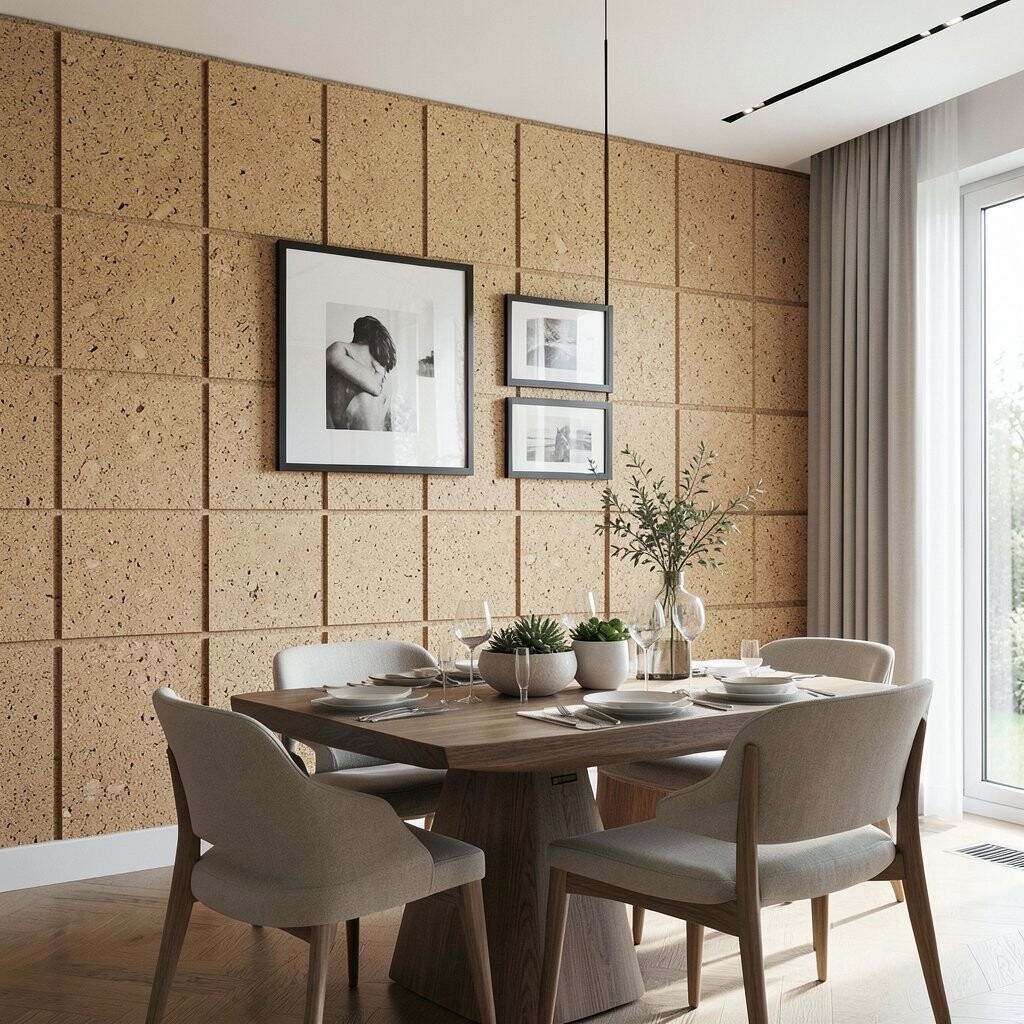
Install cork panels in a grid so you can swap artwork without redecorating the whole wall. The repeating pattern makes your dining area feel organized, while the cork texture keeps it casual and friendly.
Use a flexible system by spacing the grid wide enough for different frame sizes. If you like gallery styles, keep each row for a theme, like travel prints or family photos. To avoid clutter, pick one dominant frame color and repeat it across the panels.
For costs, measure the wall and buy panels that match your geometry so you waste less material. If you’re renting or want easy changes, use removable hanging hardware instead of permanent mounting. Add personalization by using cork in only one section and leaving the rest for a simpler finish.
3. Faux “Floating” Cork Frame Borders
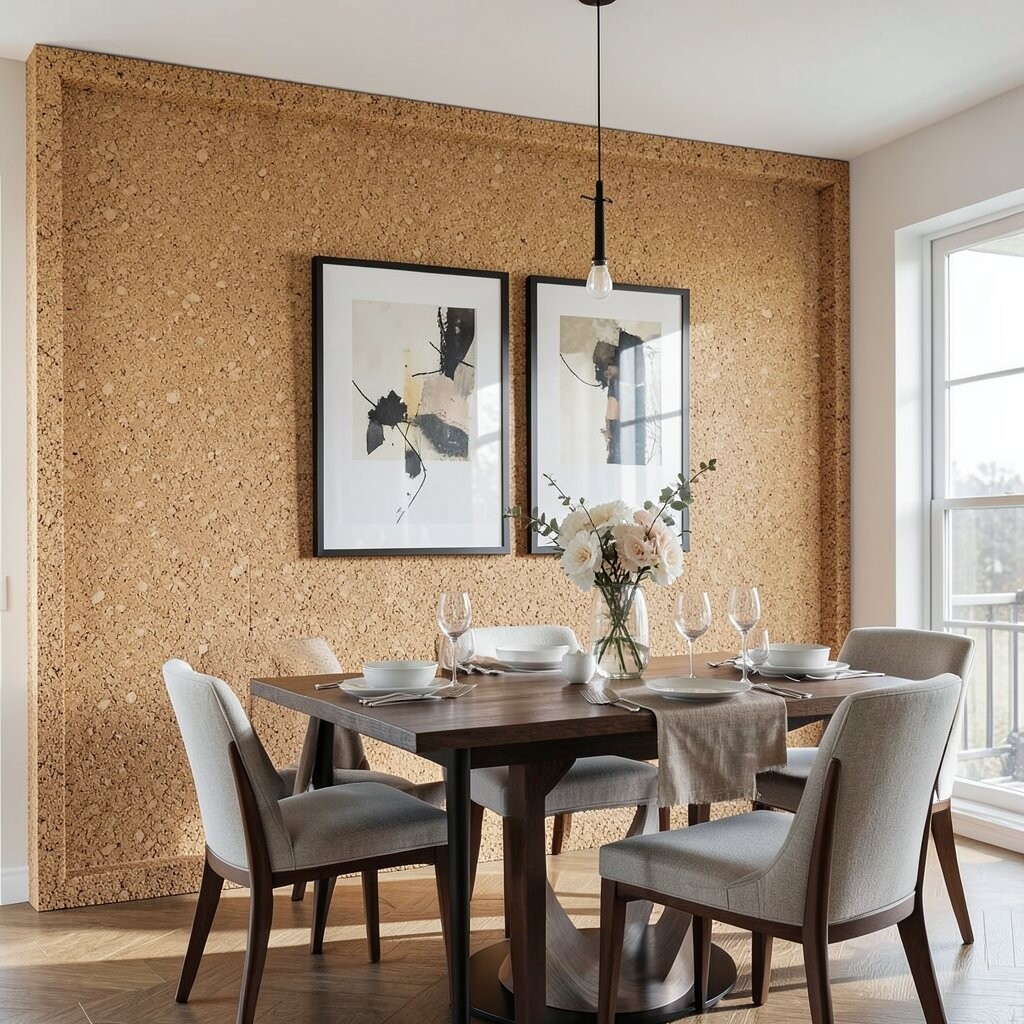
Create the look of floating frames by cutting cork into thin border strips. Press the strips around the art so it looks like the picture is gently held in place by a cushioned frame.
Pick frames with simple lines so the cork does the visual work. The benefit is that cork adds a soft buffer, which can help protect paper from small bumps. This also makes the wall feel modern without needing bold paint or complicated carpentry.
Try a monochrome palette with black frames and natural cork borders for a trendy, clean vibe. If you want something warmer, stain the cork a honey brown and pair it with brass nails. For personalization, include a small quote print and surround it with the cork border to make it feel special.
Keep it practical by sealing cork edges lightly so they don’t shed over time. Plan your layout on the floor first, then transfer marks to the wall with painter’s tape. This helps you space everything evenly before you commit.
4. Cork + Fabric Backing for Cozy Dining Art

Layer cork behind fabric so the wall feels soft and cushioned, like a mood board you can hang. The mix of texture makes your dining area look styled, especially under warm lighting.
Choose linen, cotton, or a subtle woven fabric that matches your curtains or table runner. This idea lets the cork provide a sturdy surface while the fabric adds comfort and color. Use simple frames so the cork and fabric show around the artwork without feeling busy.
5. Bulletin-Style Cork for Rotating Seasonal Art
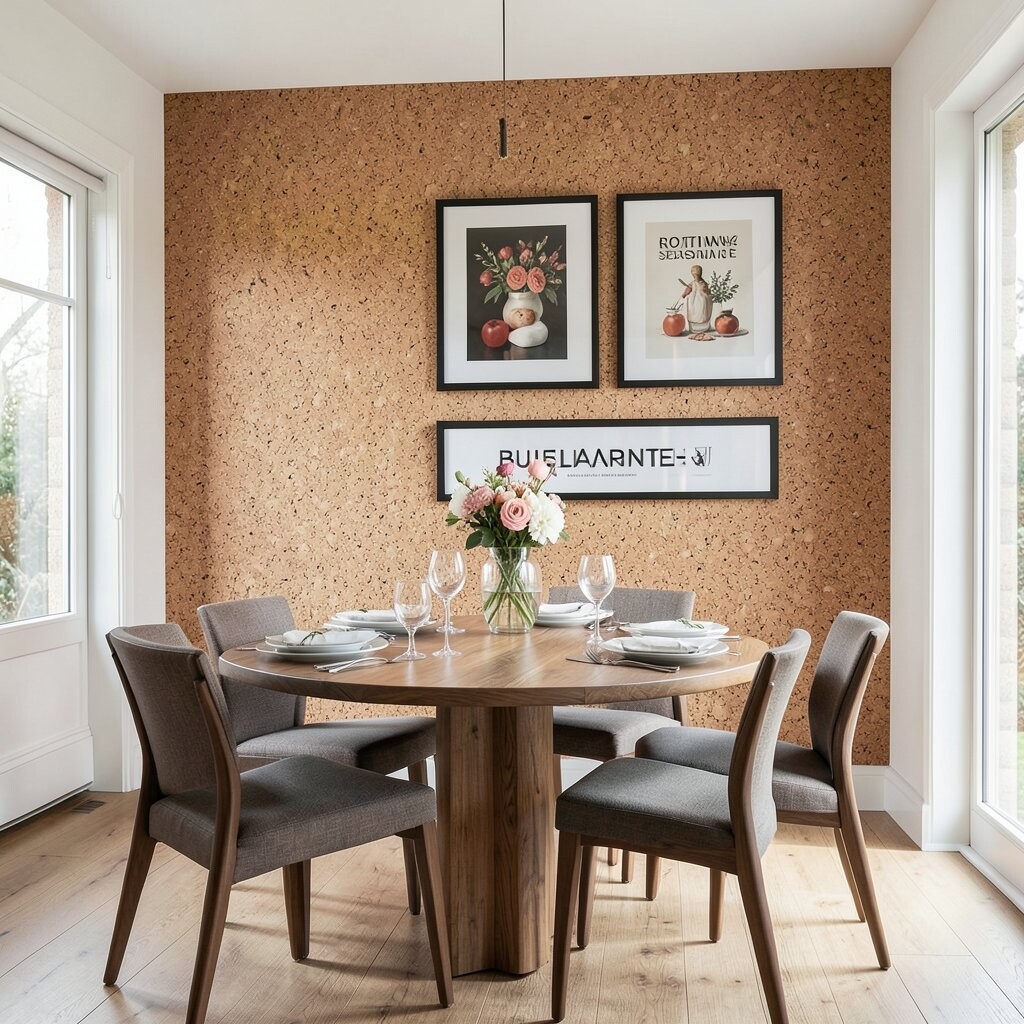
Use cork like a stylish bulletin board, but keep it neat with matching frames and consistent clip styles. In a dining area, that means your wall can change with seasons without feeling chaotic.
Try pinning prints with brass pushpins or decorative clips that coordinate with your light fixtures. Cork is naturally easy to work with, so swapping art becomes a relaxing weekend habit. Keep a small tray on a nearby console to store extra pins and rulers.
For personalization, group seasonal items by color, like cool blues in winter and warm oranges in fall. Budget smart by printing your own art or resizing old photos into new frames. If you follow current trends, consider using bold, simple line art for the modern look.
6. Layered Cork “Gallery Wall” With Depth

Build depth by using different cork thicknesses behind various frames. Some artworks sit closer to the wall, while others float slightly forward, creating a gallery feel that still looks cozy.
Combine cork with picture frames in wood and metal so the texture stays the star. This also helps you correct small spacing issues because you can “tune” the depth with backing layers. A practical approach is to keep heavier frames more anchored and lighter pieces closer to the wall.
For a trendy look, mix black frames with natural cork and add one oversized piece for focus. Personalize by featuring a single family photo series and surround it with smaller art. If you’re watching cost, reuse frames you already own and spend money only on the cork and hanging supplies.
7. Oversized Cork “Frame” for One Statement Piece
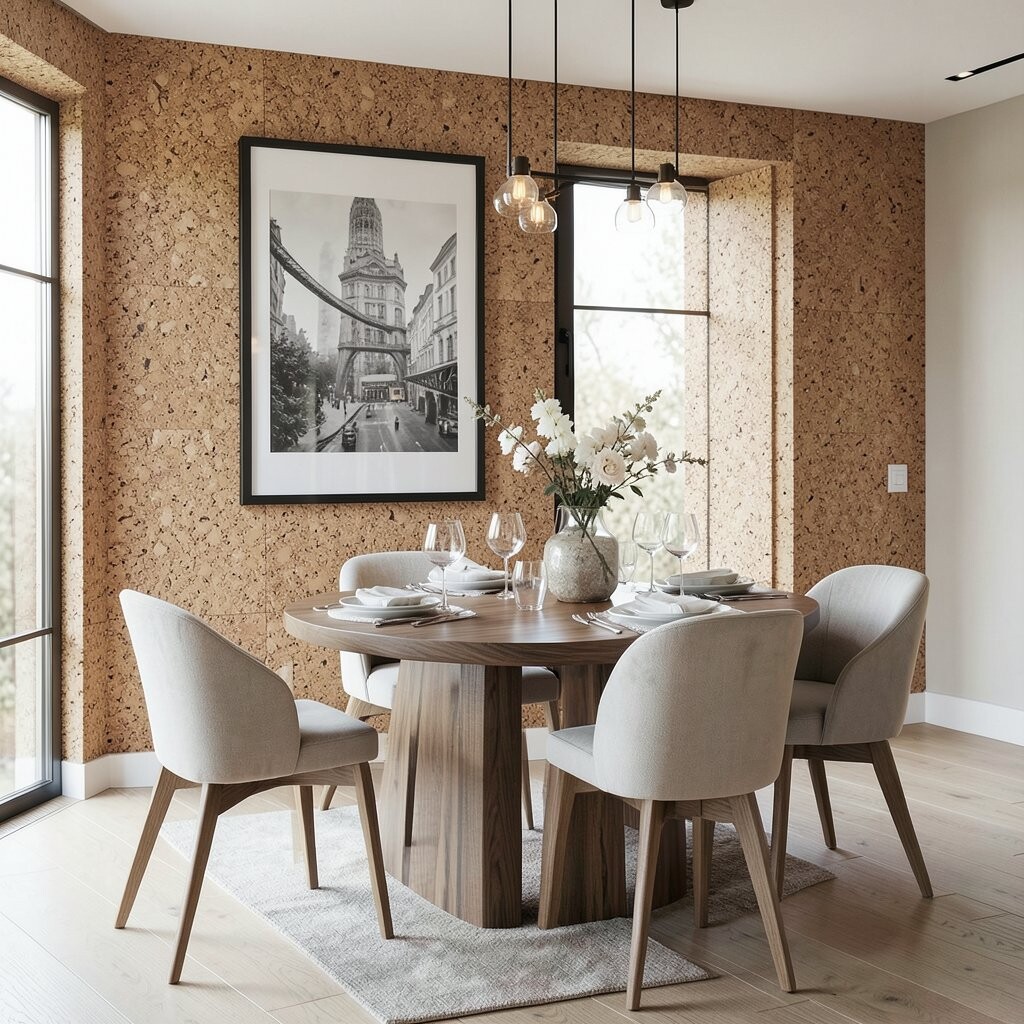
Turn cork into a large border around one artwork so it feels like a focal point. In a dining area, that kind of statement makes conversations start even before anyone sits down.
Choose one piece that matches your room mood, like a botanical print for a calm vibe or a bold abstract for energy. The cork border acts like a soft mat, which benefits delicate prints by keeping them from looking flat. Paint the surrounding wall in a warm neutral so the cork stands out without shouting.
For personalization, add small pinned accents around the main art, such as pressed leaves or a tiny menu board. Keep it current by selecting artwork with clean shapes and limited colors. To manage cost, buy cork sheets in bulk and cut just enough for the border.
When installing, use a level and double-check placement, since oversized pieces are less forgiving. Allow time for adhesive or mounting components to set before you hang anything heavy.
8. Textured Cork Matting Behind Multiple Small Frames
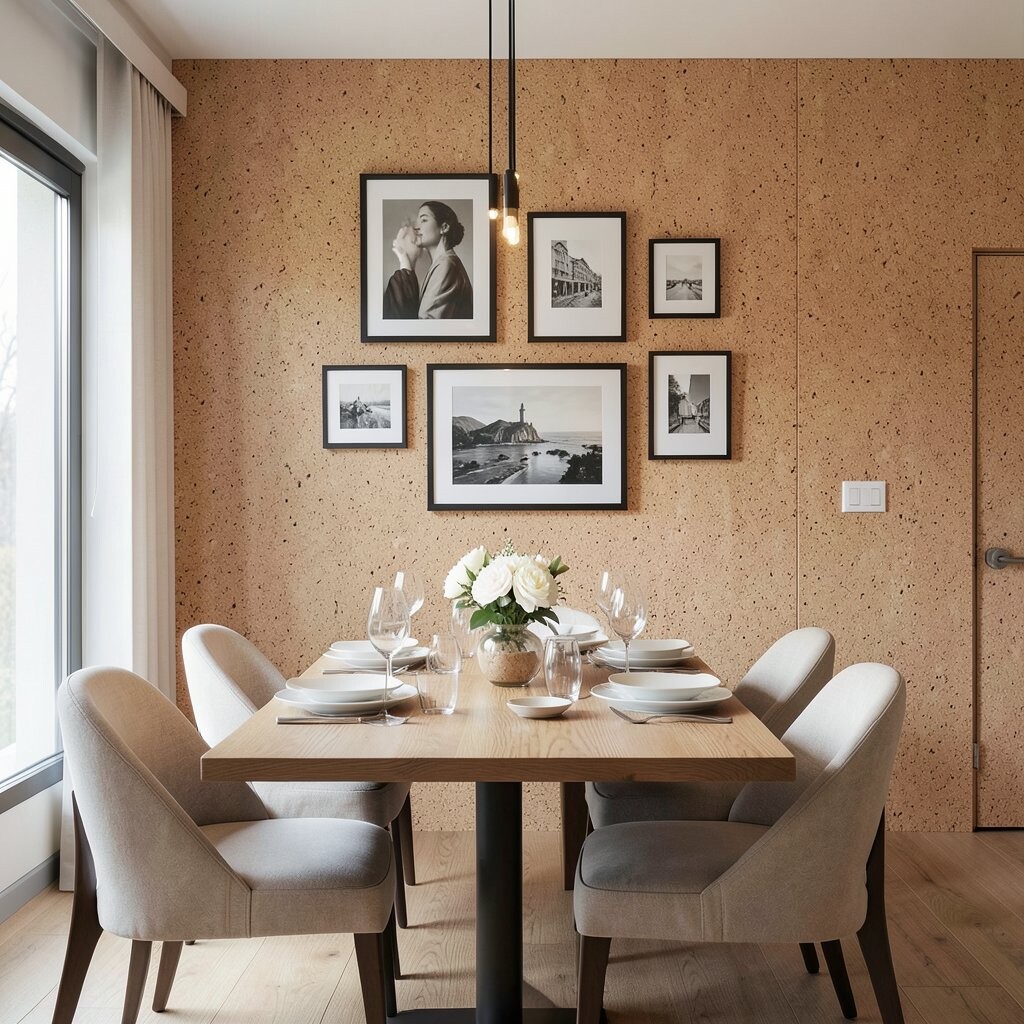
Instead of one big display, use cork mats behind several smaller frames to unify them. Cork brings a consistent texture so the whole wall looks like a curated set, not random pieces.
Pick frames with similar inner dimensions so the cork matting aligns nicely. This benefit is visual harmony, which helps your dining room feel calm while still showing personality. Add practicality by using cork as a gentle cushion for paper and lightweight prints.
If you enjoy trends, try a “mini gallery” with mixed orientations, but keep the color palette tight. Personalize with a mix of framed postcards, student art, or restaurant menu inserts you saved. For cost, hunt for bargain frames at thrift stores and refresh them with a quick paint update.
9. Cork Backer for Monogram and Menu Boards

Make your wall useful by framing a monogram, family initials, or a rotating menu board with cork. The cork texture makes the letters feel warm and handmade, which fits dining spaces perfectly.
Use cork to pin printable menu designs or chalk-style inserts while still keeping the overall look polished. This is a practical win because you can update the board for holidays, parties, or even weekly dinners. Choose a monogram style that matches your home, like classic serif letters or a bold modern script.
For personalization, add small magnets or decorative thumbtacks that coordinate with your cutlery colors. Keep cost reasonable by printing menu designs at home and replacing them as needed. If you want a trend-forward look, use simple typography and lots of negative space so the cork texture frames everything cleanly.
10. Color-Blocked Cork Panels in Dining-Ready Tones

Paint cork panels in dining-friendly tones, then use them as background frames for artwork. Color-blocking adds a fun design moment without making your wall feel too loud or busy.
Try earthy shades like terracotta, sage green, or warm greige to match many dining styles. The benefit is flexibility, since you can change art while keeping the color structure the same. Seal painted cork lightly so it stays tidy and easy to wipe.
To make the look cohesive, keep artwork colors aligned with the block colors. Personalize by adding one cork block for a “family favorites” set and another for quotes or travel art. For cost, you can cover only portions of the wall and keep the rest simple, which saves on materials.
Hang frames after paint dries fully, and use spacers so the artwork stays centered. This approach makes your dining area feel current and intentional.
11. Cork + Sconce Lighting for Picture Glow
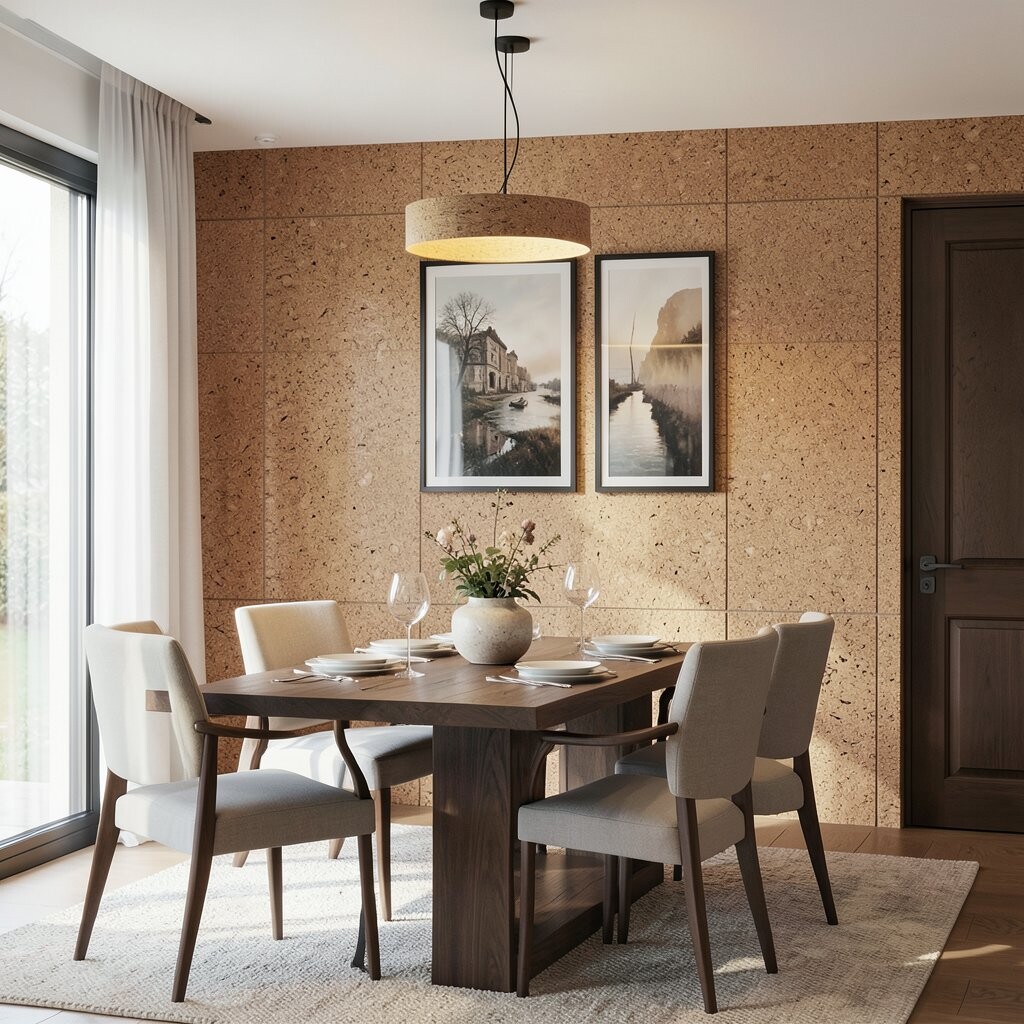
Pair cork framed art with wall sconces to create a soft glow right where guests look. Cork’s natural texture reflects light gently, so your pieces feel more alive during dinner.
Install sconces above or beside the art, then keep the light color warm for a welcoming mood. The benefit is comfort, since harsh overhead lighting can flatten artwork and make skin tones look off. Choose compact sconces if your wall space is limited, and keep wiring neat with a tidy cord cover if needed.
For personalization, highlight one piece you love most, like a framed print of a favorite dish or a scenic photo. This is also a great way to follow current lighting trends that focus on layered, warm illumination. Budget smart by using energy-saving bulbs and choosing sconce styles that match your existing fixtures.
If you’re concerned about uneven brightness, test the angle with paper taped in place before mounting everything. Then adjust until the glow lands where you want it.
12. Framed Cork With Embedded Letter Tiles
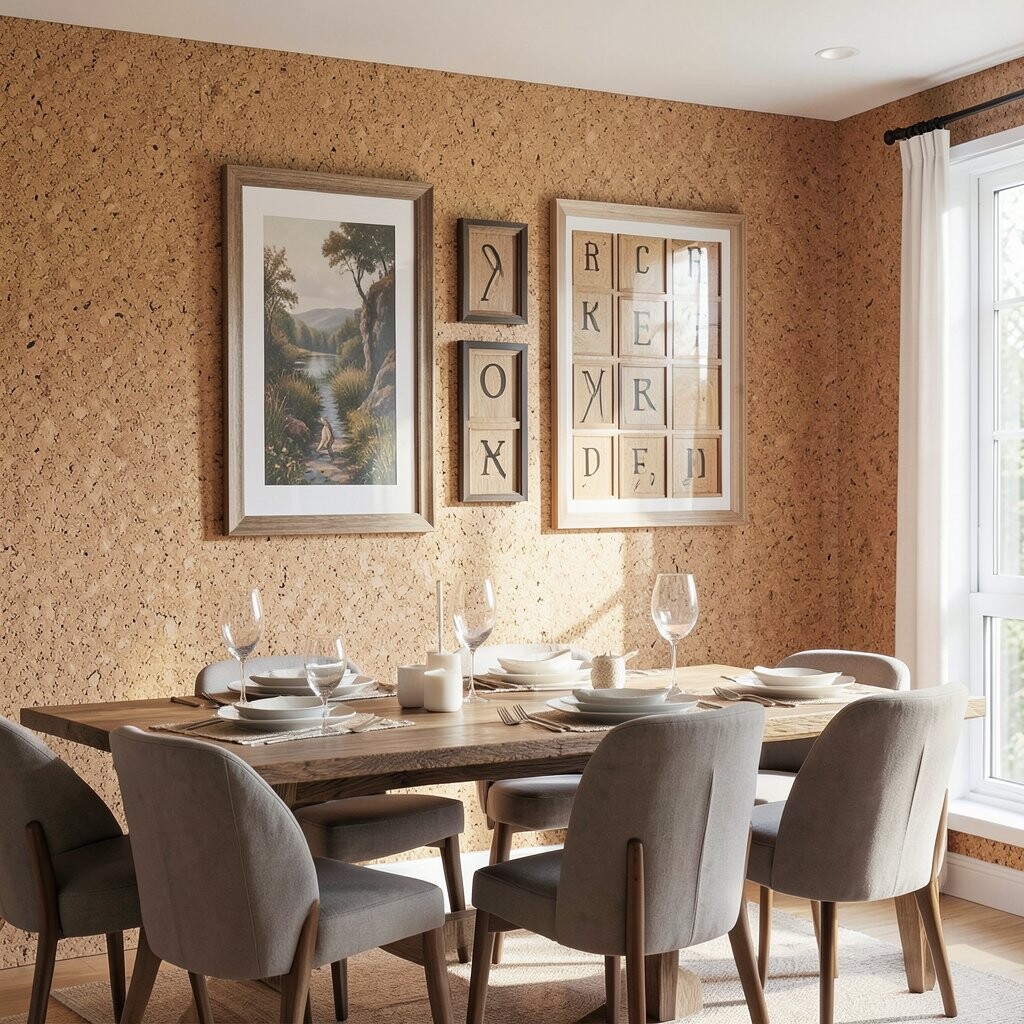
Embed small letter tiles into cork frames so your artwork includes names, dates, or meaningful words. In a dining area, this can feel like a personal place setting for your wall, full of little stories.
Use cork as the base, then set tiles in a grid around a central picture for a balanced look. This adds uniqueness because the display becomes interactive, and guests may notice details over multiple visits. Keep the theme consistent by using one font style across all letter tiles.
For personalization, include a “house rules” phrase, family names, or anniversary dates, and pair them with a photo that matches your story. Cost can be managed by printing letter tile templates and using inexpensive craft tiles you cut to size. If you want a modern trend feel, choose clean lettering and keep the central image simple.
When assembling, measure twice and press tiles firmly so they don’t lift over time. You’ll end up with a framed cork art piece that feels decorative and meaningful at once.