Bathrooms feel calmer when the light matches the mood you want. With LED strips, you can make that happen in ways that look custom and feel easy.
1. Backlit Vanity Mirror Glow
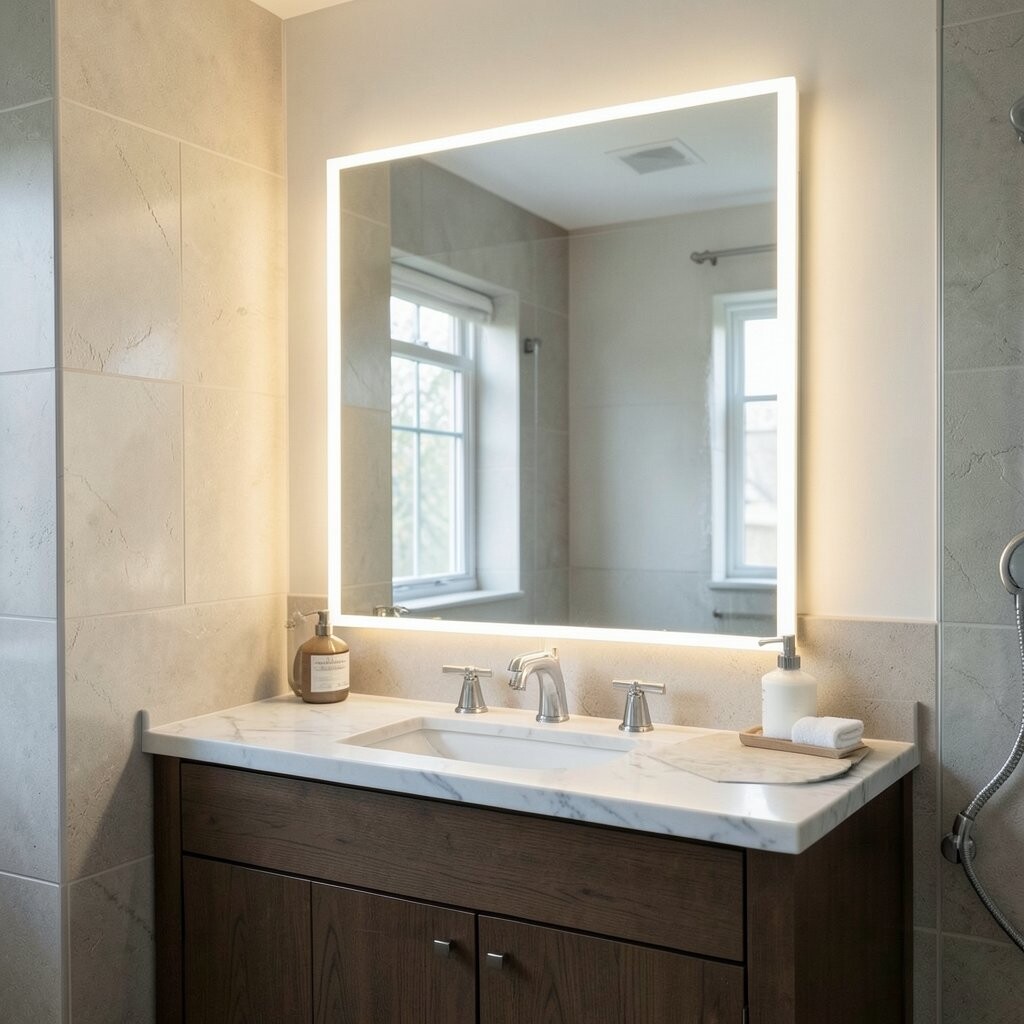
Imagine shaving in soft, even light that makes your skin tone look natural. A strip of LEDs around the mirror frame or behind a frosted edge creates a gentle halo that reduces harsh shadows.
Pick a warm-white or neutral-white strip so the bathroom doesn’t look yellow or too icy. Use a diffuser channel for a smooth glow, and keep the strip level so the light line stays tidy. For personalization, add a small dimmer so morning routines feel bright and evening routines feel relaxed.
2. Shower Niche Accent Lighting
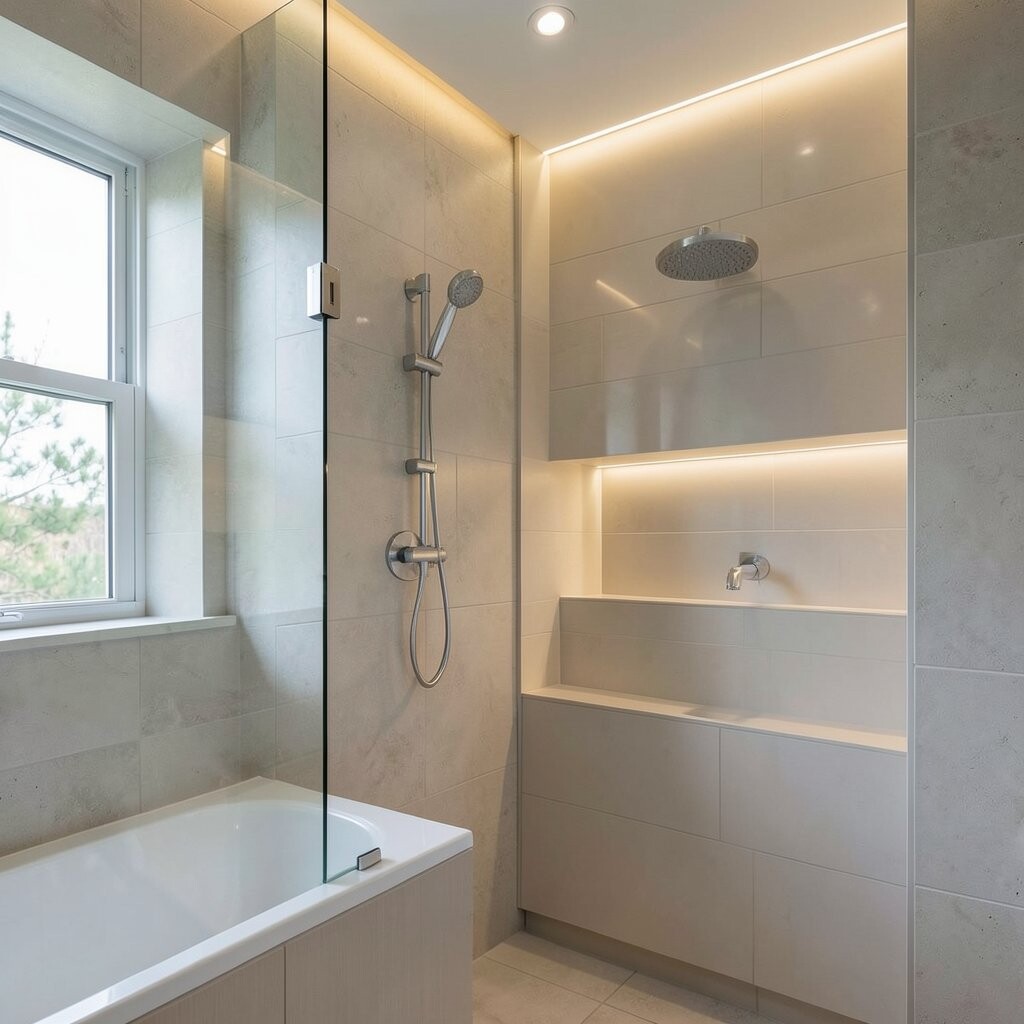
Inside a tiled shower niche, LED strips add a clean splash of brightness where you need it most. The light makes shampoo shelves and soap corners stand out without turning the whole shower area into a spotlight.
Choose a waterproof-rated strip and plan for safe routing with sealed connectors. Place the LEDs along the sides or the back edge of the niche so water doesn’t pool on exposed parts, and test before closing up. If you often reach for products with wet hands, slightly brighter output can help you spot everything faster.
For cost control, use shorter strips only where the niche needs light, and rely on dimming if you want flexibility. A modern trend is combining niche lighting with a subtle color temperature shift, like neutral on the main aisle and warmer light within the niche for a spa feel.
3. Under-Sink Floating Cabinet Light
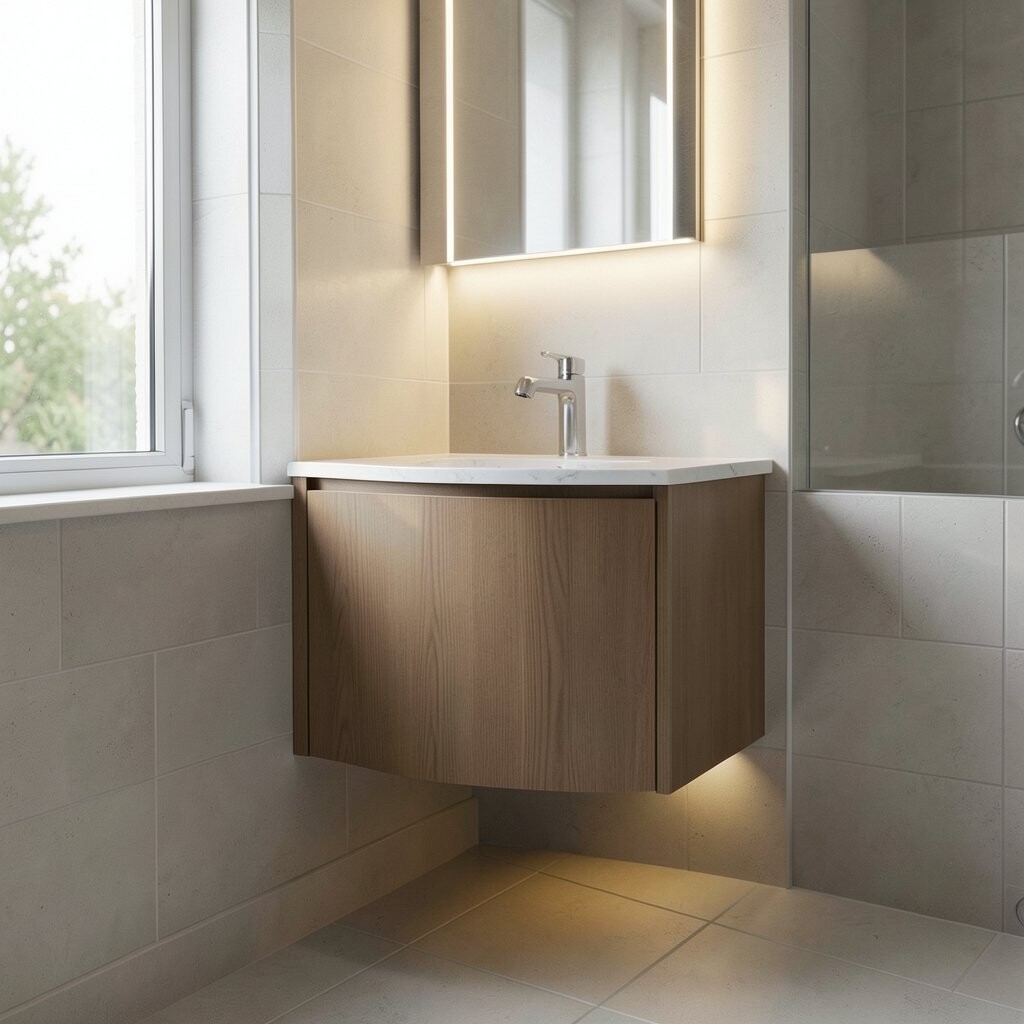
A floating vanity looks even more modern when the bottom edge glows. LED strips tucked under the cabinet create a “floating” effect that feels airy and gives your bathroom a designer look.
Run the strip along the underside with a hidden channel so the light spills downward and doesn’t shine into your eyes. Warm white keeps wood tones cozy, while cooler shades can highlight sleek surfaces. If you have open shelving, you can extend the same glow to the edges for a matching look.
To keep maintenance simple, use a strip with strong adhesive, then add a cover channel that protects it from splashes and dust. If your budget is tight, start with just the main face of the cabinet, then add more later when you’re ready.
As a personalization touch, you can add a motion sensor so the lights come on the moment you step in, which is especially helpful at night.
4. Toe-Kick Lighting Along the Bathroom Floor Edge
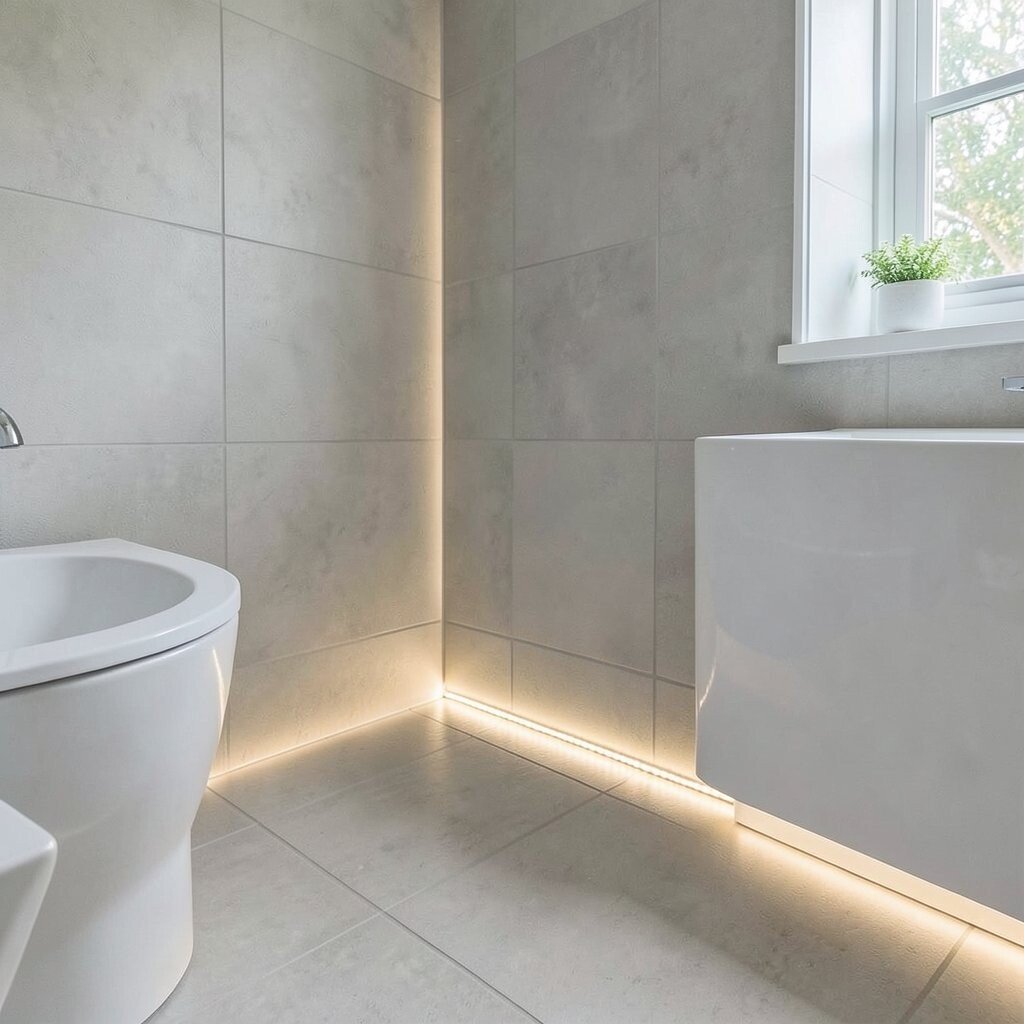
There’s something magical about walking into a bathroom and seeing a soft line of light along the baseboard. Toe-kick LED strips guide your steps at night and make the floor look subtly framed.
Use a low-profile strip in a channel that fits the kick space, and aim the light downward or slightly outward for comfort. Choose a dim, warm setting so the glow supports your feet without blinding you from across the room. If your bathroom has pets, lower brightness can also help keep the lighting calm and stress-free.
For practicality, place the driver where it stays dry and accessible, and route the cable away from areas that get bumped during cleaning. You can also sync these lights with other bathroom lighting so everything turns on together and feels cohesive.
5. LED Strip Behind Bathroom Shelves
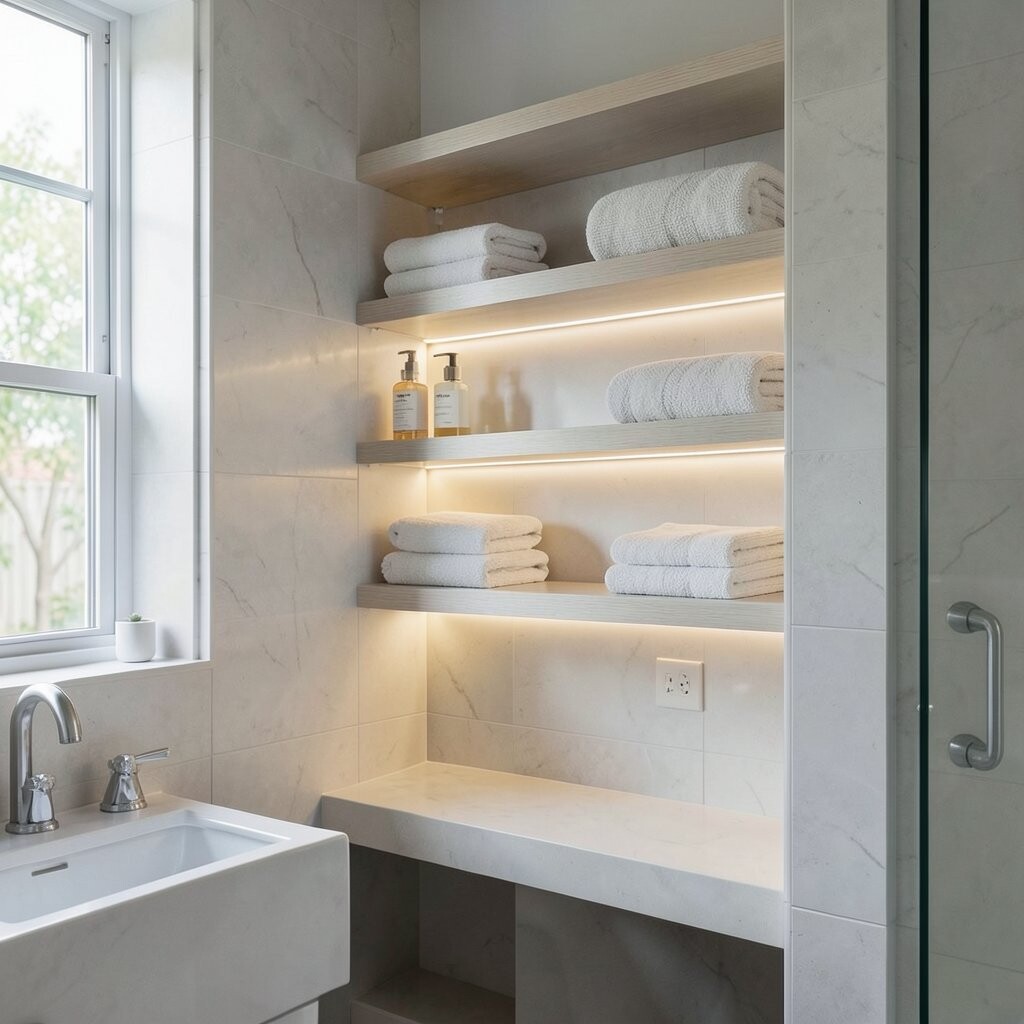
Open shelves can look messy when everything is dim, but LED backlighting makes items look intentional. A strip mounted behind shelf boards adds gentle brightness that makes towels, jars, and decor pop.
Go for a strip that produces even coverage, and hide it behind the shelf so you see the glow, not the individual diodes. If you like a neat look, keep the strip width close to the shelf depth and use a diffuser to avoid hot spots. For personalization, match the light color to your grout or wall tone so the whole room feels balanced.
Budget-friendly options include using one continuous run across multiple shelf levels if spacing allows. A current trend is mixing shelf lighting with minimal styling, so fewer items look brighter and more curated.
6. Ceiling Line Lighting Around the Shower Ceiling Perimeter
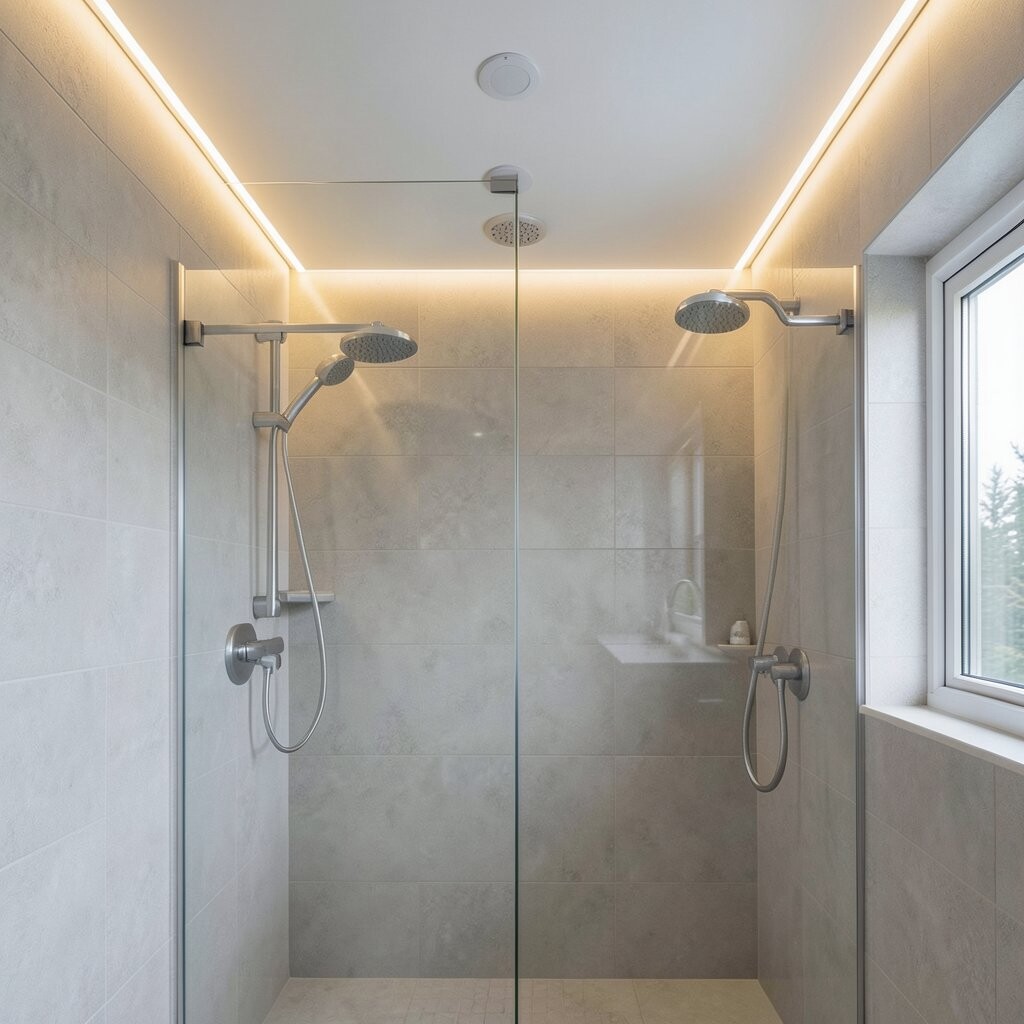
If your bathroom feels flat, a ceiling edge can add depth fast. An LED strip traced around the shower ceiling perimeter or along a drop-ceiling edge makes the space feel taller and more luxurious.
To keep it flattering, aim the light wash toward the center of the ceiling rather than straight down at eye level. Use a lens or diffuser so the line looks smooth, and choose a neutral-white temperature that holds up on tiled surfaces. If you’re worried about glare, test the angle with a temporary strip before final installation.
For practicality, plan your wiring so the driver stays outside the wet zone and the strip stays fully sealed. This idea can be mid-range in cost depending on whether you already have a channel system, but you can save by running shorter sections first.
7. Color-Changing LEDs for Mood Nights
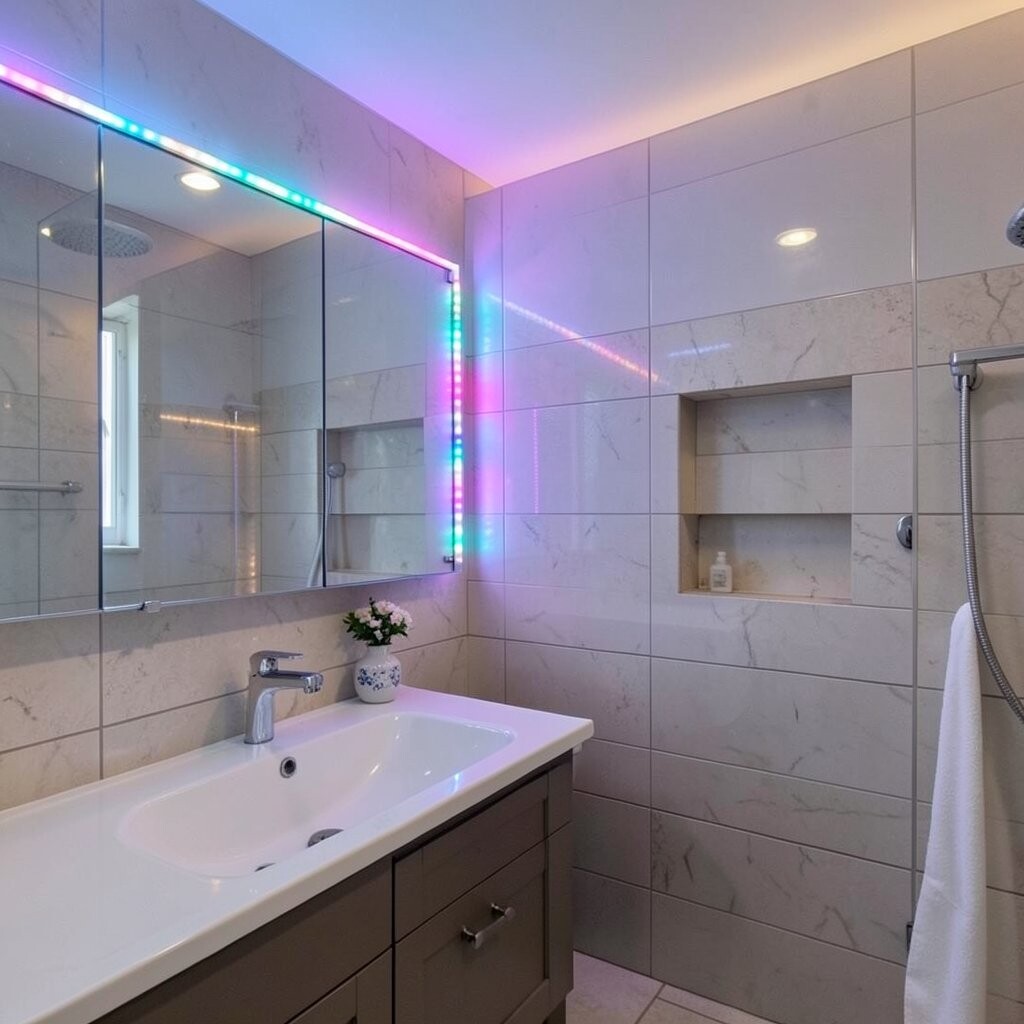
Sometimes you don’t want “bright,” you want “right now.” Color-changing LED strips let you set a vibe for baths, movie nights, or winding down after work.
Pick a controller that works easily with your phone or a simple remote, and set favorites for relaxing blues, soft purples, and gentle warm tones. Make sure the strip is rated for bathroom use, and keep the power supply secured away from humidity. For personalization, try a slow fade effect so the light feels calm instead of sudden.
Consider the cost of the controller and the quality of the power adapter, since those parts affect reliability. A trend you’ll see in modern bathrooms is using color as an accent rather than lighting the entire room, so keep the brightest colors in one or two spots.
If you share the bathroom with someone who likes different moods, set up a few preset scenes and let everyone pick what feels best.
8. Mirror-Side Accent Lighting for a Slim Profile
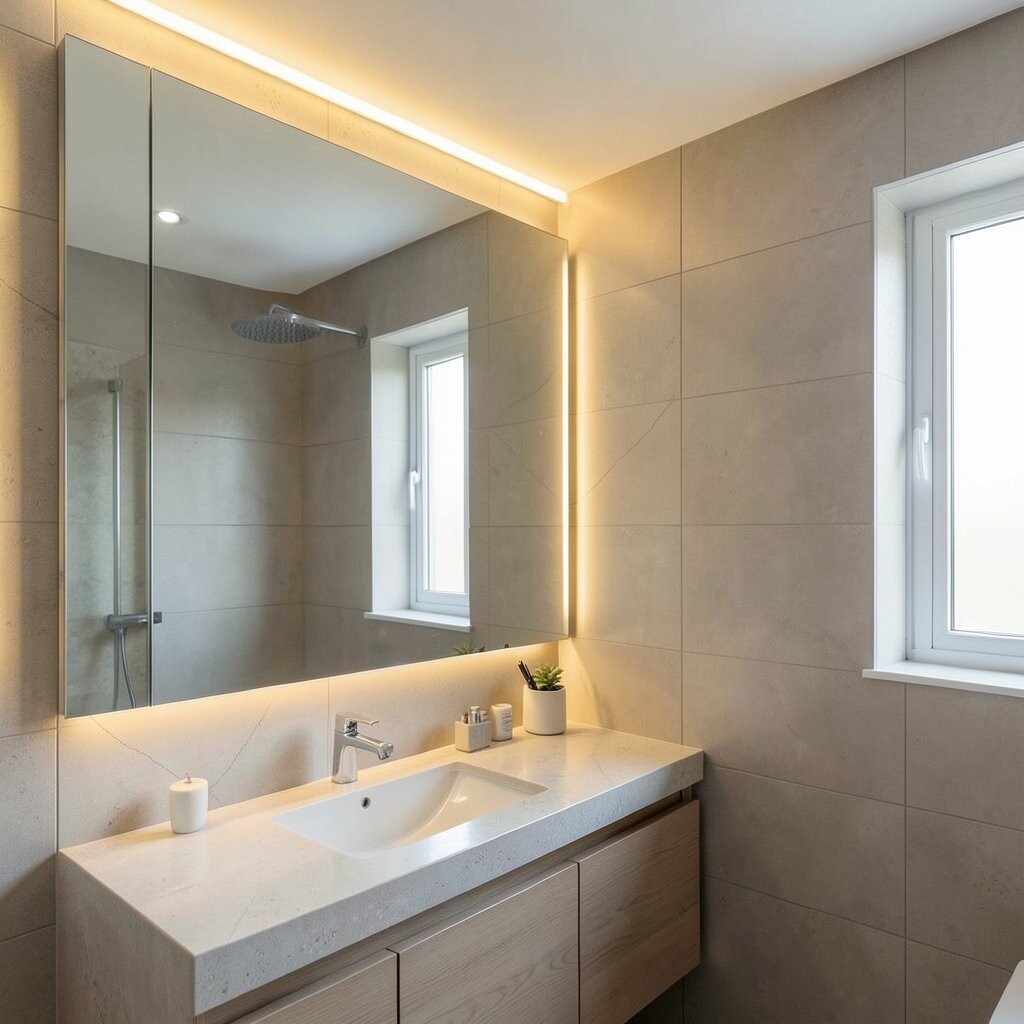
Even with a bright overhead light, side shadows can make makeup and grooming harder. LED strips placed on the vertical sides of a mirror give you flattering, balanced illumination.
Use narrow strips tucked into slim channels so the installation looks clean and modern. A neutral-white setting is great for daily routines, while dimming helps when you want a softer feel. If your mirror has a recessed frame, you can hide the LEDs inside it for a seamless look.
For practical installation, measure twice and ensure the strip lengths match the mirror height with a little extra for adjustments. Cost-wise, this is often a simpler job because you’re using less strip material than full perimeter designs.
9. Under-Rail Lighting for Towel Bars
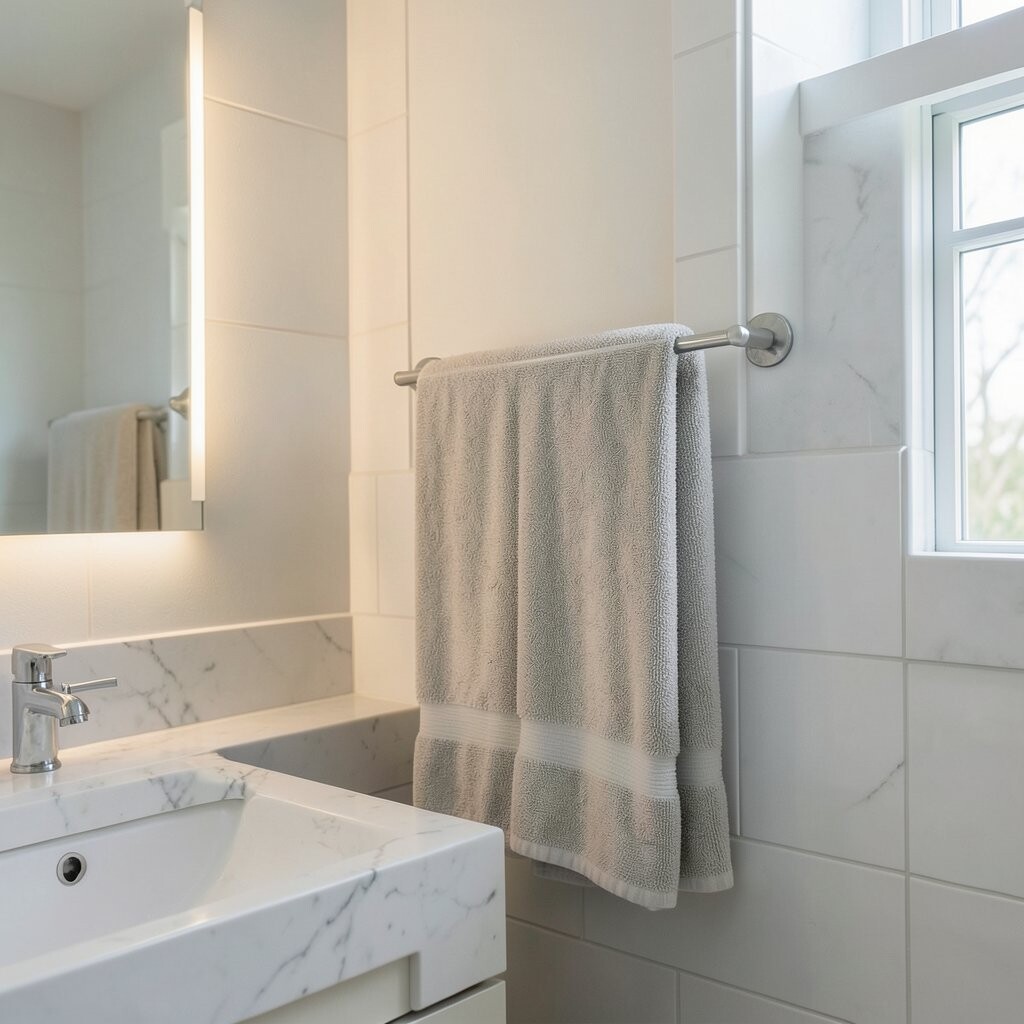
Towel bars can become a styling feature when they glow from behind. LED strips installed near a towel bar rail or behind it add a crisp highlight that looks like it belongs in a boutique hotel.
Mount the strip so the light hits the towel fabric gently, which helps towels look fresh and inviting. Choose a warm neutral so towels don’t look dull or too gray, and keep the brightness moderate for everyday comfort. For personalization, align the light with your bathroom’s existing linear design, like cabinet handles or a matching frame.
If you’re working with limited power points, you can run the strip on a nearby outlet with a simple plug-in transformer. This approach can save money while still giving that “wow” look when guests walk in.
One practical trick is to test placement with towels in place, since shadows shift depending on how towels hang.
10. LED Strip Around the Bathtub Rim for Spa Lighting
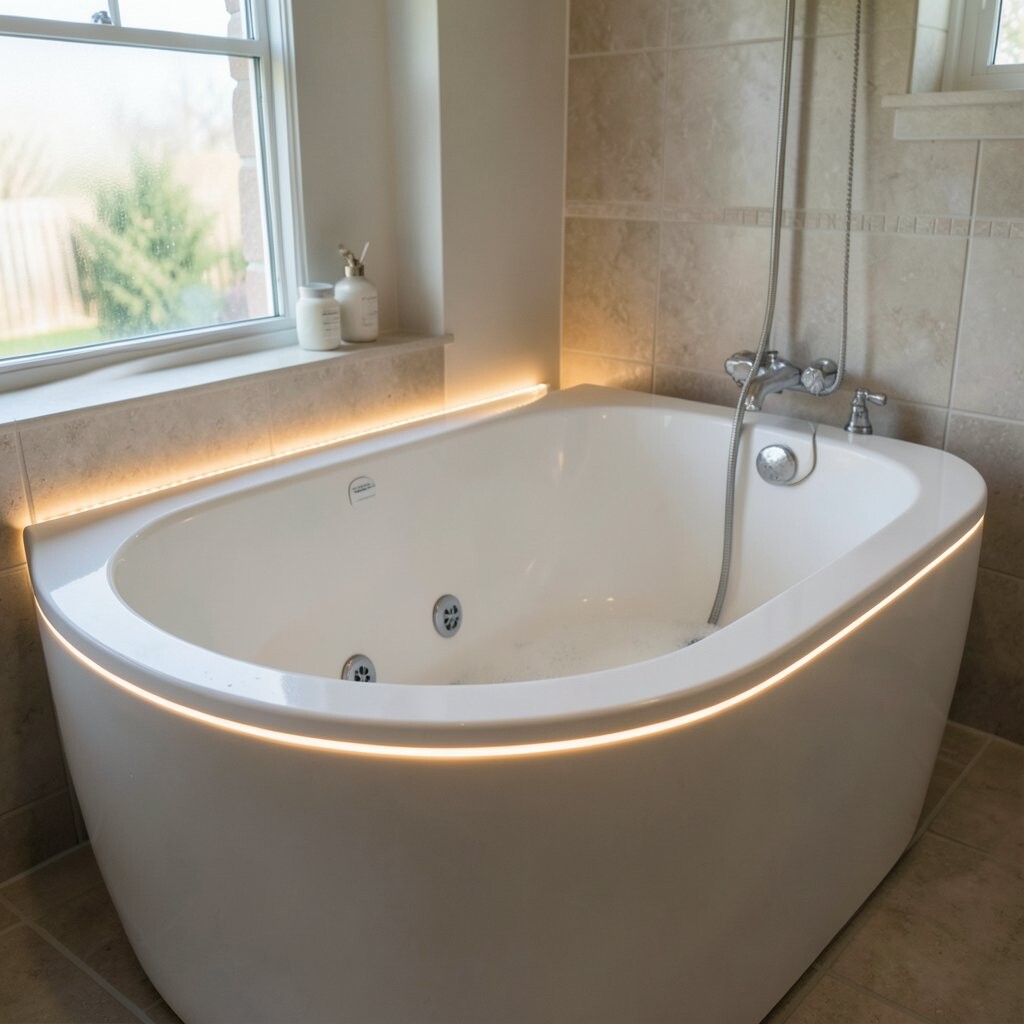
A bathtub becomes the main character when the light frames it in a soft glow. LED strips tucked along the inner rim or just behind the tub surround create that relaxing, spa-like feel without harsh overhead glare.
For safety, use a waterproof-rated strip and keep it sealed in a protective channel, especially where splashes happen. A warm white color helps bubbles and water look inviting, while a slightly dimmer setting keeps the mood calm. If you like a dramatic look, add a second channel higher up for layered lighting.
Cost can vary, but you can manage spending by using shorter runs and focusing on the visible edges. A personalization idea is to set the lights to “bath mode” with a controller so the brightness changes when you turn off the main lights.
11. Accent Lighting for Bathroom Art and Wall Niches
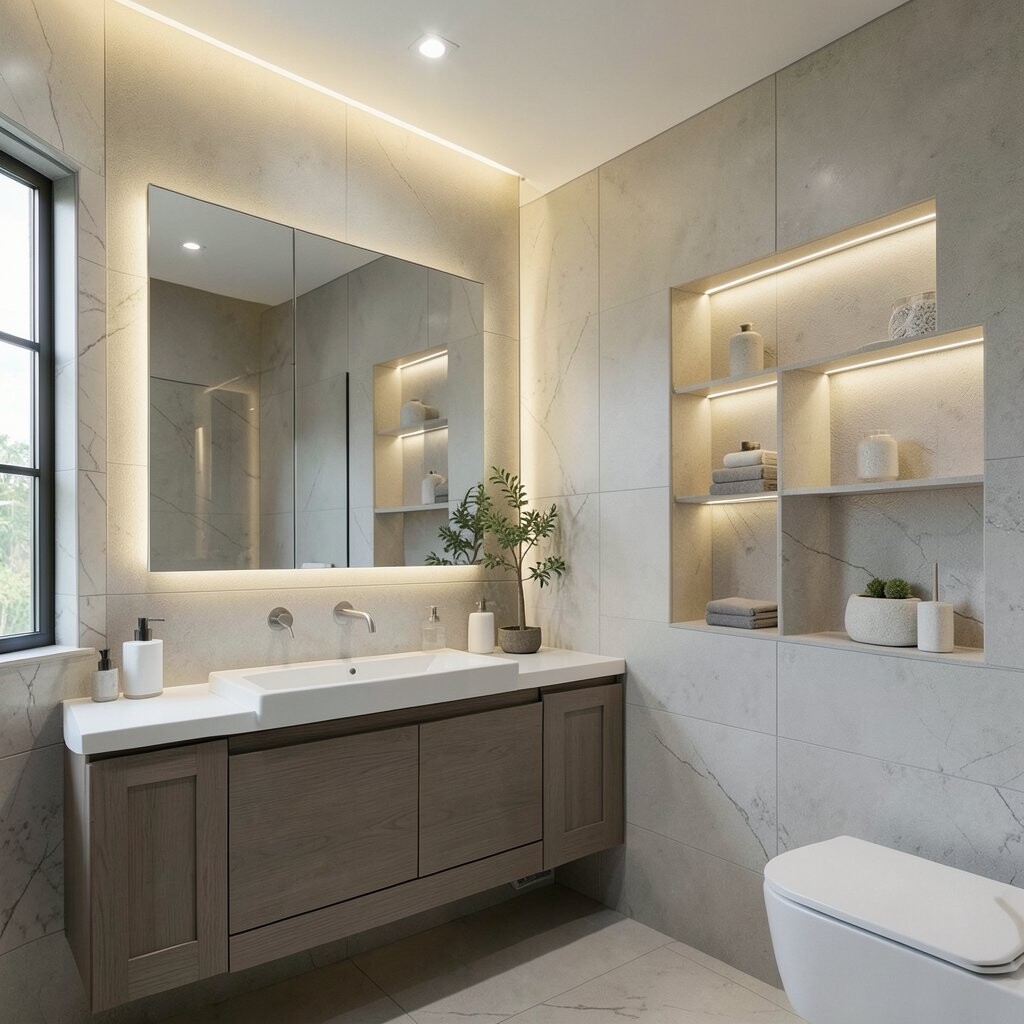
Wall art and small niches can vanish when bathroom lighting is too dim or too bright in the wrong direction. LED strips placed behind a frame or along the edge of a wall niche make details stand out instantly.
Use a subtle angle so the light grazes the surface instead of blasting straight outward. Neutral white works well for most art, but warm white can make wood and textured walls look extra cozy. For personalization, choose a strip with high color quality so paint colors and skin tones don’t look washed out.
To keep things neat, hide the wiring behind trim or run it through a channel that blends with the wall line. This idea can be cost-effective because you’re only lighting a small area, not the whole room.
12. Backlighting for LED Bath Panel or Ledge
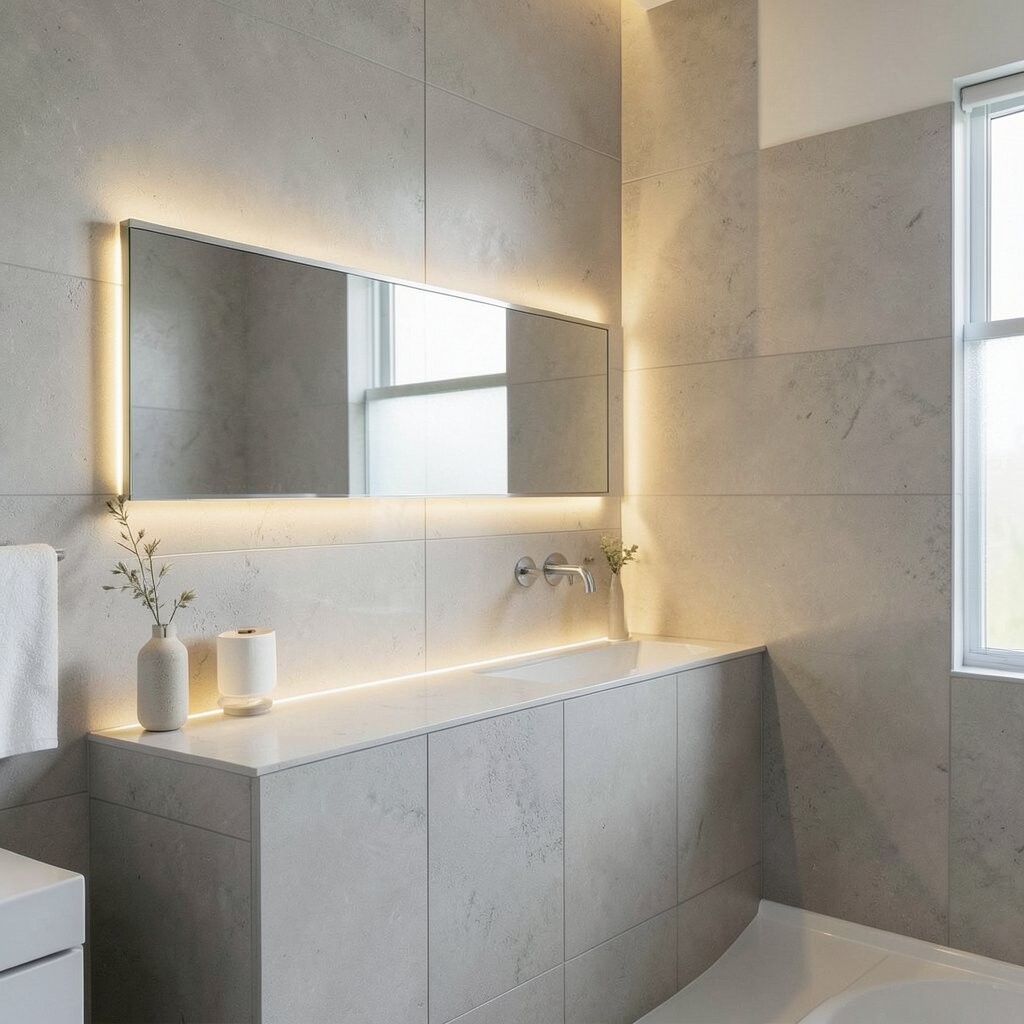
A built-in bath panel or ledge can look flat until you add light to its edges. LED strips mounted behind the panel create a soft gradient that makes the structure look intentional and high-end.
Plan for the hidden gap where the LEDs will sit, and use a diffuser so the light doesn’t show bright dots. Choose a color temperature that matches your mirror lighting so the room feels consistent. If you want a modern twist, add a slight color shift by using a warmer strip on the bottom and neutral on the side for depth.
From a practical angle, this kind of install looks best when the channel aligns cleanly with tile grout lines. Budget-wise, it can be mid-range since you may need to carve out space or adjust surfaces, but the final look often feels worth it.
Personalization is easy if you install a dimmer, because you can tune the light for daytime clarity or nighttime relaxation.
13. LED Strip Lighting Inside Vanity Drawers
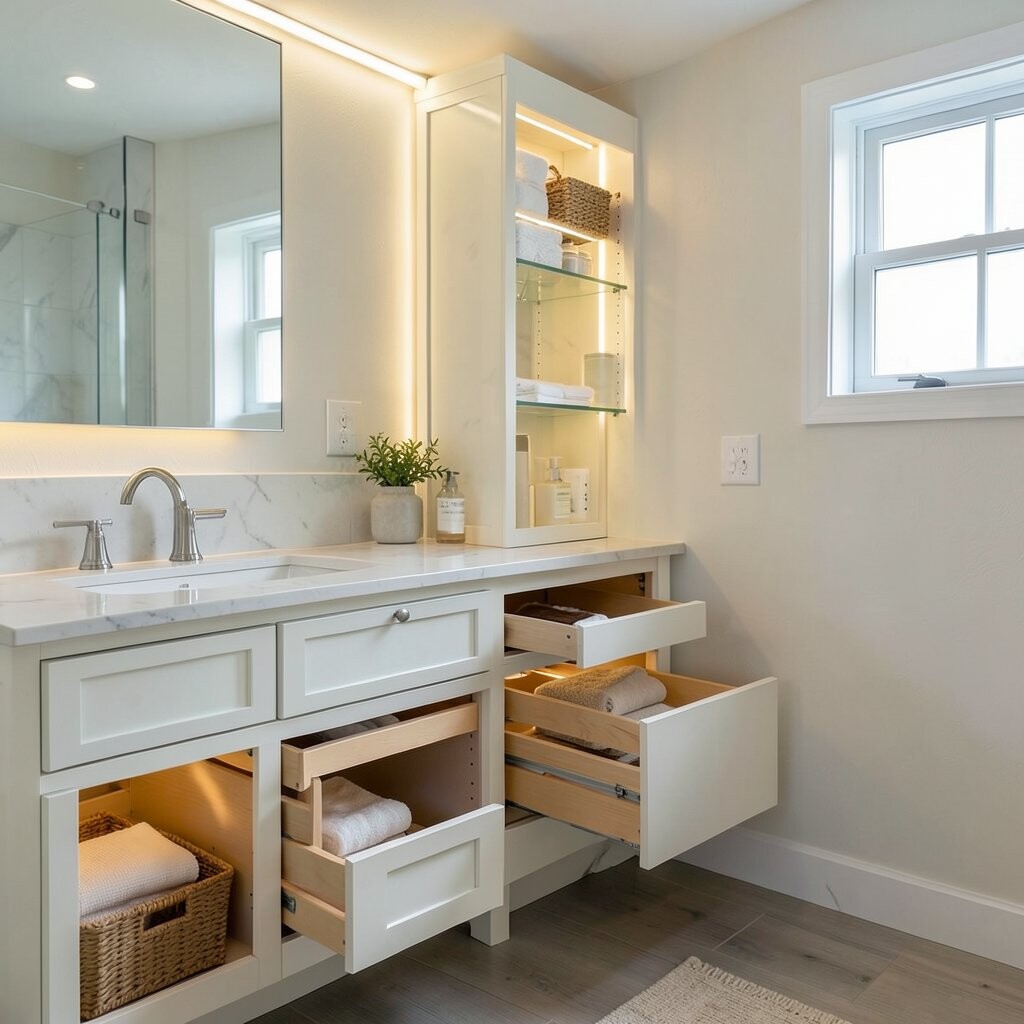
Small things matter in the bathroom, and drawer lighting makes daily routines smoother. LED strips placed inside drawers help you see grooming tools, backups, and skincare without turning on bright overhead lights.
Use low-voltage strips and secure them inside the drawer so they stay stable when you open and close it. Keep the strip brightness moderate, since too much light inside a small space can feel intense. For personalization, you can set different zones so the mirror area stays bright while drawers stay soft.
Cost considerations are usually friendly here because the strips needed are short and easy to place. A helpful trend is using smart lighting that turns on automatically when a drawer opens, which adds convenience without extra effort from you.
For wiring safety, route the power through the cabinet body and keep connectors protected from dust and moisture.
14. Linear Lighting Above the Floor for Night Navigation
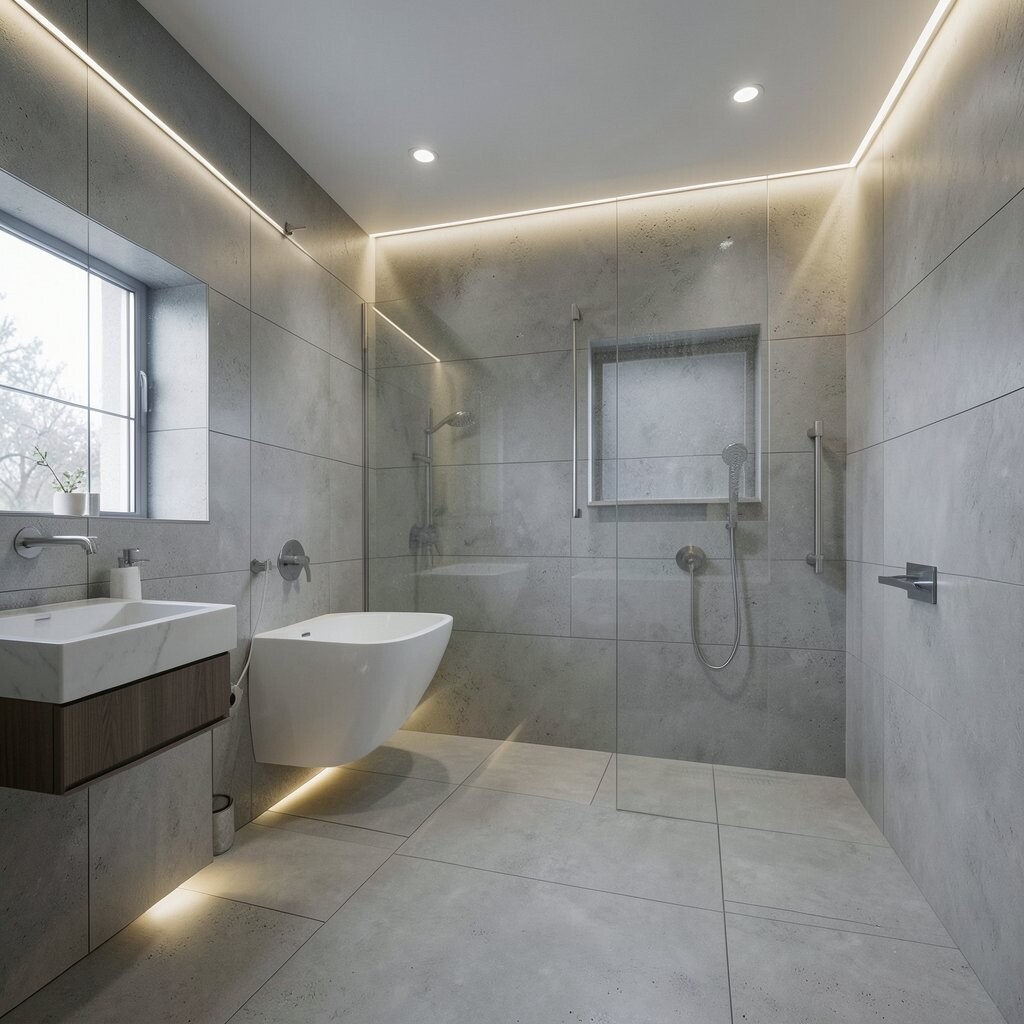
Even if you have a hallway light, a bathroom can still feel dark in the middle of the night. A linear LED strip placed low on the wall or along the floor boundary creates a gentle navigation line.
Use a warm, dim setting so it feels like a guide, not a spotlight, and aim it so it reflects off walls instead of shining into your eyes. Motion sensors or smart switches can make this idea extra practical, especially if you get up at night and want light without reaching for a switch.
For personalization, match this light line to the color temperature of your mirror glow, so the whole room feels like one cohesive design. Cost can be kept manageable by using just one or two short runs and saving larger installs for later.
As a final touch, choose a diffuser channel with clean edges, because the crisp line makes the lighting look intentional and professional.