The loft style feels bold, but your everyday life needs flexibility. A foldable dining table can keep the space looking sharp while making mealtimes easy.
When you pair smart planning with industrial textures, you get a room that works hard and still feels inviting.
1. Create a Wall-Hinged Dining Moment
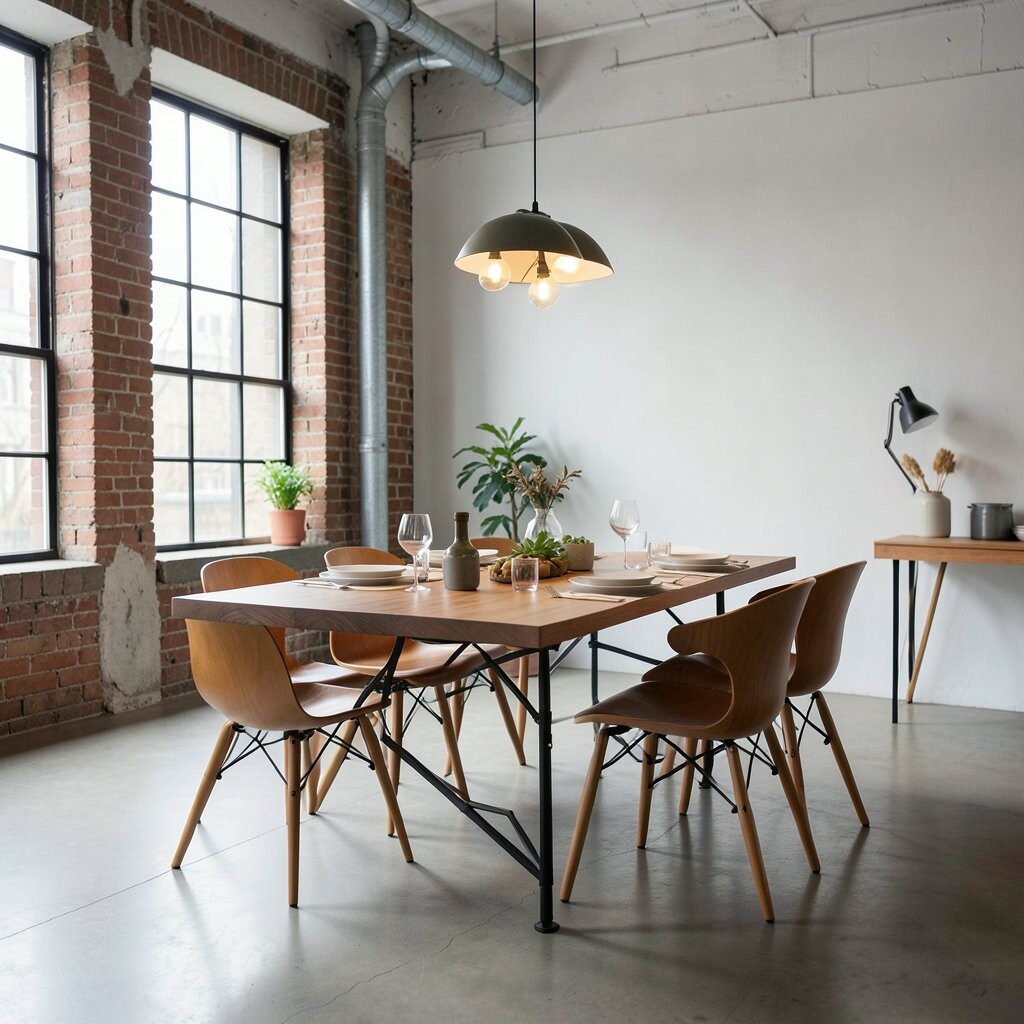
Choose a foldable dining table that tucks neatly against a metal wall or a brick feature. When it’s down, the surface looks like part of the room’s design, not an afterthought.
Lean into the industrial feel by matching the table’s color to nearby black hardware or warm steel tones. For extra practicality, mount a slim shelf above it to hold plates and napkins so you can set everything up in seconds. Add a small woven tray on top for centerpieces or daily basics, and rotate what’s on it depending on the season.
2. Pair It With a Sliding Pipe Rail for Storage
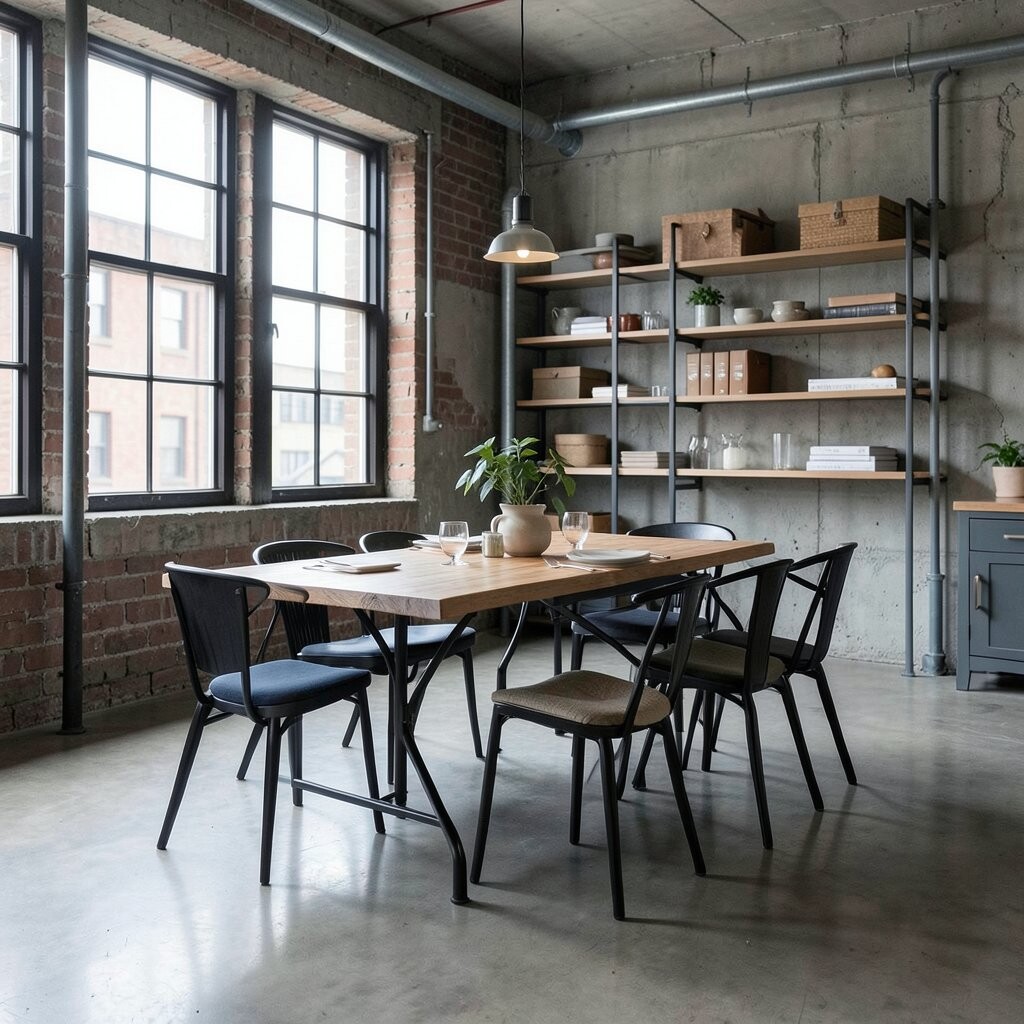
Install an industrial pipe rail along the wall so the foldable table has a “home base.” You’ll love how clean the area looks when the table is raised and the rail catches everyday items.
Use small hooks for tote bags, a brush for quick cleanups, and a hanging basket for condiment packets. To make it personal, choose rail baskets in a muted color like charcoal or tan to soften the hard lines. When you keep everything within reach, you spend less time hunting and more time eating.
Even if you’re on a budget, pipe-style rails can be more affordable than full shelving and still deliver that workshop vibe. For current loft trends, think raw materials paired with tidy organization, like open storage but in controlled zones.
3. Turn a Corner Into a Breakfast Nook
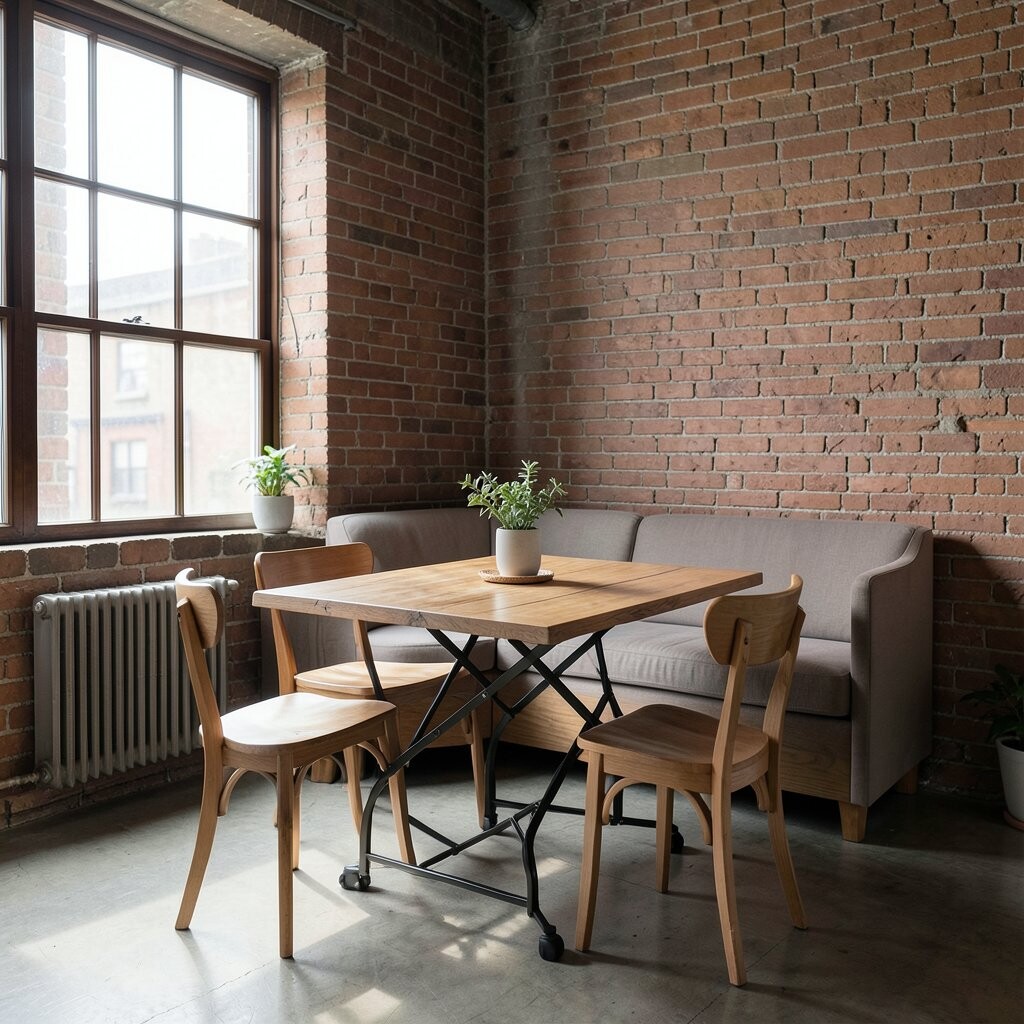
Work the foldable dining table into an unused loft corner where the floor plan feels roomy but awkward. A compact table there makes the whole space feel intentional.
Place it near a window if you can, so morning light falls across the tabletop and makes the industrial texture glow. Use two ladder-style shelves or stacked crates nearby for mugs and small plates so it functions like a real nook.
For a personalization touch, hang an Edison bulb pendant slightly above the table area so the corner becomes your everyday gathering spot. If you want cost control, start with simple lighting and only add decorative items after you’ve tested the layout. This approach also helps you avoid crowding the room when the table is not in use.
4. Use a Rolling Bar Cart as Your Dining Helper
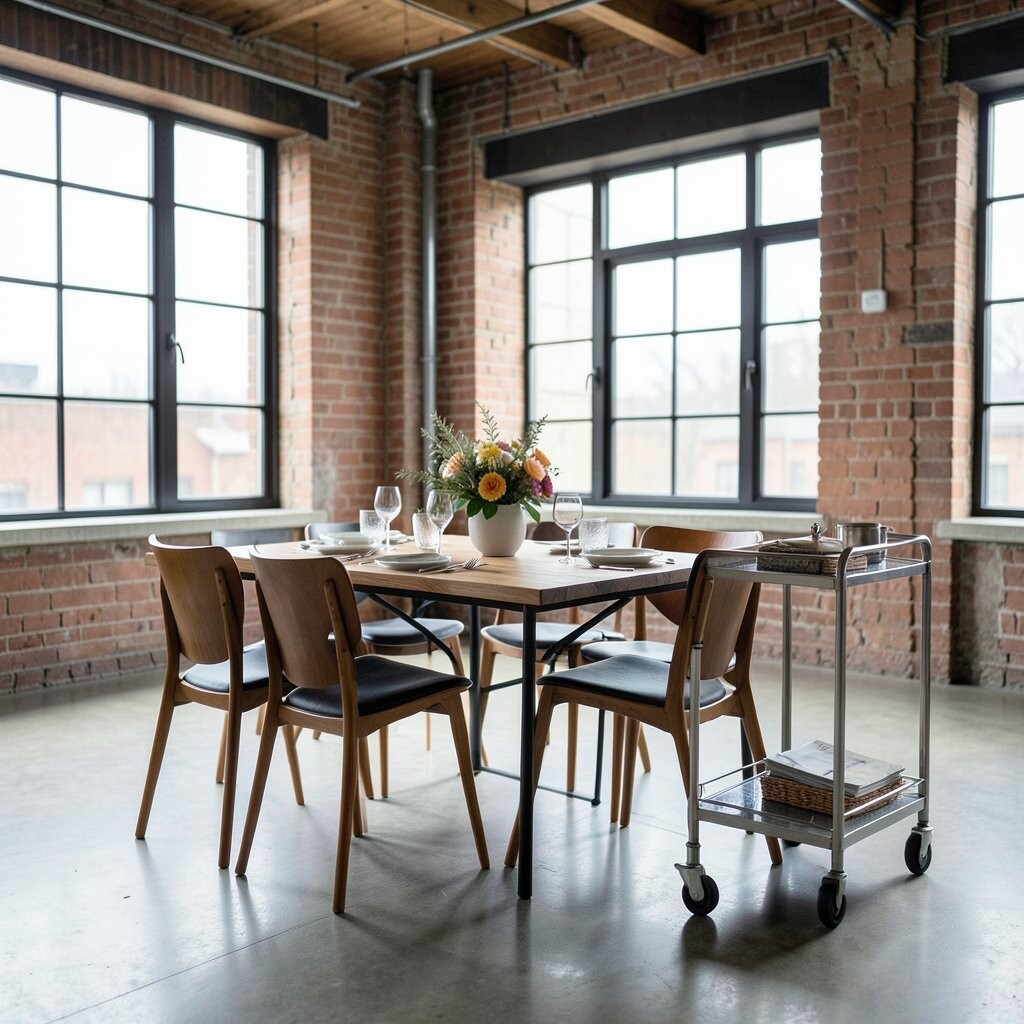
Keep a rolling bar cart close to the foldable dining table so you can set the table without running around. The cart also doubles as a serving station when friends stop by.
Style the cart with industrial cues like dark wood shelves, metal frames, and glass jars for cutlery or spices. When the meal is over, roll everything back and fold the table down so the loft looks tidy again.
To make it feel unique, add a small chalk label on the jars or use handwritten tags tied with twine. A foldable setup plus a cart is often more budget-friendly than buying a full dining set, especially in smaller lofts.
5. Choose an Over-Sized Chair Mix for Loft Drama
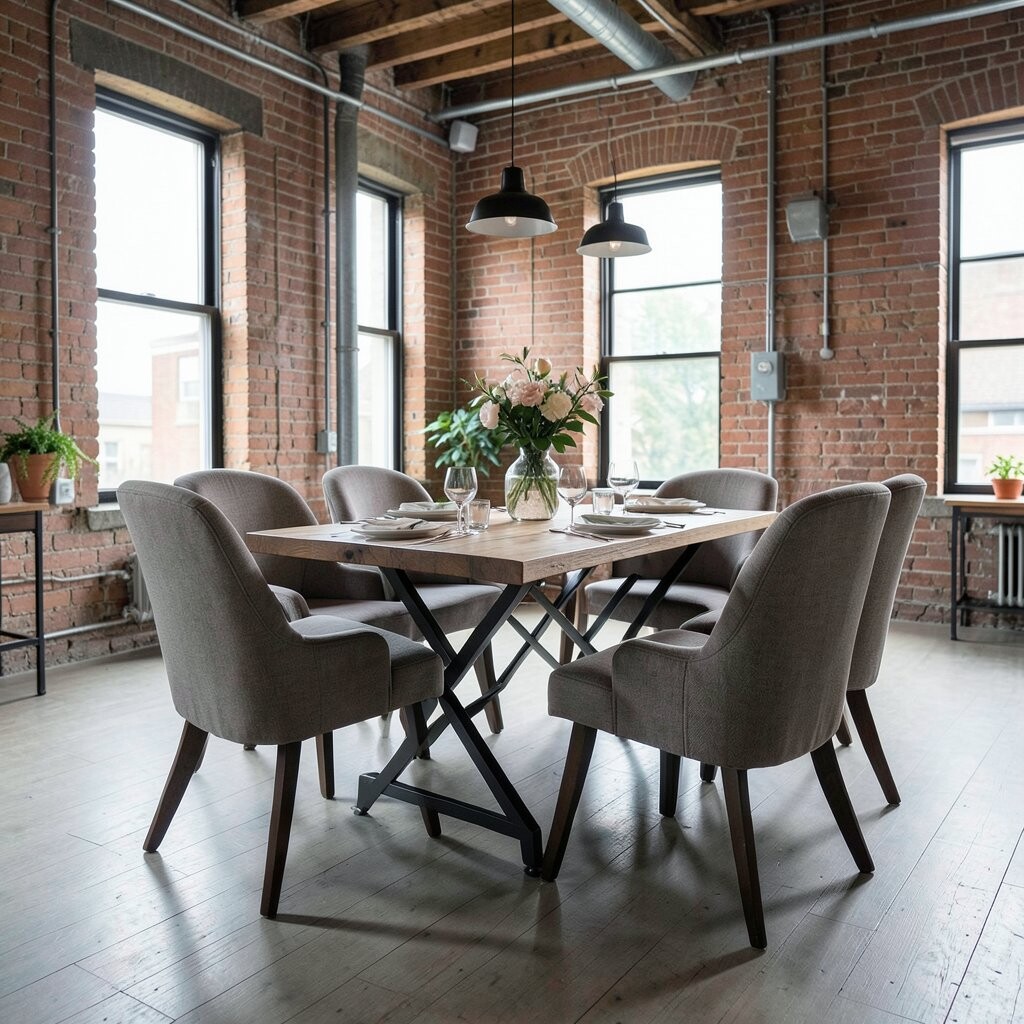
Go bold with seating by mixing chair styles around your foldable dining table. Industrial loft spaces love contrast, and chairs with different finishes can look curated instead of mismatched.
Look for metal frames, leather backs, or simple wood seats, then balance the visual weight so the area stays cohesive. If you want practical comfort, add seat cushions that match your color palette and foldable tabletop size.
This is a great place to personalize, too. Try adding one patterned throw pillow to each chair or swapping covers when you want a fresh vibe without replacing furniture.
6. Frame the Table With a Slim Industrial Screen
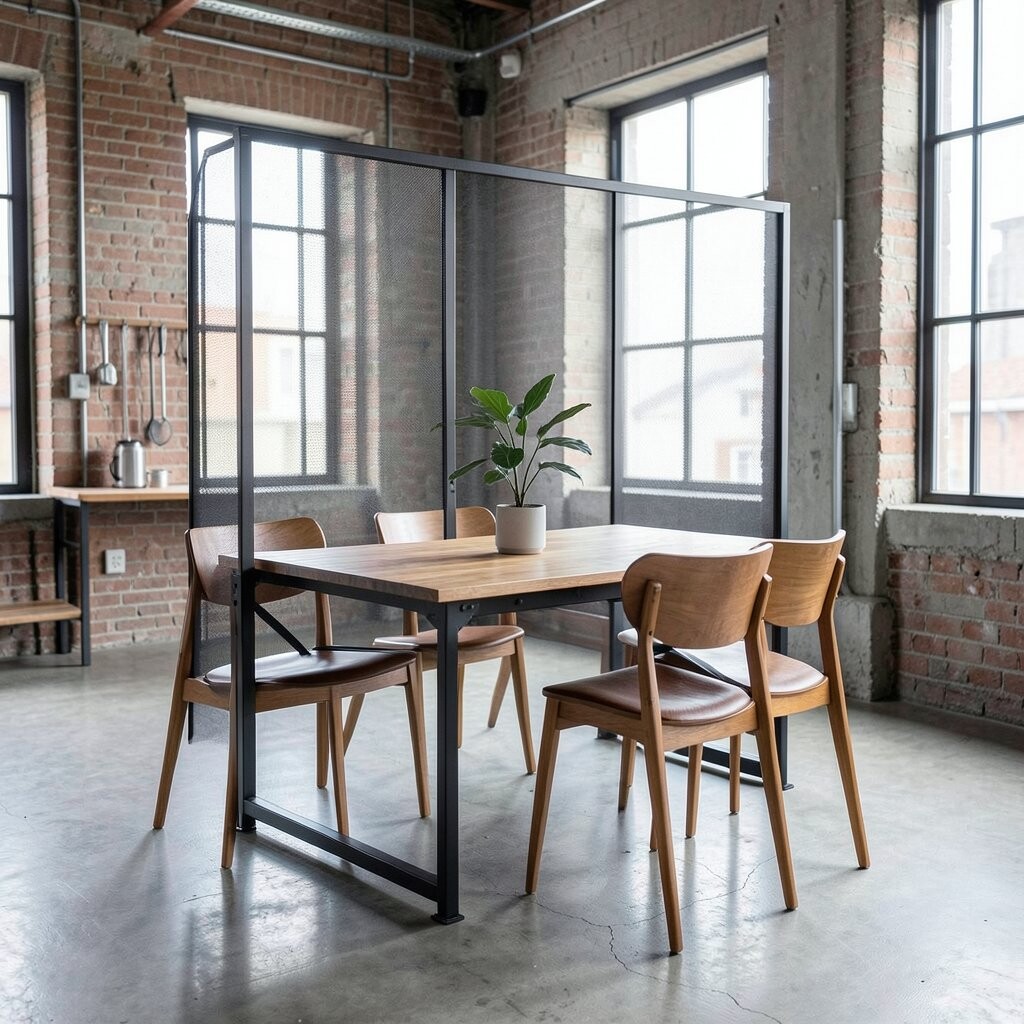
Use a narrow room divider or industrial screen to “frame” the dining zone. When the foldable table is up, it feels like a defined spot; when it’s down, the loft still looks open.
Pick a screen with metal scrollwork or clean grid lines to keep the industrial look consistent. For practical tips, anchor the screen so it doesn’t wobble, and leave enough space for the table to fold smoothly.
You can also use the screen to hang small planters or lightweight organizers, giving the dining area a personal, lived-in touch. This can be a mid-range cost move, since smaller screens often cost less than building custom partitions, yet they still create a big visual effect.
7. Put the Table on a Rug With a Concrete-Like Pattern
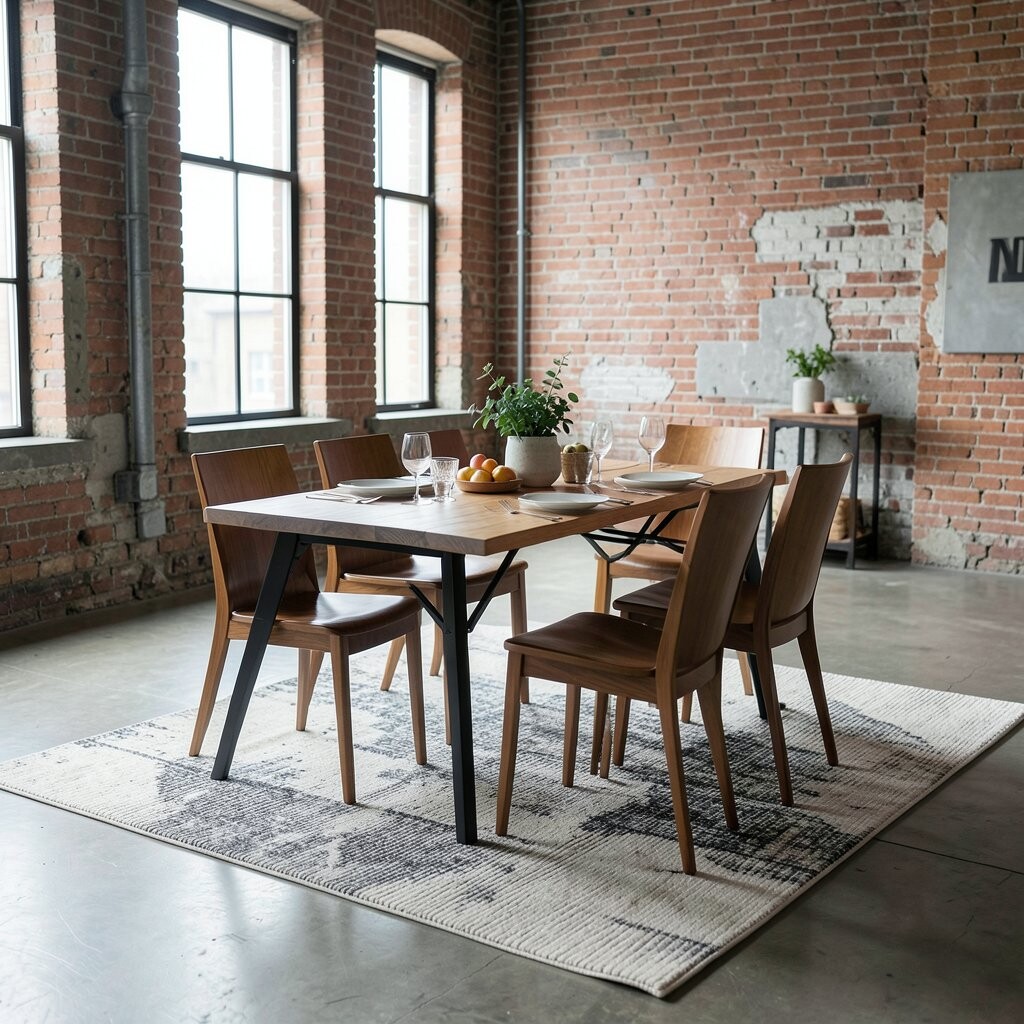
Place a flat-weave rug or one with a subtle concrete pattern under your foldable dining table. The rug makes the whole zone feel grounded and helps protect floors from chair movement.
Choose a darker tone to hide everyday marks, which is especially useful in loft spaces with lighter finishes. For personalization, layer a smaller runner in a complementary color when you want a seasonal change.
If you’re balancing budget, look for rugs that are easy to clean and made for high traffic. Current trends favor textured neutrals, so you get an updated look without spending on brand-new furniture.
8. Build a Counter-Height Seating Plan for a Faster Setup
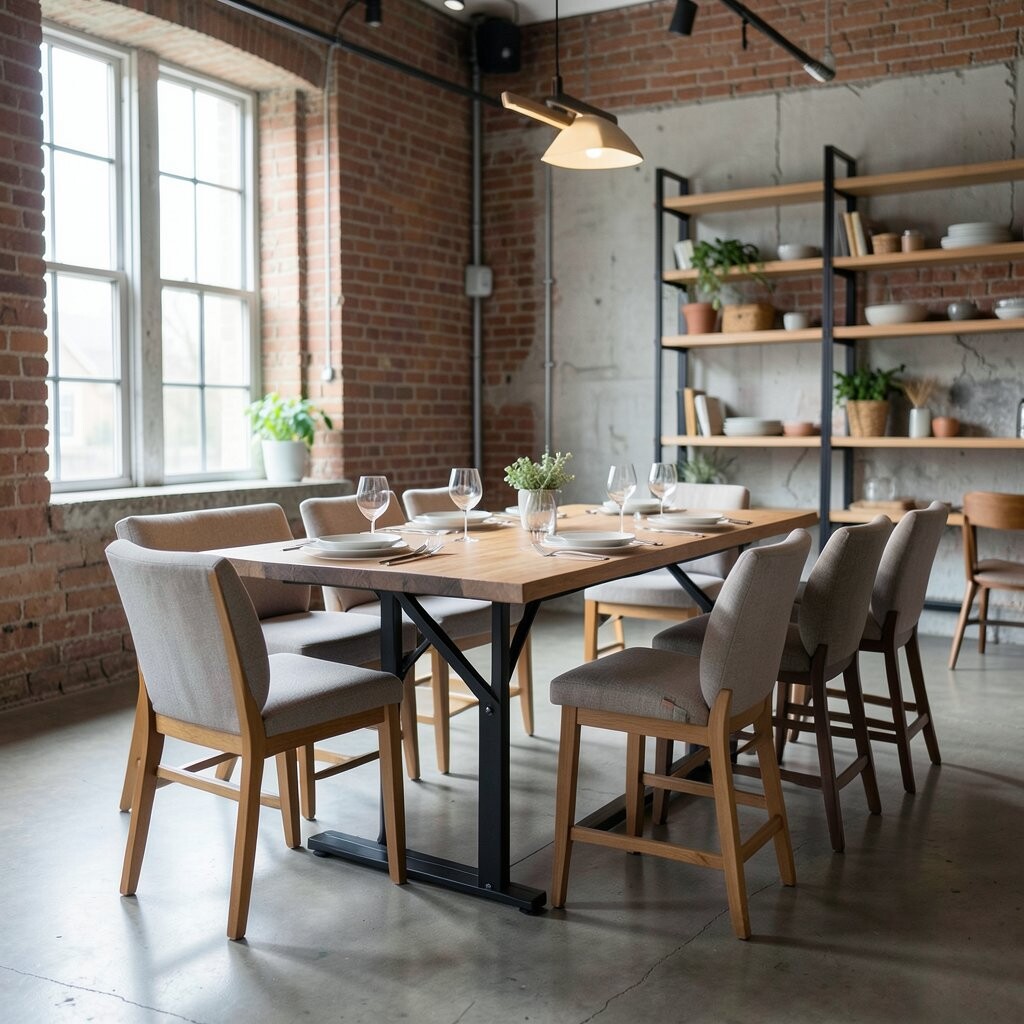
Instead of treating the foldable table like a formal dining space, match it to counter-height stools for a relaxed loft feel. This helps you eat comfortably and keeps the surface from dominating the room.
Use shorter lamps or wall sconces so the lighting stays aligned with the table area. Add a small tray for daily items like coasters and salt so everything stays orderly during busy weeks.
This setup is unique because it blends dining and casual bar-style hanging out. If cost matters, stools can be found in sets that work with most foldable tabletop heights, which may save money versus hunting for a full dining set.
9. Create a “Shadow Line” With Cove Lighting
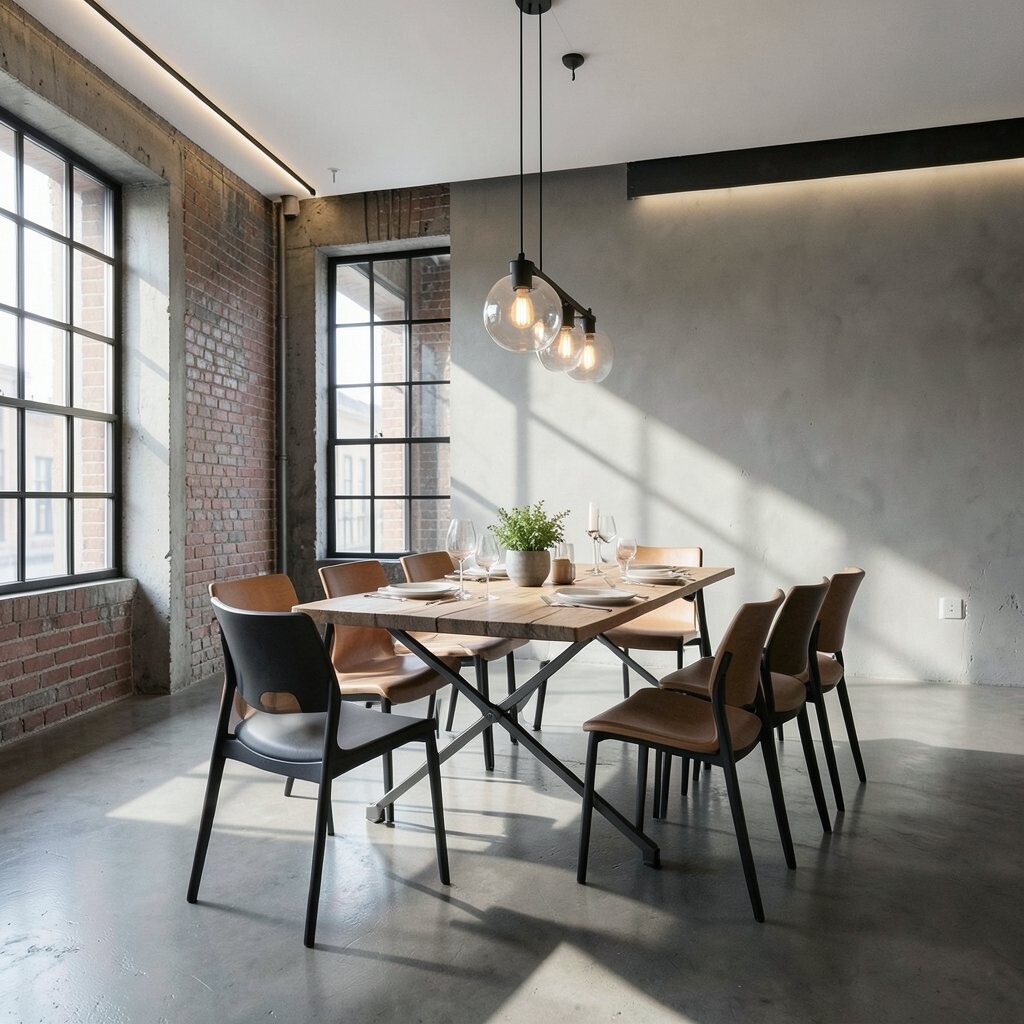
Install simple LED strips along the wall to create a soft glow behind your folded table zone. Even when the table is tucked away, the area looks warm and styled.
When you pull the table out, the light makes the tabletop stand out against brick, plaster, or concrete walls. Use warm white bulbs to keep the industrial space from feeling too cold or harsh.
For personalization, dim the lights with a plug-in dimmer so you can set the mood for dinner or late-night snacks. This is a trend that many loft owners like right now because layered lighting makes small spaces feel bigger without adding clutter. You can also keep costs lower by starting with lighting first and upgrading decor later.
10. Use a Foldable Table With a Removable Center Insert
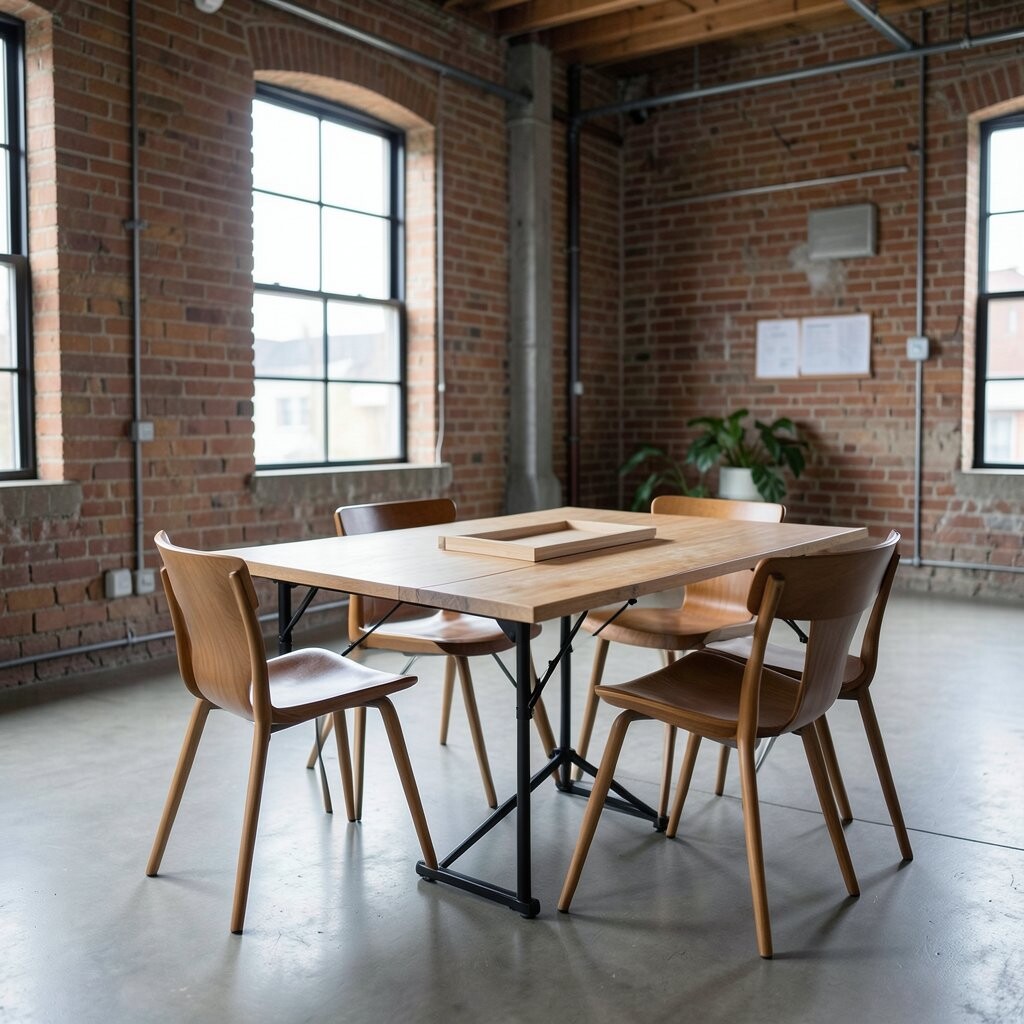
Select a foldable table design that includes a removable insert or modular surface. That feature makes it easier to adjust the table for family meals, game nights, or quick snacks.
Choose inserts that match your lifestyle, like a smooth top for prep or a textured insert that hides scratches. Keep a small storage bin nearby for inserts so you’re not hunting for parts during dinner rush.
To personalize, swap in a different look for holidays using simple accessories like a place-mat set. If you’re watching costs, modular options can be a smarter purchase than multiple separate tables because one piece can do more jobs.
11. Add a Pegboard Organizer Behind the Folded Table
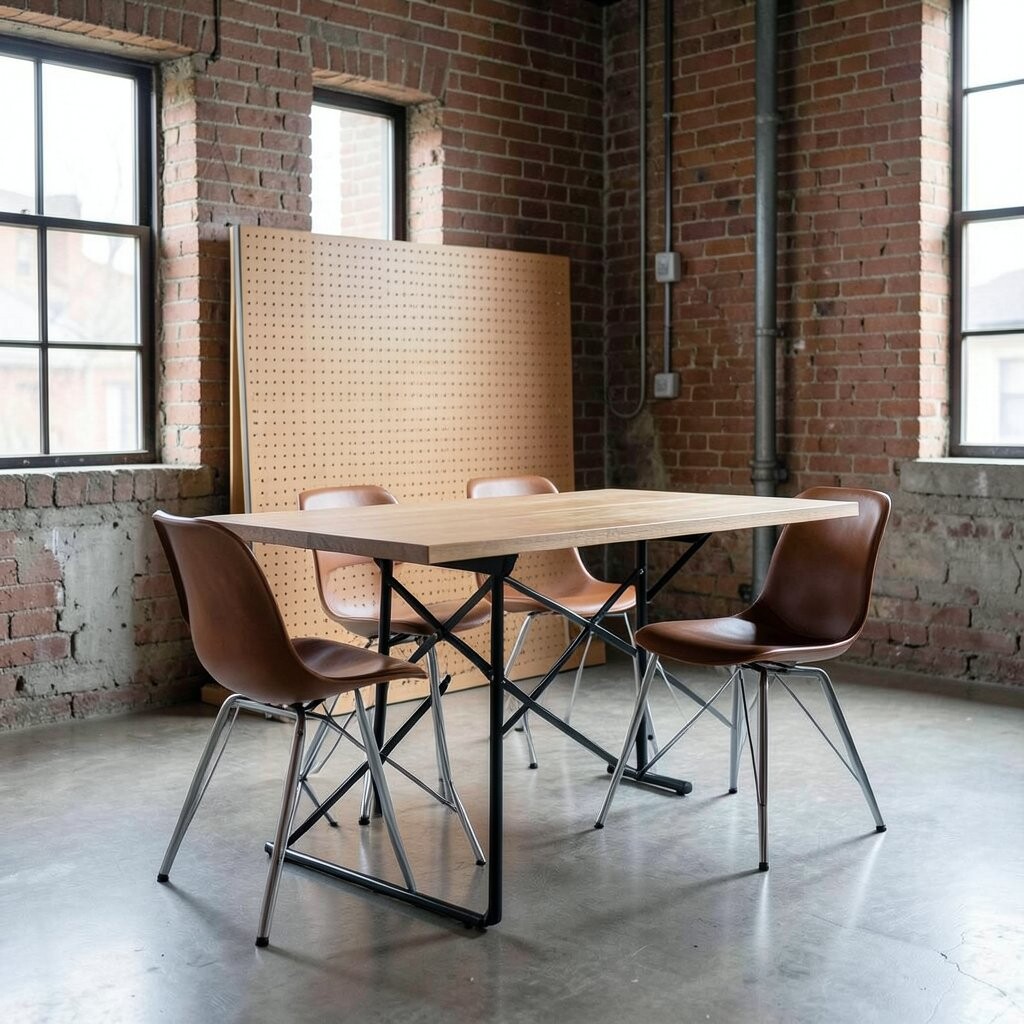
Mount a pegboard behind the foldable dining area so you can store what you need in plain sight. The pegboard fits the industrial vibe and turns everyday items into part of the decor.
Hang hooks for utensils, small baskets for napkins, and a few labeled containers for tea or packets of spices. Keep it tidy by using only a handful of tools you actually reach for.
For a unique touch, paint some pegboard accessories in one accent color like rust or deep green to warm up the steel look. This approach can be cost-effective because you can start with a basic pegboard and build up gradually with small add-ons. It also matches current loft trends that favor functional walls and styled-but-practical storage.
12. Style the Table With a Factory-Edge Runner and Linen
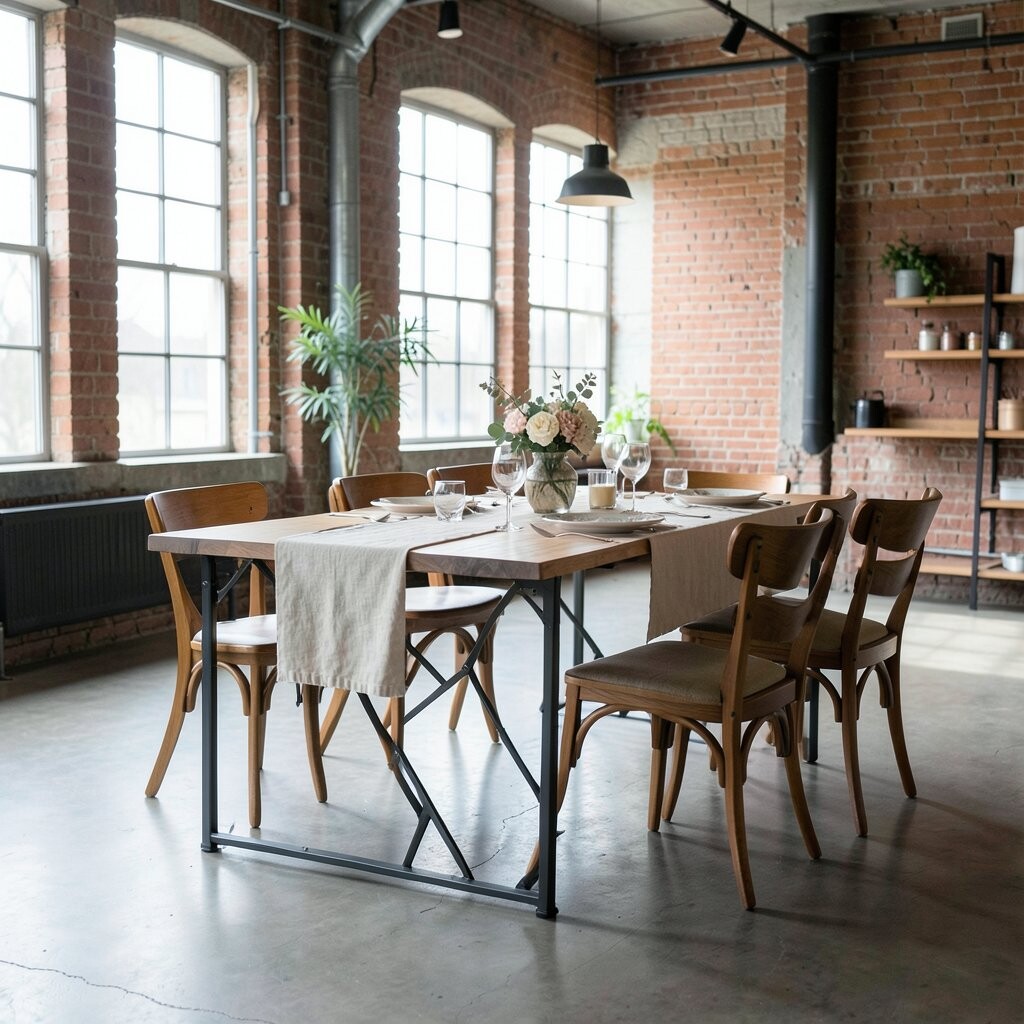
When your foldable table opens up, style it like a miniature stage. A runner with a factory-edge look, plus linen napkins, can make the spot feel designed and cozy.
Choose a runner in muted black, oatmeal, or faded gray so it blends with industrial finishes without fighting them. Add simple placemats that are easy to wipe clean, since loft life can get busy fast.
For personalization, switch between materials based on the season, like thicker textures in winter and lighter ones in summer. This is often a lower-cost way to refresh your dining area since textiles are cheaper than furniture upgrades. The result feels both current and welcoming, not stiff or showroom-only.
13. Use a Compact Dining Plan for Flow in the Loft
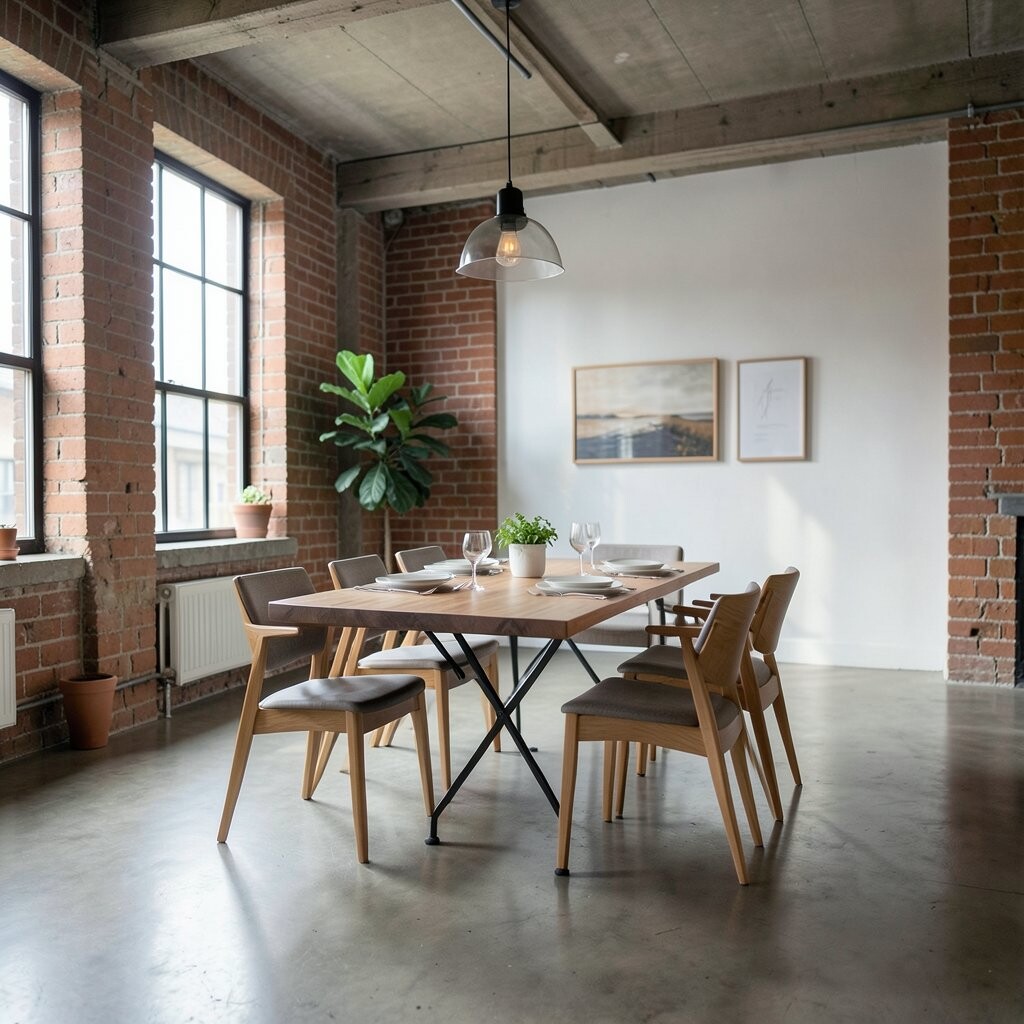
Place your foldable dining table where you can keep clear walkways through the loft. Industrial spaces often mix living, cooking, and working, so flow matters more than you might think.
Measure the folding path first so you don’t block doors or create tight corners. If the table can slide slightly or align with a wall, your room will feel smoother and easier to navigate.
To keep it unique, align the table with your existing design lines like the direction of exposed beams or the edge of a feature wall. Cost-wise, optimizing layout is free, and it can prevent you from buying a larger dining set that doesn’t fit. This kind of planning is a current trend because it prioritizes function without sacrificing style.
14. Pair With a Bench for Flexible Seating
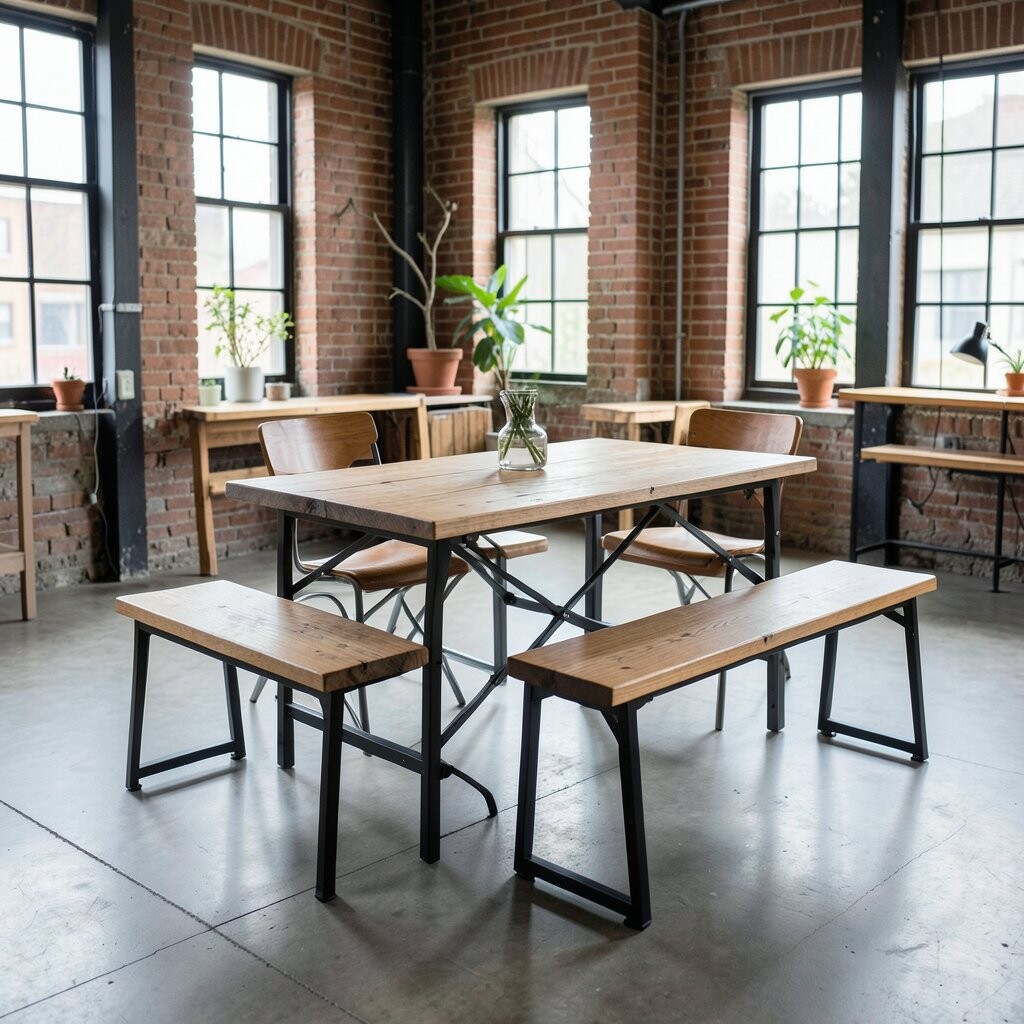
A bench beside a foldable dining table can help you seat more people without adding bulky chairs. The industrial look shines when you use long, clean lines and sturdy materials.
Choose a bench with metal legs and a simple wood or upholstered top, so it feels durable and comfortable. Add hooks or a small storage space under the bench if you can, which helps keep dining items out of sight.
Personalization can be as simple as selecting cushion fabric in a color you already love, like tan, black, or a muted blue. If you’re managing costs, benches can be cheaper than buying four separate chair pieces, especially when you want a full setup for guests. The setup also makes mealtime feel casual and social, which is perfect for loft living.
15. Build a Mini Gallery Wall Above the Folded Table Zone
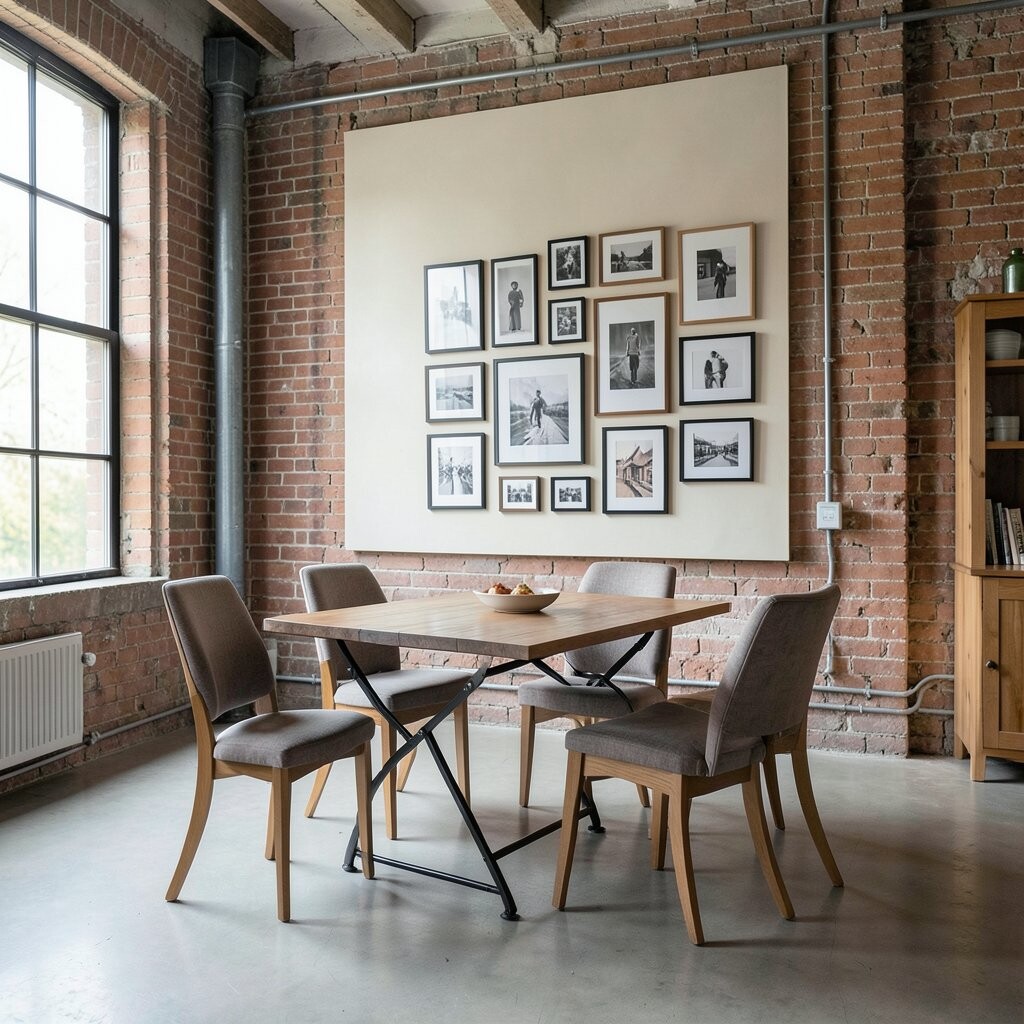
Create a small gallery wall above the spot where the foldable table sits. Industrial lofts feel better when the wall gets texture and personality instead of staying bare.
Use black frames, metal-like finishes, or photo prints with warm tones to soften the room’s hard edges. Keep spacing consistent so the gallery looks intentional, even when the table is folded away.
To personalize, rotate prints seasonally or add one artwork that connects to your routine, like a sketch of a city you love. This can be a budget-friendly move because you can swap prints without replacing frames. A styled wall also supports current trends that emphasize layered decor, not just furniture placement.
16. Maintain a “Folded-Friendly” Lighting and Surface Plan
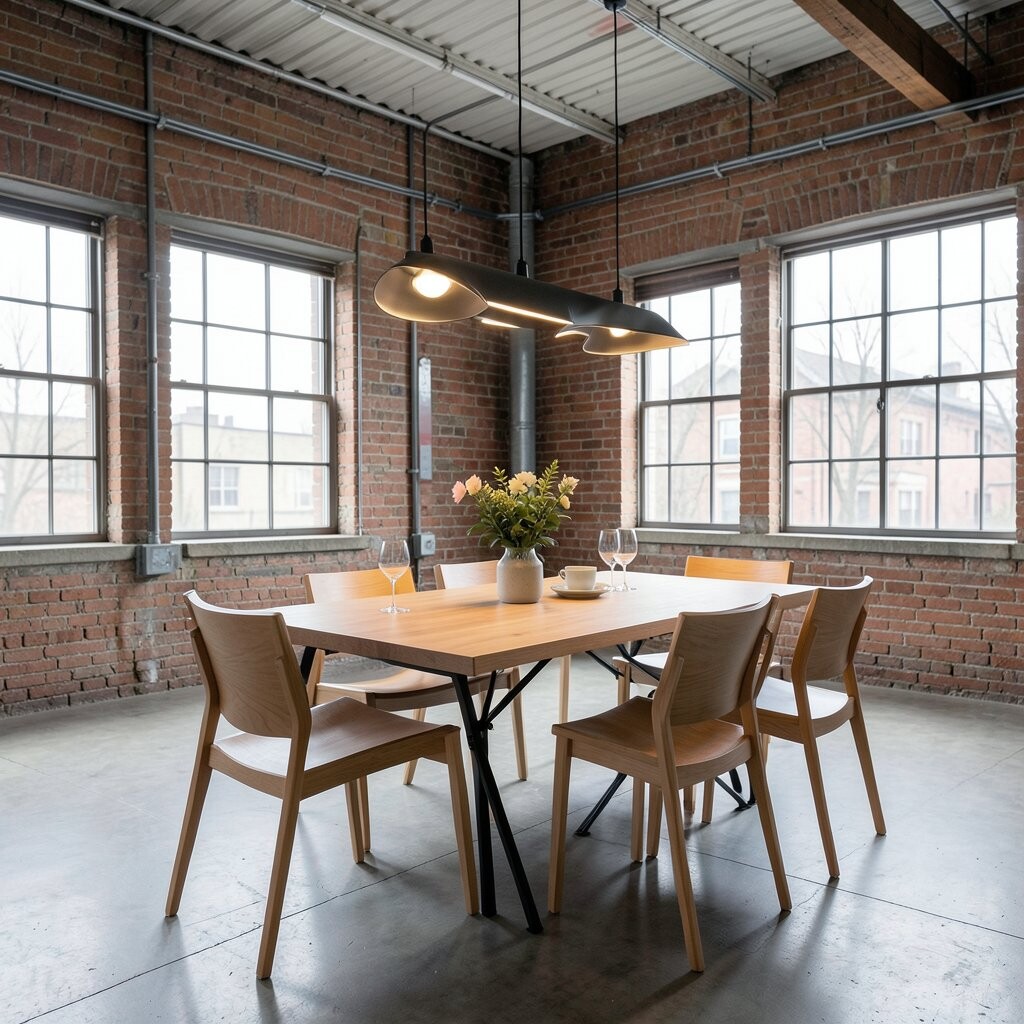
Plan lighting and surfaces around the moment your table is folded. Choose fixtures that work whether the tabletop is extended or tucked against the wall so the room always looks complete.
Use a mix of overhead light and a nearby task lamp so you can focus on eating without harsh glare. Keep the nearby wall clear and add a small landing area like a narrow ledge or wall shelf for items you grab often.
For personalization, add a warm-toned lamp shade or a metal shade with cutout patterns that cast gentle shadows. Cost considerations are easier here because you can often swap bulbs, add a lamp, or install a small plug-in fixture rather than buying new furniture. The result feels intentional, and your industrial loft looks stylish every time the table goes up and comes back down.