A wall can act like a doorway when you paint it with intention. Once your brush starts moving, your studio begins to feel like a living dream.
These ideas help you create surreal murals that look strange in the best way and still work for real studio life.
1. The Clock That Melts Into a Harbor
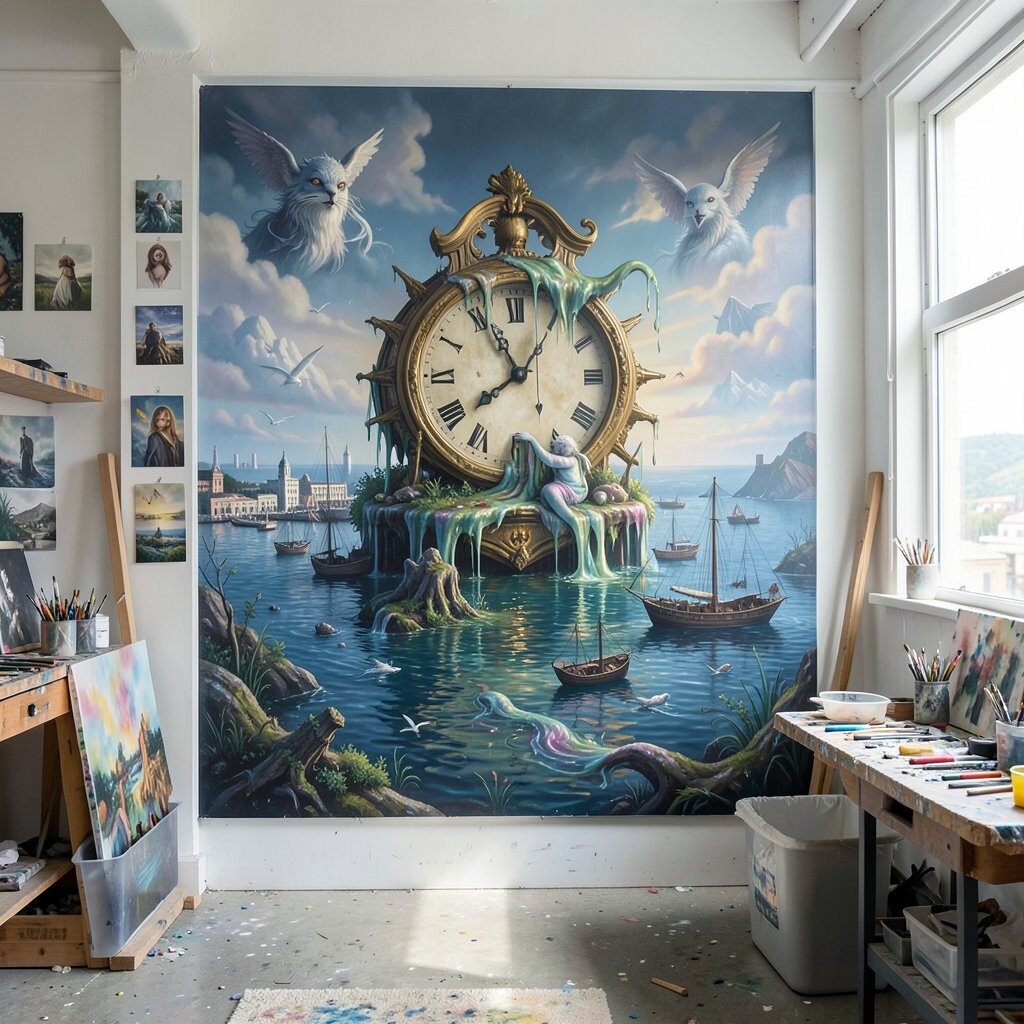
Paint a shoreline where soft clocks drip into the sea like warm metal. Let barnacles and foamy swirls catch the highlights as if time is breathing.
This mural can make a daily practice feel gentler because it reminds you that pacing can change. For practical setup, sketch the shoreline with a grid so the horizon stays steady even when the clocks melt. Use a limited palette of deep blues, foggy grays, and warm golds so the wall does not look too busy. For personalization, add tiny symbols from your own life, like a small boat silhouette that matches your signature. To keep costs in check, use inexpensive base paint for the background and invest in a few mid-range metallics only for the clock edges.
2. Floating Staircases in a Sky of Paper Lanterns
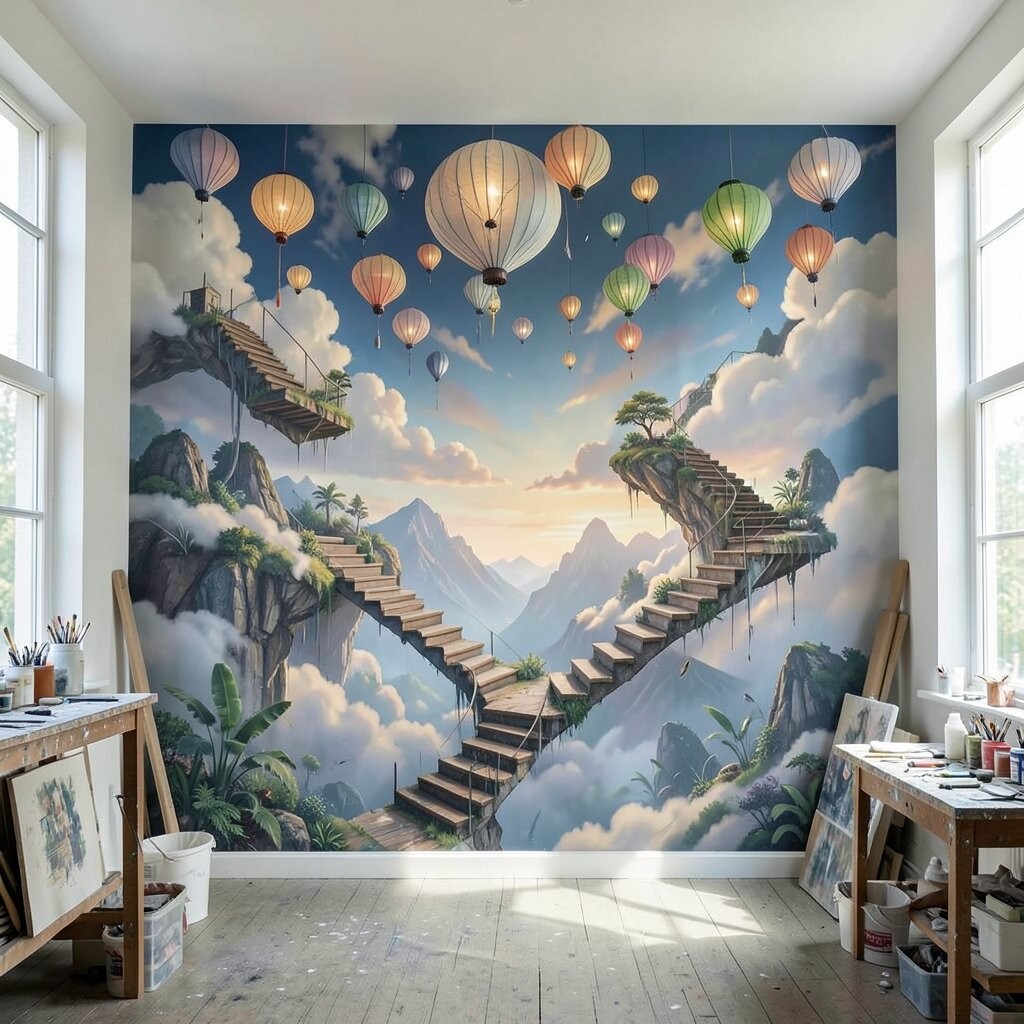
Imagine stair steps suspended in midair, each one painted like folded paper. Around them, hang paper lanterns that cast soft, uneven light across your room.
Seeing a path that never touches the floor can push you to try new compositions without worrying about “perfect.” Start by lightly drawing one strong staircase vanishing point, then repeat smaller steps toward it for depth. Keep the lantern shapes simple, and vary only their colors and sizes so you get movement without chaos. For personalization, paint a few lanterns in colors that match your studio objects, like your paint jars or sketchbook covers. If you want an affordable approach, mix chalky whites with cheap acrylic colors for the lantern glow and save brighter pigments for the brightest lanterns.
This kind of mural fits current trends toward warm, ambient lighting effects in studio spaces. It also works well with the way artists often work at night, because the lanterns give your wall a calm, cozy focus.
3. A Forest Made of Torn Pages and Ink Rivers
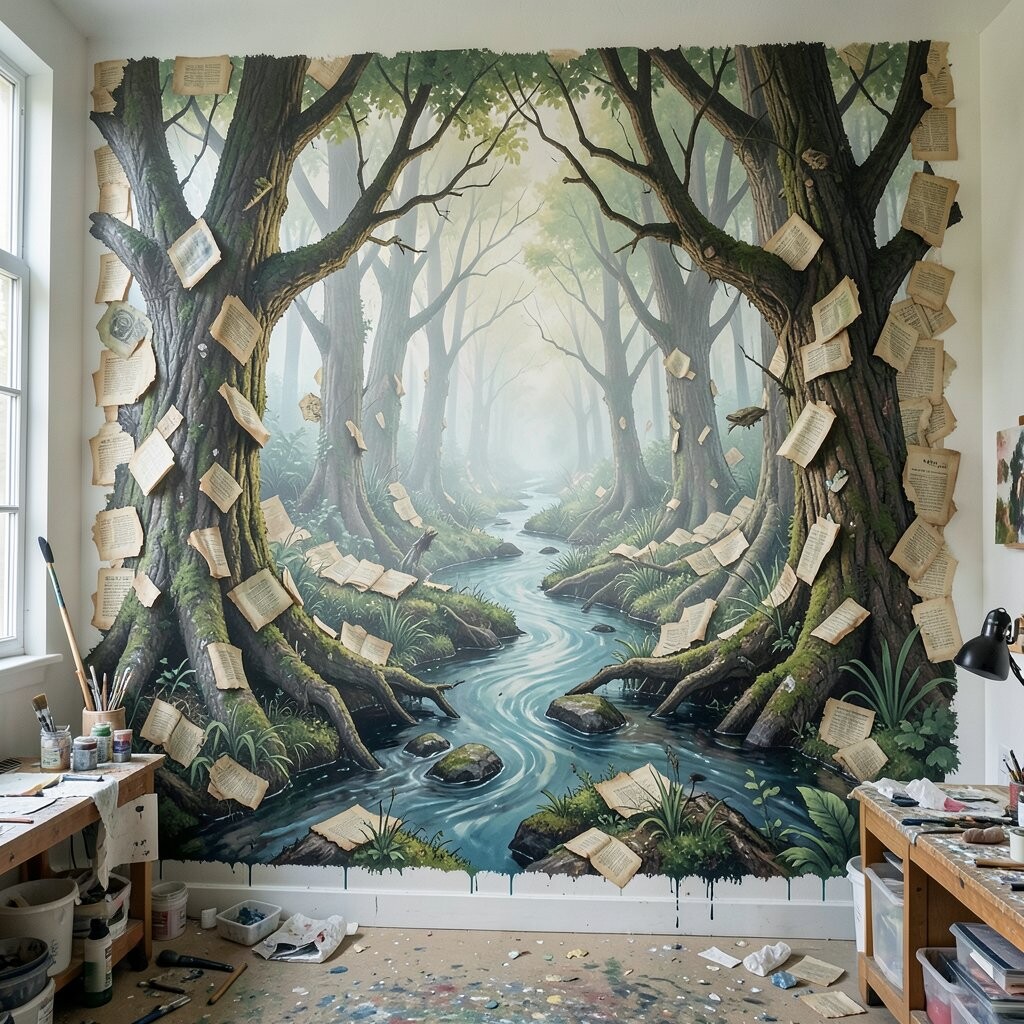
Turn a wall into a forest where trunks look like torn book pages. Instead of leaves, ink rivers curl and spill from branches like living handwriting.
This concept feels unique because it blends nature with the act of making marks. Paint a few “main trees” larger than life, then fill the background with smaller page scraps that overlap like real paper. Use a damp brush technique for the ink rivers so edges look soft and wet, which makes the mural feel alive. To personalize, include handwriting-like swirls that resemble your own doodles, even if they do not form words. For cost considerations, you can use low-cost paper textures through acrylic medium, then stencil small torn shapes to reduce painting time.
When people see a mural like this, they often feel invited to create again. It can also help your eyes rest during long sessions because the organic motion of ink curves feels soothing.
4. The Sun as a Face Carved From Marble Dust
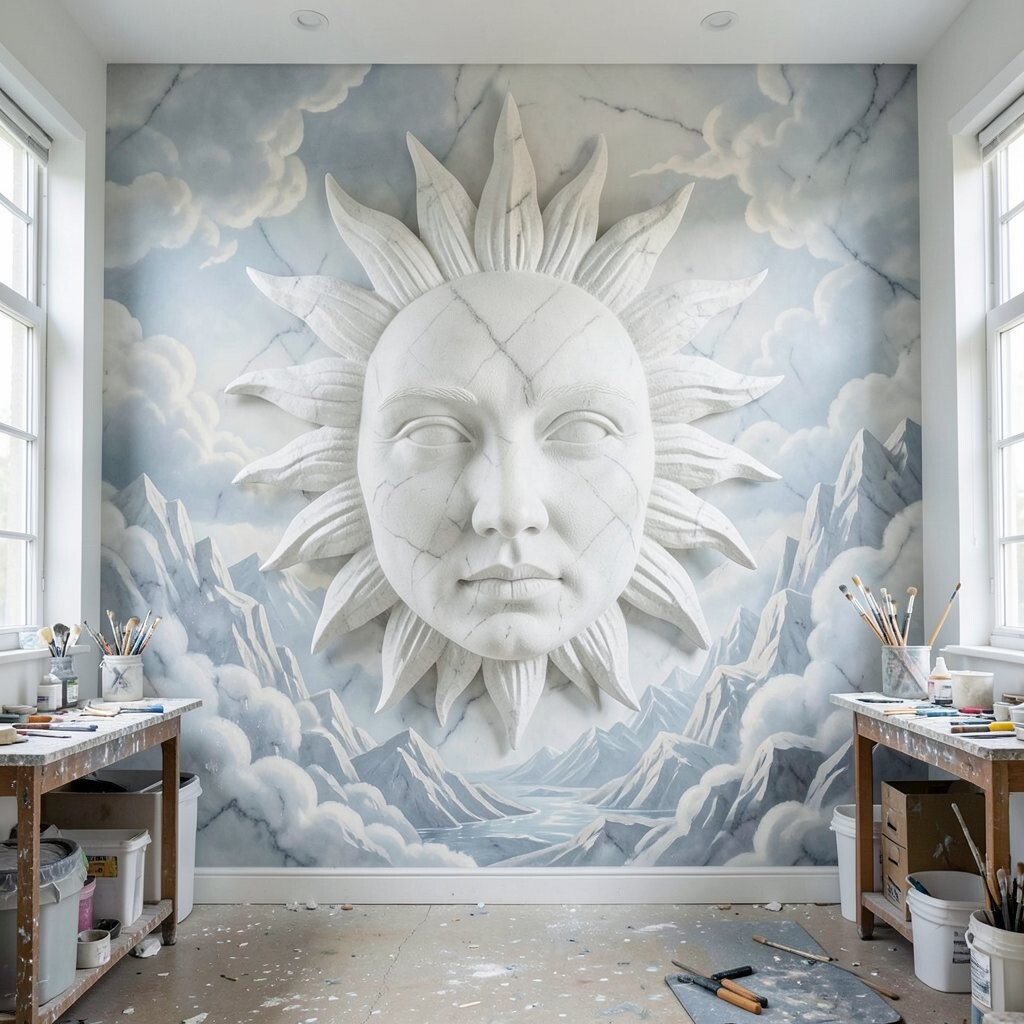
Paint the sun as a gentle face, made of pale marble chunks and dusty light. Let tiny cracks spread like veins, while soft shadows give the expression a quiet mood.
This mural gives your studio a calm “presence” that can steady your focus on difficult days. Start with a smooth circular base, then add crack lines with a fine brush and blend edges with a slightly dry sponge. Keep the palette mostly cream, gray, and muted peach so the face stays timeless and not overly loud. To personalize, give the sun a faint smile or a thoughtful brow using only a few careful strokes. For budgeting, you can fake marble texture with a sponge and inexpensive matte white paint, then use a small amount of pearl pigment for the most important highlights.
5. Fish Swimming Through Clouds of Glowing Sugar
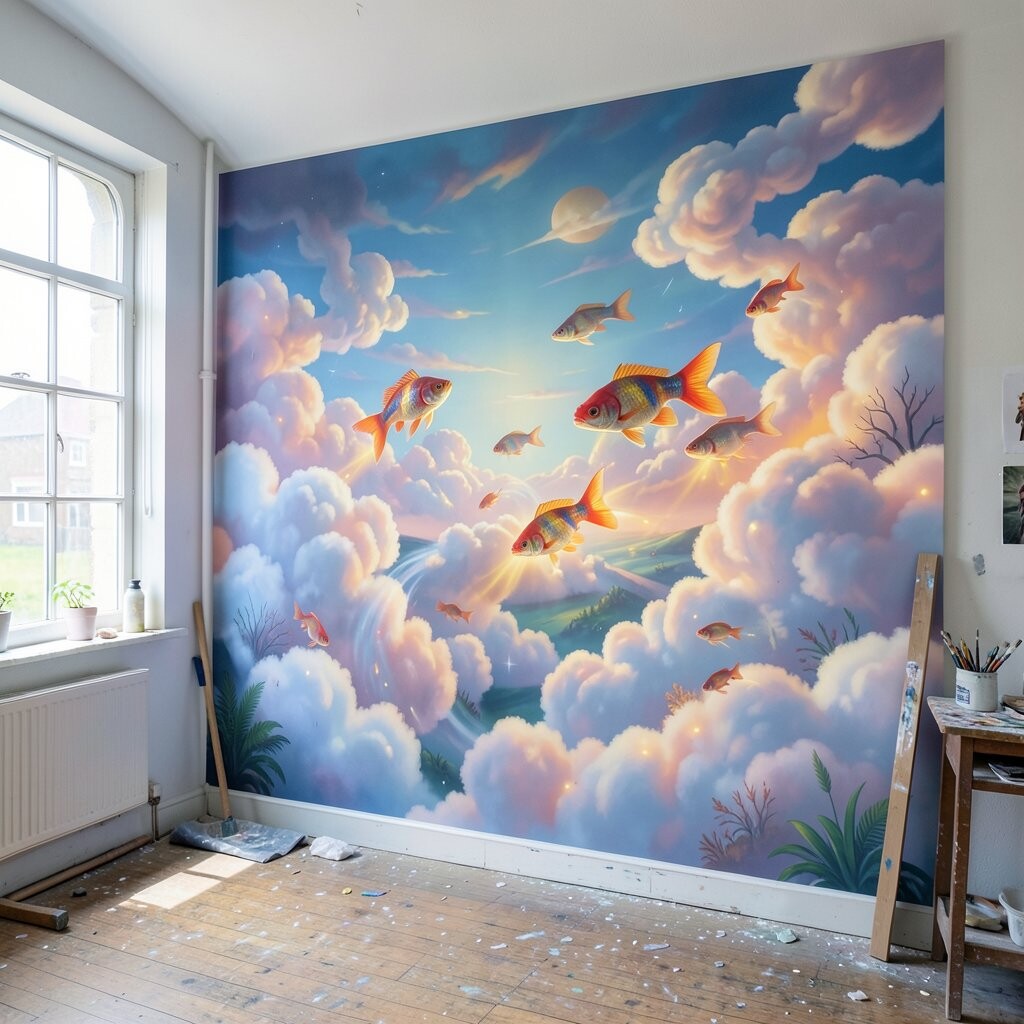
Show fish moving inside fluffy clouds, but make the clouds look like sugar crystals. Use bright specks and soft gradients so the air seems sweet and sparkling.
The benefit here is playful energy without losing artistic seriousness. Begin by painting the cloud mass first, then add fish silhouettes with clean shapes so they read from a distance. Sprinkle a light dusting of iridescent medium or fine glitter where the clouds catch light, but keep it limited to avoid making your wall feel messy. Personalize the scene by turning one fish into an emblem of your style, like adding a unique stripe pattern you often draw. Cost-wise, you can keep it reasonable by using textured drywall compound or heavy gel for cloud thickness, then add a tiny amount of sparkle only on focal areas.
This idea matches current interest in tactile, “edible-looking” textures in murals. It also encourages you to slow down, because the careful crystal details reward steady brushwork.
6. An Observatory Window Showing Inside-Your-Head Constellations
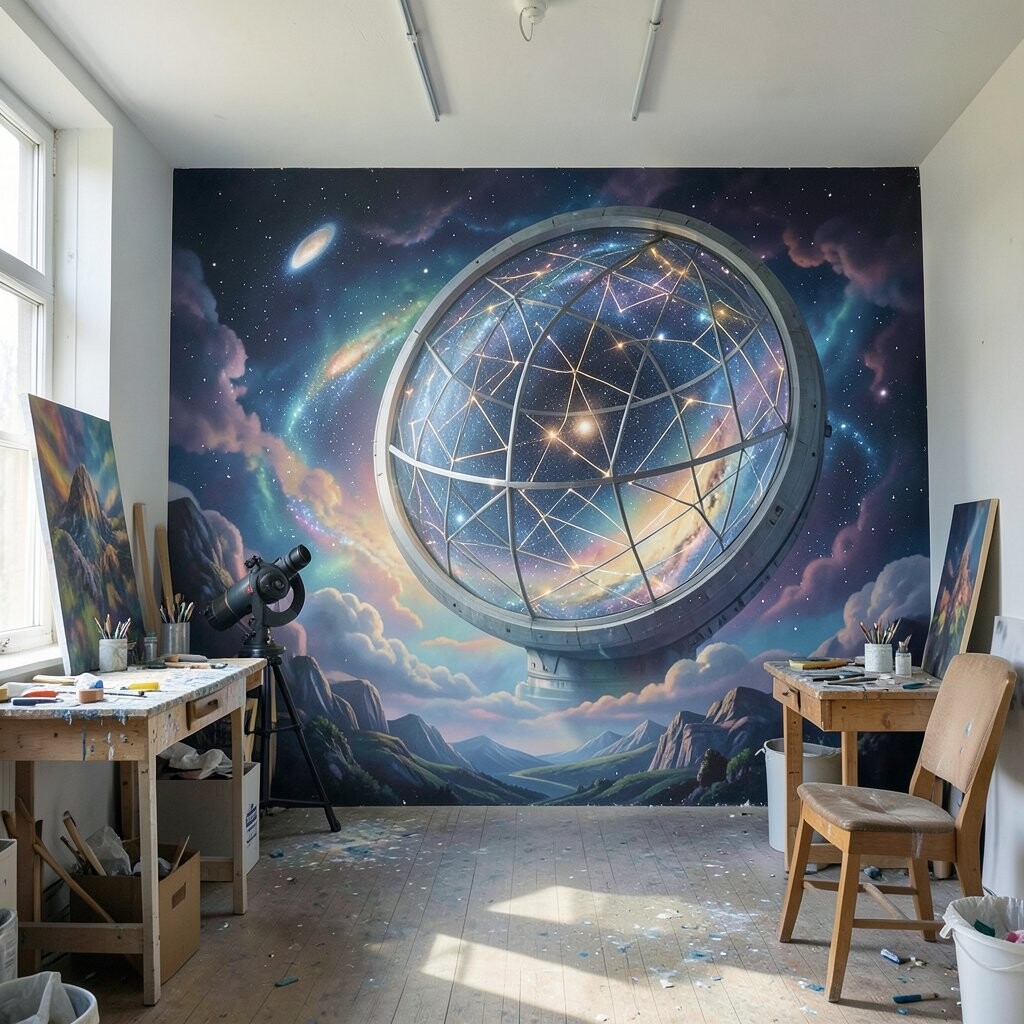
Paint an old window frame, and inside it show constellations shaped like your thoughts. Let stars become little ideas, like spirals, arrows, and sketches you made during the day.
This mural can feel like a private creative journal, which makes your studio feel more personal. Outline the window with strong lines first, then build the sky with layered washes so it stays airy. Add a few constellations that echo your favorite motifs, such as flowers, faces, or geometric patterns, so the stars feel yours. For practical tips, tape the window edges neatly so you get crisp borders, then use a small brush for star dots and a larger brush for the cloudy haze behind them. For cost, buy a basic set of water-based inks or diluted acrylics, and reserve expensive colors for the brightest stars.
Many artists enjoy “inner world” themes right now, and this one fits that mood while still looking elegant. It also gives you an everyday ritual cue, because you can glance at the window and pick a new idea to work on.
7. The Mountain That Grows Paintbrushes Instead of Trees
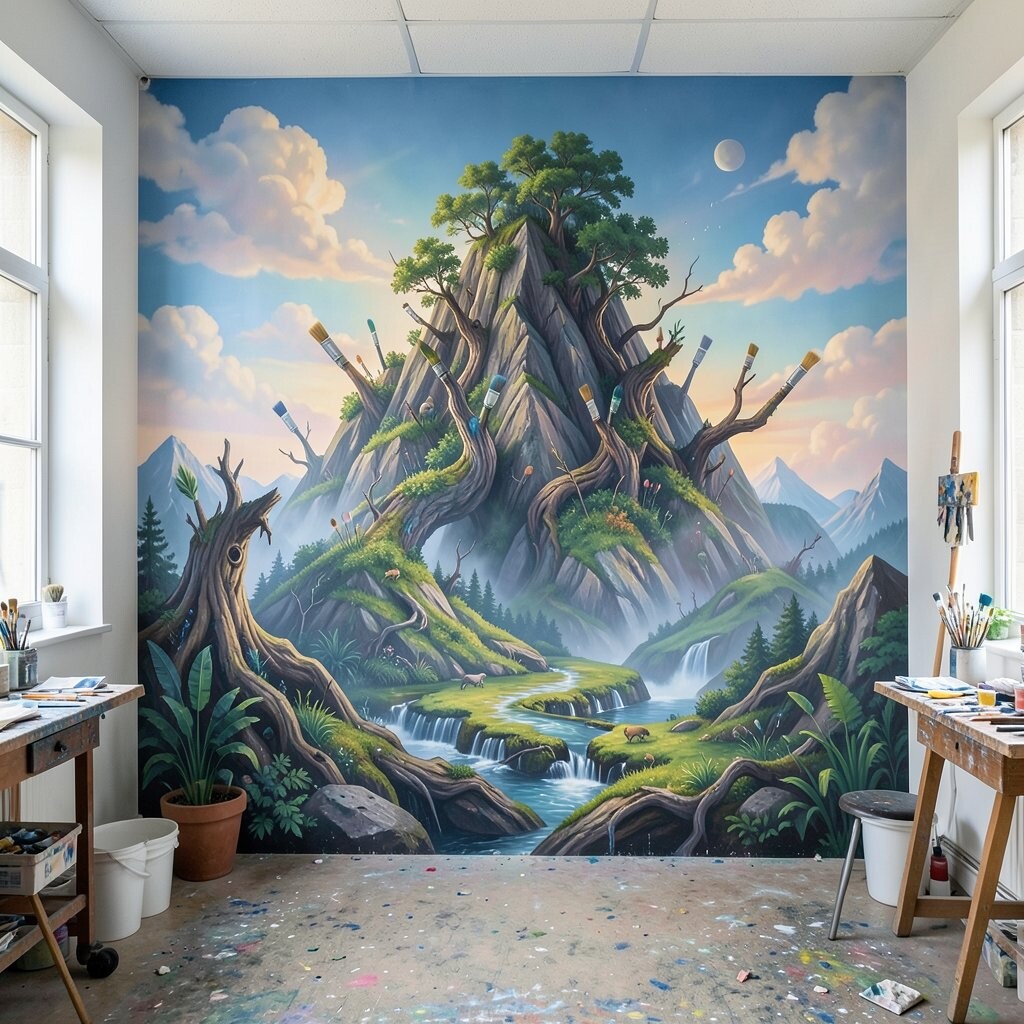
Create a mountain range where tree-like branches are actually paintbrushes. Paint the bristles with layered colors so they look fluffy and full of fresh pigment.
This is a bright, whimsical mural that celebrates your tools, which can boost motivation. Start by deciding which brush is the hero, then let smaller brushes repeat along the slope for rhythm. Blend the mountain colors gradually using a sponge for soft fog, so the brushes stay readable. Personalization is easy here: add your own brush shapes, including wear patterns, like a worn tip or a handle color you love. If you want to keep costs down, use inexpensive brushes as reference and paint simple bristle textures with one or two fan brushes rather than many detailed strokes.
It is also a strong studio trend, because murals that honor craft tools and process feel modern and grounded. Even if you do abstract work, this one can help you connect your tools to your imagination.
8. A Library Staircase With Books That Become Birds
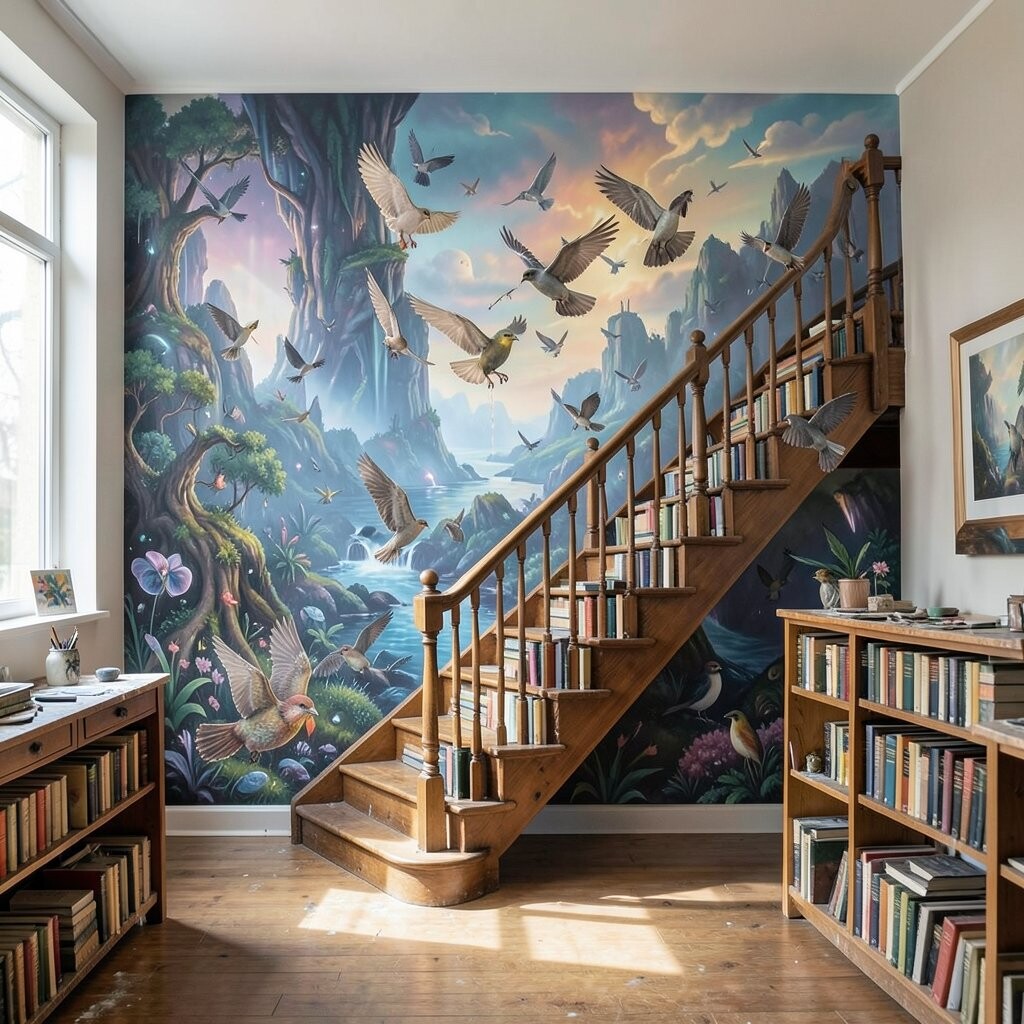
Paint a staircase that leads upward inside a huge library, but each open book releases birds. The birds should look like they are made from page edges, with feathers shaped like curled paper.
This mural offers a wonderful mix of wonder and structure, since stair steps naturally guide the eye. Sketch the staircase perspective carefully so the steps feel solid, then let the birds break the rules by drifting in playful angles. Use warm browns and deep navy for the library, and then add brighter bird colors only in the areas that you want to feel lively. Personalize by featuring a few “book titles” as shapes or symbols without needing readable text. For cost, use a limited number of book colors and repeat them across the scene to reduce paint mixing time.
9. The River That Flows Upward Into a Blooming Light
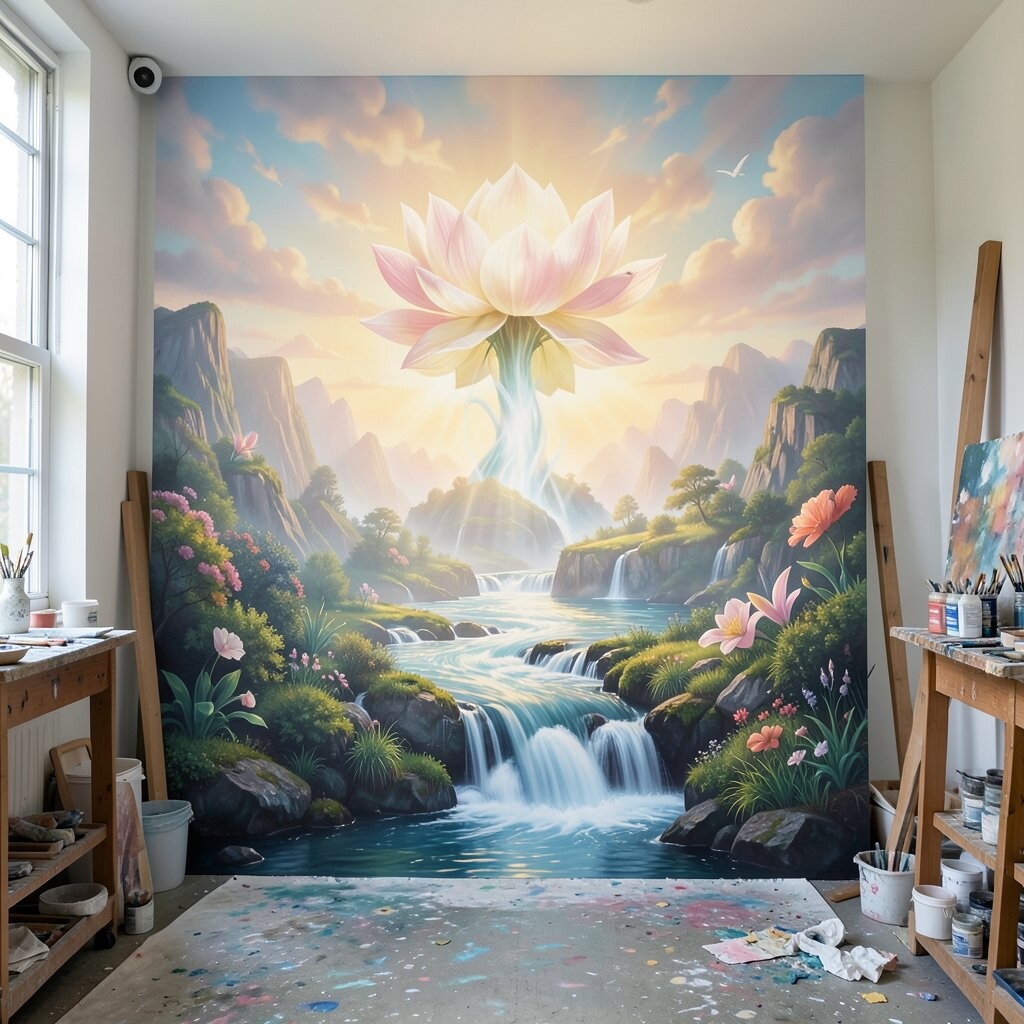
Depict a river that rises from the ground and turns into a bright flower of light. Paint the water with gentle curves, then let it soften into glow at the top.
This scene can make your studio feel hopeful because it turns ordinary gravity upside down. Start with a clear river path line, then widen it gradually and add reflections using lighter tones. Add small ripples at regular intervals, and use a thin brush to pull highlights so the water looks fresh. For personalization, include a tiny object floating in the river that means something to you, like a seed, a key, or a paint cap. To manage costs, do the glow with layered inexpensive whites and soft yellows, and use one brighter accent color only at the final bloom.
This idea fits a common trend toward uplifting “light and growth” visuals in creative spaces. It also helps with composition practice, because painting a moving curve teaches your hand to stay smooth.
When you work near it, you may find your focus shifts from small mistakes to the bigger flow. That shift alone can make long sessions feel easier.
10. The Mirror Room Where Reflections Wear Different Seasons

Create a mural of a room with mirrors, but the reflected world shows different seasons. In one mirror, snow falls softly; in another, flowers glow; in a third, leaves swirl in warm wind.
This concept feels deeply surreal because it keeps the “same place” while changing the entire mood. Begin by drawing the room box and placing mirror frames so they match your wall proportions. Paint each season reflection as a mini scene, but keep the mirror edges consistent so everything feels connected. Personalize the reflections using your own seasonal memories, like a specific flower color or a sky tint you recall. Cost-wise, you can reduce time by reusing shapes, like the same tree silhouette, then changing only the color palette and leaf density.
Season-splitting art is popular right now because it captures change in a visually bold way. It is also a great way to match your mural to the time of year, since you can add a seasonal update later if you want.
11. The Streetlight That Turns Into a Constellation Machine
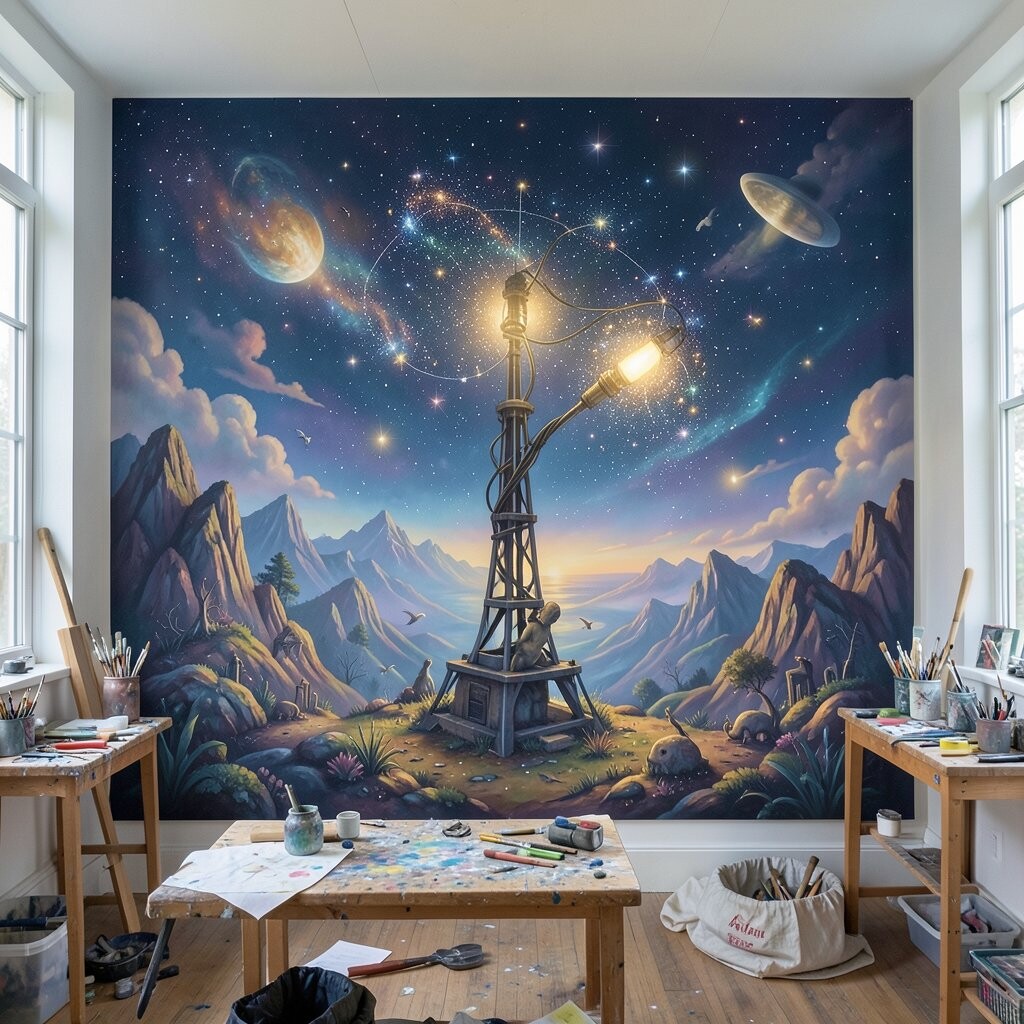
Paint a single streetlight at night, then have it transform into a device that projects stars. Let the light beam become a pattern, like tiny gears and constellation lines forming together.
This mural helps your studio feel like a place where ideas are made, not just stored. Start with a strong dark background and a focused light cone, then build the “machine” inside the glow using simple geometric shapes. Add thin star lines with a fine brush and vary dot sizes so the sky looks believable. For personalization, place one constellation that matches your favorite drawing subject, such as a hand, a heart, or a brush icon. Cost considerations are friendly here, because you can use cheap black and white for the sky and reserve your best color only for the most visible constellation lines.
It is unique because the machine quality keeps the surreal scene anchored in a believable object. And it aligns with current interests in sci-fi calm, where wonder meets clean design.
12. The Garden Path That Leads Into Your Canvas Texture
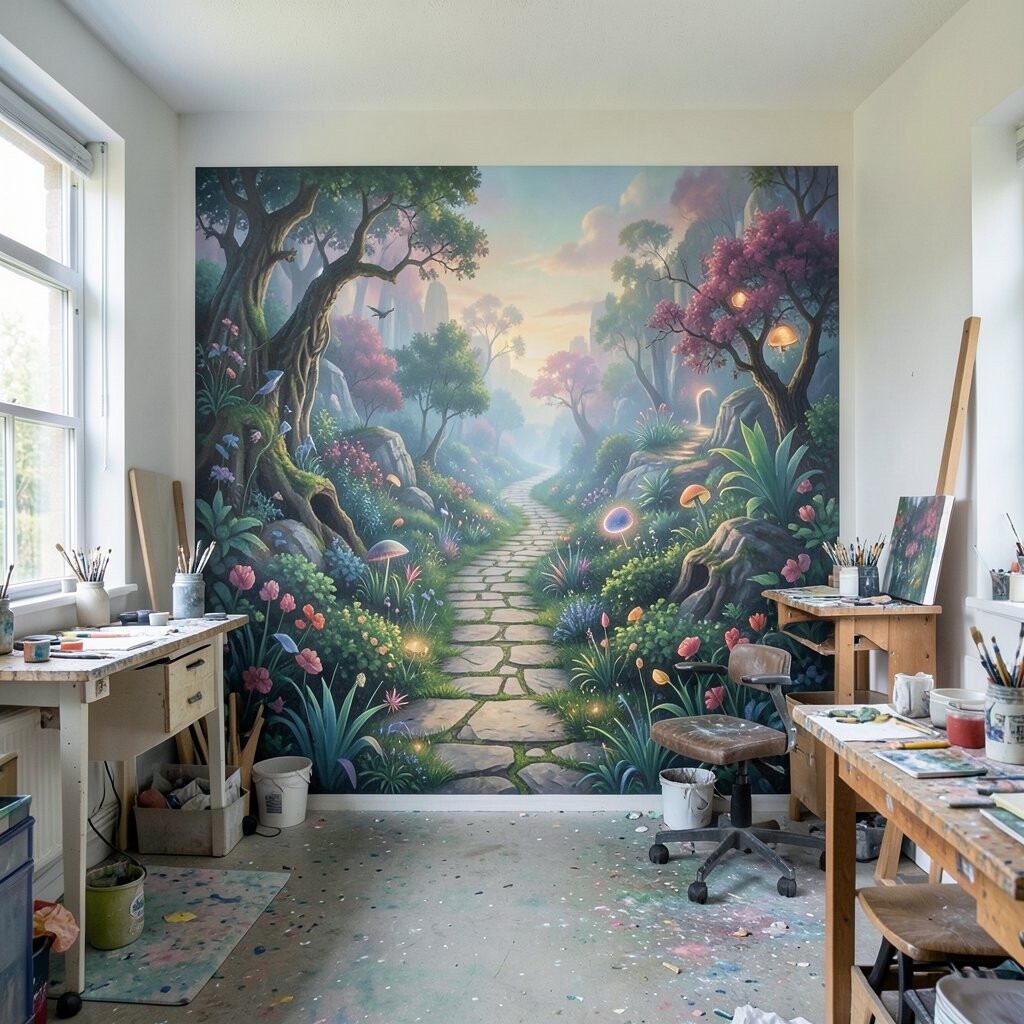
Design a winding garden path that seems to fade into a giant canvas surface. As the path disappears, the wall should show brush marks, fabric weave, and layered paint ridges like a real artwork.
This ending image is powerful because it makes your studio wall feel like part of your process. Use dry brush for the canvas texture and build raised paint lines in small areas so the wall catches light. Keep the garden elements soft and painterly so they melt into the canvas background without sharp borders. Personalize it by copying a texture you like from your own work, such as the way you apply gel medium or palette knife strokes. If you want to keep costs manageable, you can make “canvas weave” with inexpensive mesh or textured roller impressions, then add only a few hand-painted ridges for detail.
This kind of texture-forward mural is trending in studio design because it invites touch and close looking. Even from far away, the path gives you a clear route for your eyes, which makes the mural feel welcoming.
As you paint, you will likely start noticing your own stroke style more clearly. That awareness can improve your work while also making your space feel like it belongs to you.