
The right garden shed can make your yard feel more inviting. Even a simple corner can start to look cared for.
When you plan it with color, storage, and thoughtful details, it becomes a little neighborhood landmark. You’ll enjoy walking by it every day.
1. Pastel Doorway With Matching Planters
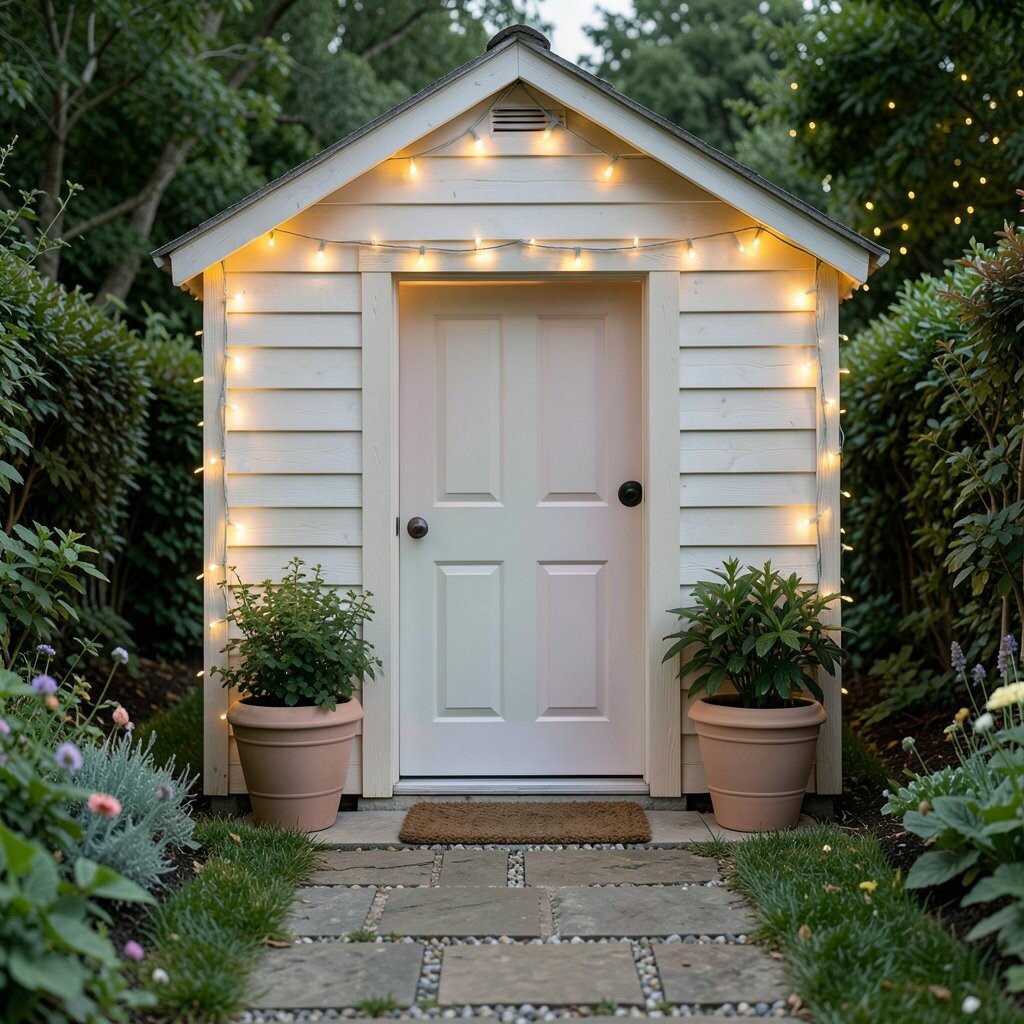
A soft pastel door can turn a plain shed into something cheerful. Pair it with matching planters so the whole spot looks like it belongs together.
Imagine pale mint or sunny peach welcoming you as you pass. You can paint only the door and trim for a budget-friendly start, then let climbing plants soften the edges. Keep the planters nearby so small tasks feel easier, like grabbing herbs while you work in the garden.
2. Window Frames That Look Like Cottage Art
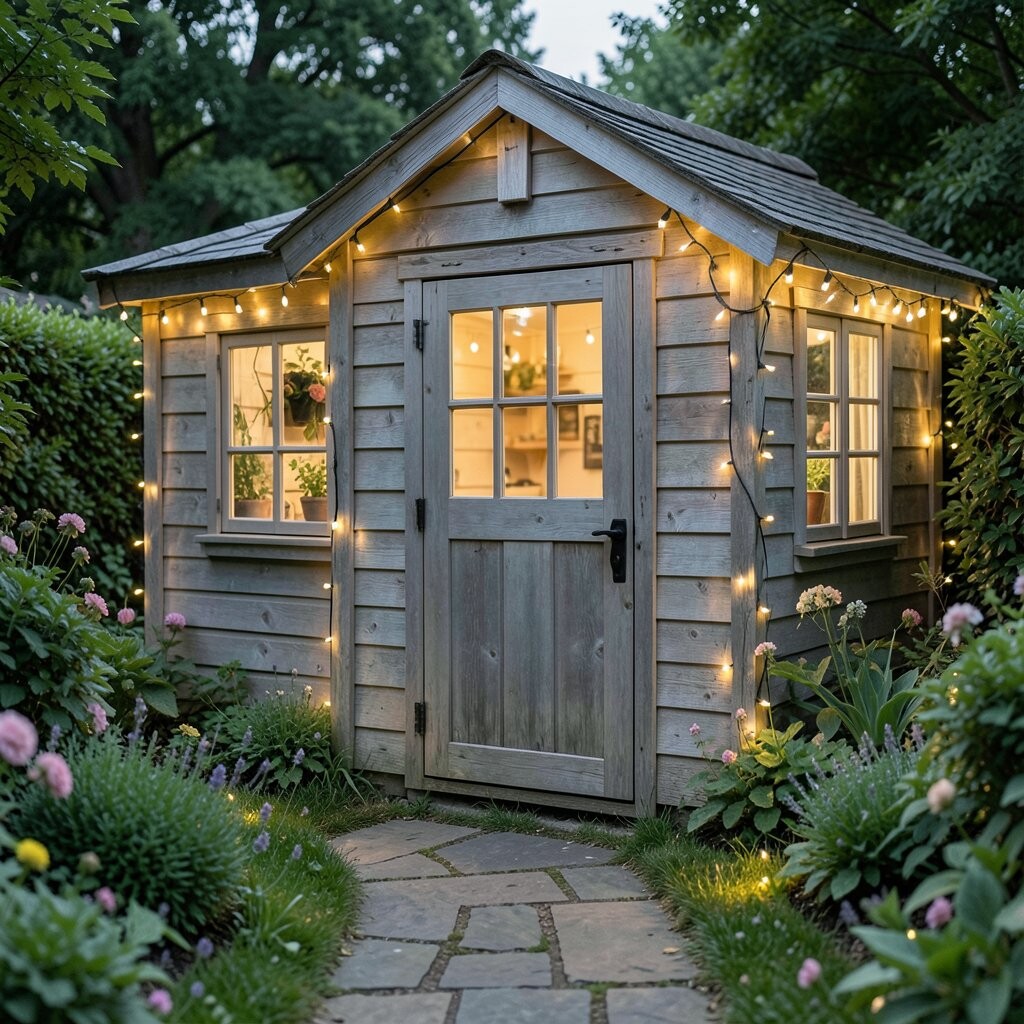
Small windows or window boxes can make your shed feel warm and lived in. Even if your shed is basic, adding charming window frames creates a bigger visual moment.
Try vintage-style trim around the glass, then paint it to match your fence or porch railing. You’ll get more natural light inside, which helps when you’re sorting tools. For practical planning, keep the glass safe with protective film if you have kids or lots of activity nearby.
Many people are adding slim grids to mimic older cottages, and that look still feels fresh today. Choose simple shapes, like rectangles, to keep the style classic and easy to maintain. If you’re redoing the outside anyway, it’s a good time to check that your latch and weather seal stay tight.
3. Vertical Herb Wall Inside the Side Storage
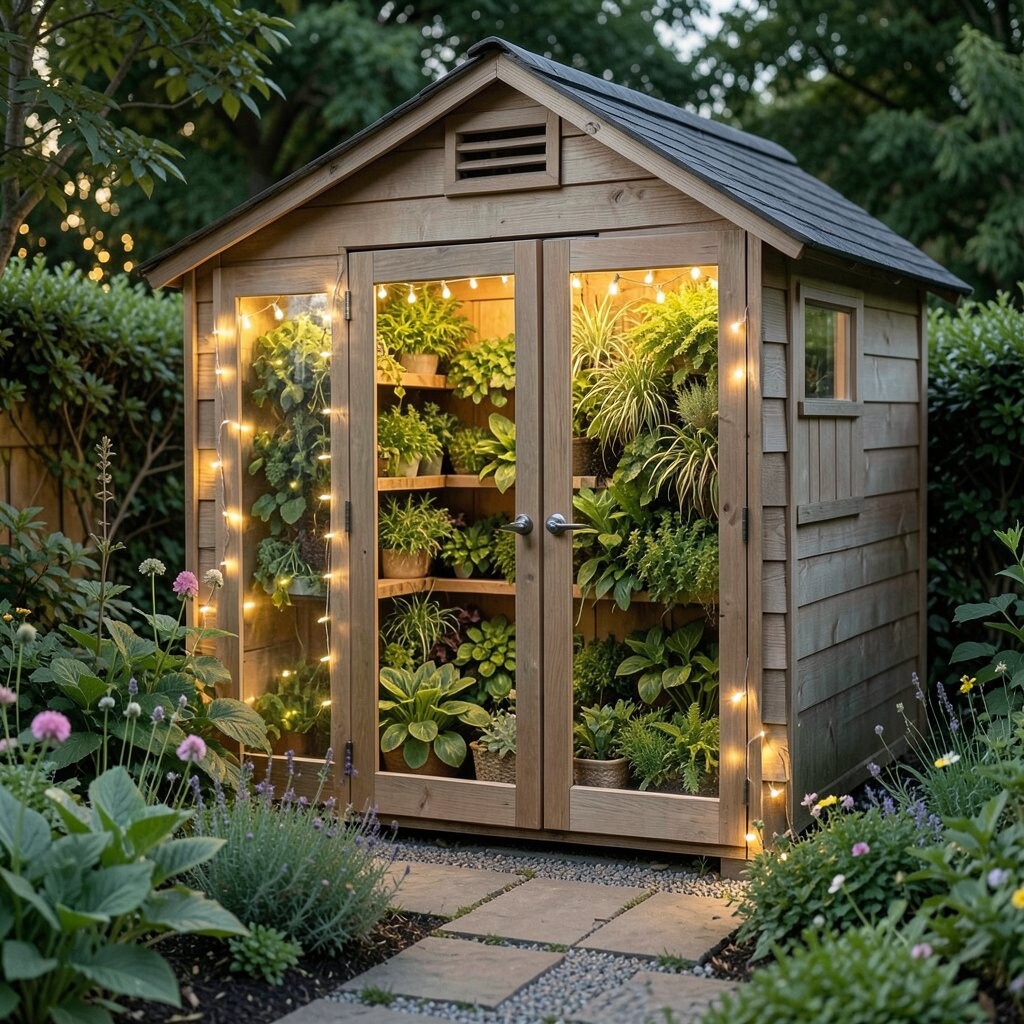
You can make your shed more useful by turning a side wall into a vertical herb station. It’s a friendly way to keep fresh greens close without taking over your kitchen counter.
Picture a narrow shelf system with small pots and tidy labels, all lined up like a tiny garden inside your toolshed. Use food-safe containers and a simple drip tray so spills stay contained. This helps you stay organized, especially if you already have potting supplies and watering basics stored.
For personalization, match the pot colors to your garden theme, like earthy terracotta or cheerful cobalt. People also love using modular rails now, so you can rearrange as your plants grow. When you plan the layout, leave a walkway space so you can reach everything comfortably while wearing gloves.
Cost-wise, you can start with a few pots and expand over time. Look for brackets that mount securely into studs, and choose a watering method that fits your schedule. A small system like this can make your shed feel less like storage and more like a workspace.
4. Chalkboard Panel for Plant Notes and Reminders
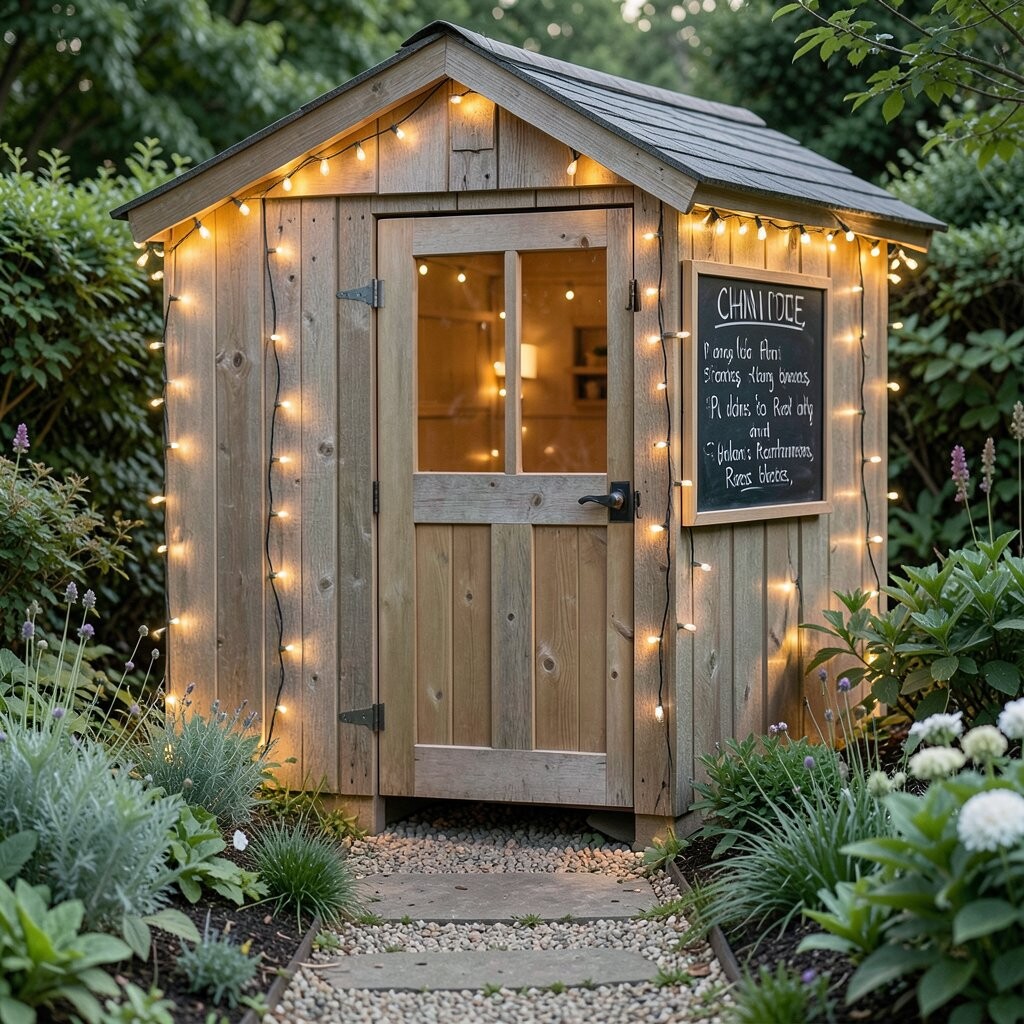
A chalkboard panel on the outside gives your shed a playful, practical purpose. It’s perfect for writing quick reminders for watering, seed starts, or seasonal tasks.
Think about bright drawings of flowers beside your handwriting, turning the shed into a little art board. Use outdoor chalk markers if your area gets humid or rainy, since they hold up better than plain chalk. When guests visit, they’ll notice it and ask about what you’re growing, which makes your garden feel more social and welcoming.
5. Warm Wood Slats for a Soft, Modern Look
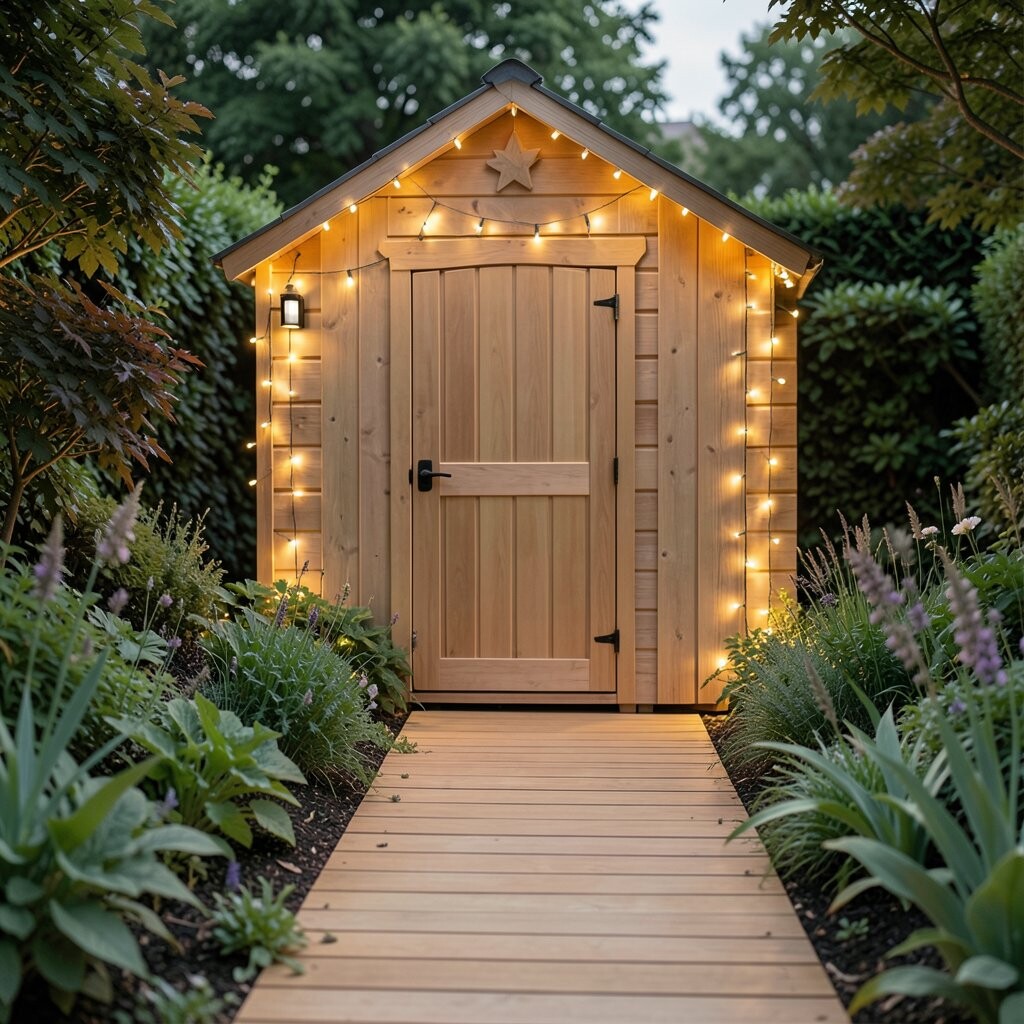
Wood slats add texture and calm to any shed design. This approach feels natural and looks great with both modern and traditional yards.
Picture horizontal boards creating gentle stripes across the front, with a clean door and neat trim. If you choose cedar or pressure-treated wood, you’ll get a durable surface that can take sunlight and light weather. Apply a simple stain, then add a sealant so the slats stay looking fresh through the seasons.
Many homeowners are choosing this “layered fence look” because it hides uneven siding and adds charm without heavy construction. To keep it practical, attach the slats with weather-resistant screws and leave a tiny gap for airflow. You’ll reduce moisture buildup, which helps the shed last longer.
6. Built-In Bench for Tool Sorting and Quick Breaks
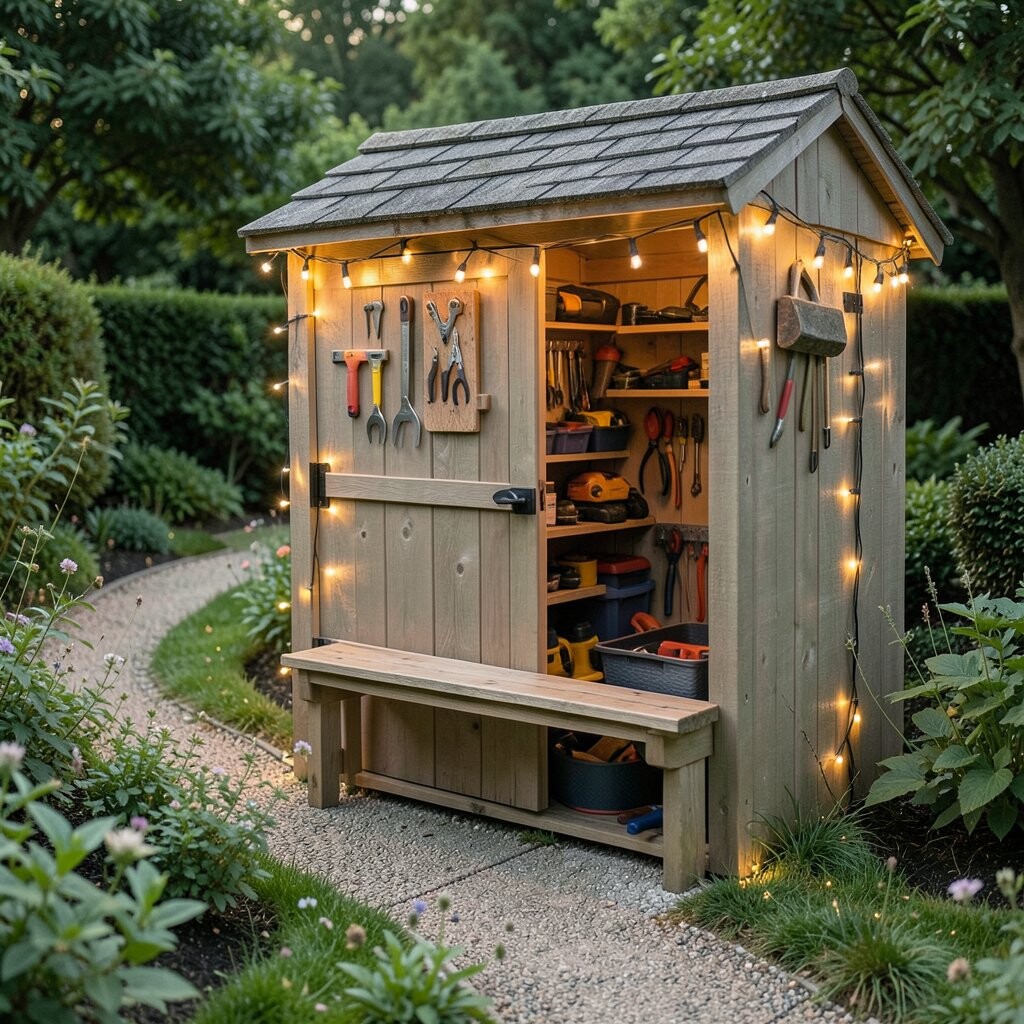
A shed can feel friendlier when it includes a built-in bench. This makes tool handling easier and gives you a comfortable place to sit during yard chores.
Imagine stepping inside and seeing a sturdy bench along one wall, with hooks for your most-used tools. You can add a small drawer for twine, gloves, or plant tags, so everything feels within reach. The benefit is simple and real, because you’ll spend less time searching and more time enjoying your plants.
For personalization, paint the bench edge in a color you love, like deep green or bright yellow. People are also adding pegboards behind benches right now, and it makes the shed feel like a workshop. If you worry about clutter, choose a bench design with closed storage under the seat.
Cost is often manageable because bench framing can reuse scrap lumber and simple hardware. Measure your shed width before building so you don’t block doors or shelves. A bench like this turns chores into a routine you look forward to.
7. Color-Blocked Side Panels With One Bold Accent
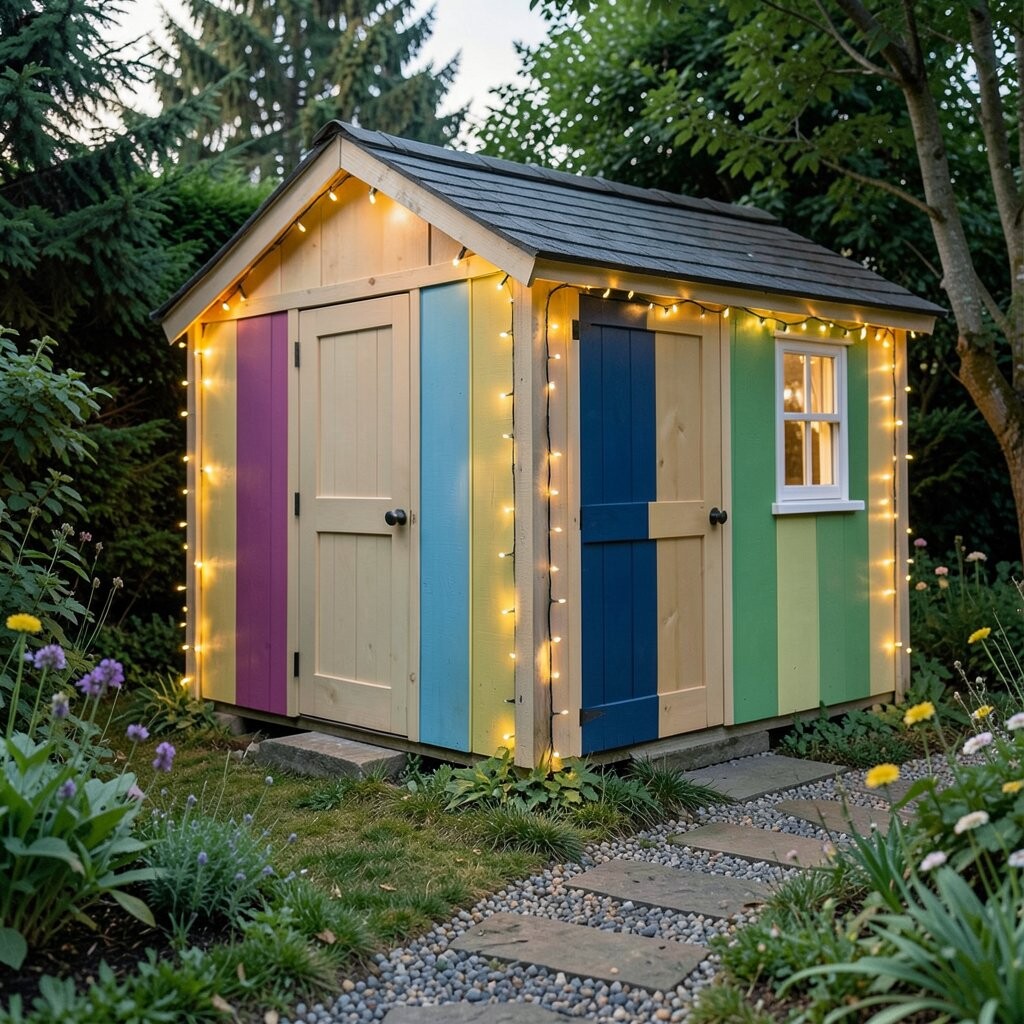
Color blocking is a fun way to make your shed stand out without painting every surface. Choose one bold accent and keep the rest softer for a balanced look.
Picture a warm cream shed body, then a teal panel on the side where the door sits. That visual contrast makes your path feel brighter while still looking tidy and intentional. You’ll also find practical benefits, like easier spotting of the door and clearer organization when you store things near the marked area.
To keep it current, try muted tones that match outdoor accessories, like planters, umbrellas, or garden furniture. Consider using exterior paint with a durable finish so the shed holds up to sun and rain. If you want a lower-cost upgrade, tape off sections and repaint only the panels, not the full shed.
Personalization can be as simple as adding a small painted motif, like a tiny leaf cluster near the handle. When the design feels like “you,” the shed becomes part of your home style, not just a background structure.
8. Glass Jars and Label Strips for Inside Organization
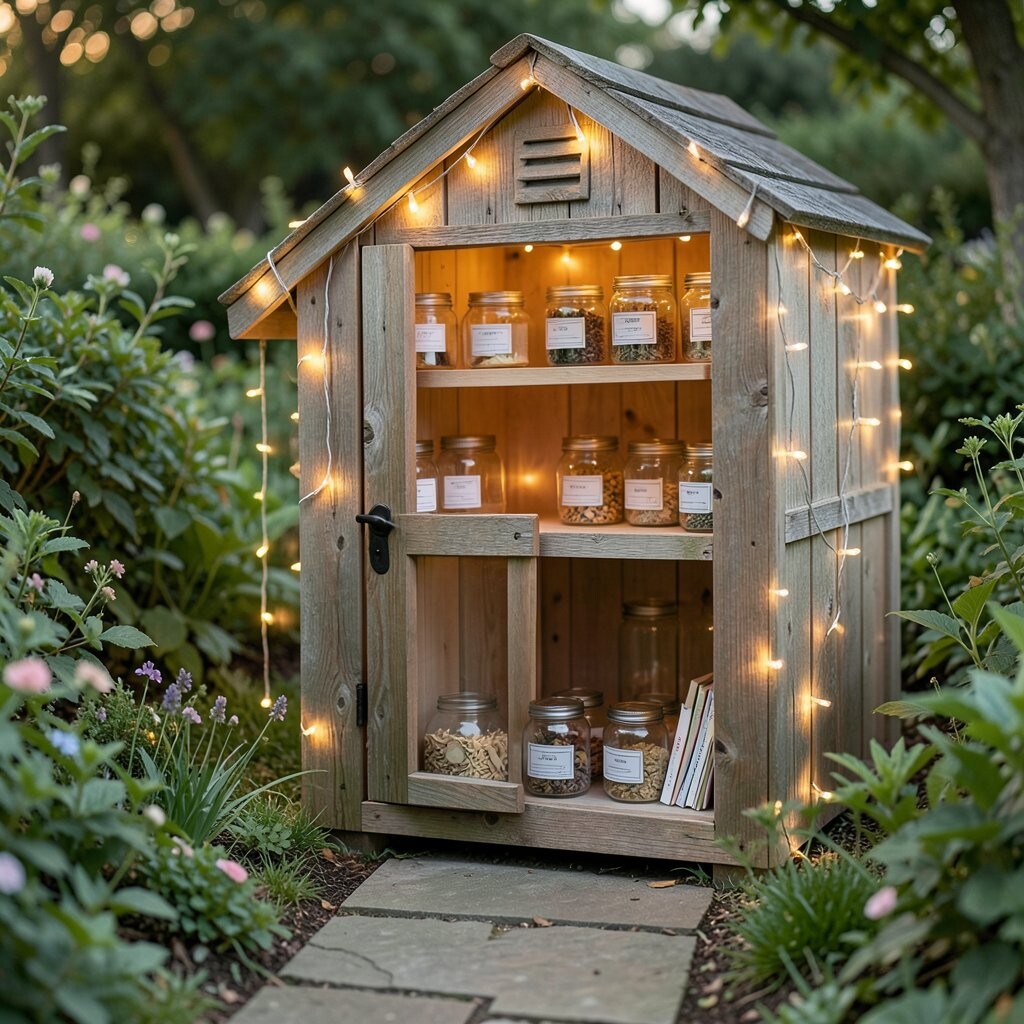
A shed that looks organized feels inviting, even when you’re not using it. Clear storage jars let you see what you have, so you can grab supplies faster.
Think about lining up jars on a shelf with matching label strips, making the inside look neat and bright. This reduces waste because you’ll notice when seeds or bulbs are running low. It also helps you work in less chaos, especially on busy planting days.
Many current storage trends focus on “uniform aesthetics,” where labels match and containers look consistent. Use a label maker or neat handwriting, then choose label colors that match your shed paint. For cost considerations, start with one shelf and upgrade gradually as you finish older containers.
If you store potting mix or fertilizer, keep those items in sealed bins for safety. Always keep labels readable, so you don’t mix up things later. When the inside looks as good as the outside, you’ll feel proud every time you open the door.
9. Fairy Light String Paths Along the Eaves
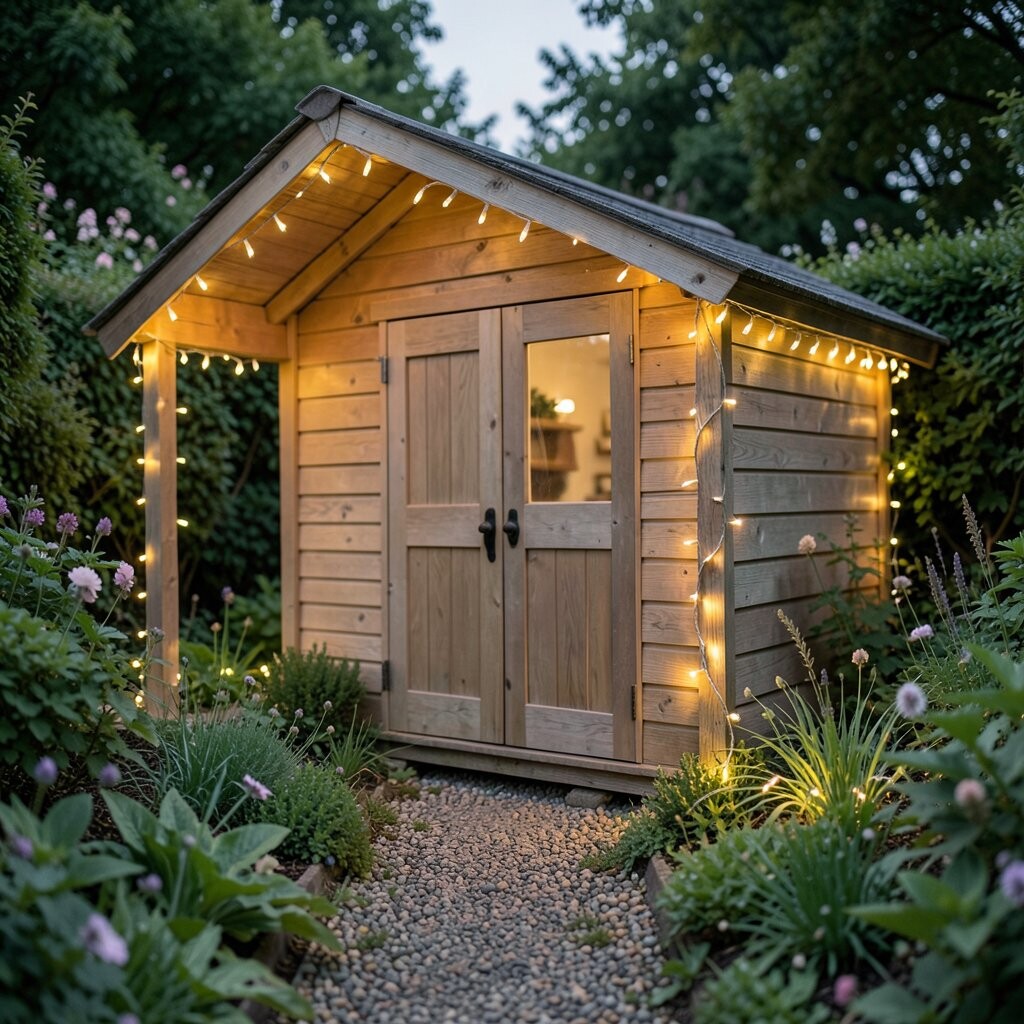
Outdoor string lights can make your shed feel magical after the sun goes down. They also brighten the path so you can move safely at dusk.
Picture soft warm lights tracing the shed roofline, reflecting off nearby plants and creating a cozy glow. Choose LED lights for better energy use, and tuck cords so they stay neat. This small change gives a big visual payoff, especially if you often step outside in the evening to water or check on plants.
For uniqueness, try weaving lights through a thin lattice panel or along a trellis near the shed. You can also switch light colors with the seasons, using warm white year-round and adding red or green accents around holidays. If you’re thinking cost, LED strings are usually a smarter long-term choice than older bulbs.
Make it practical by using clips and weatherproof hooks so lights hold steady in wind and rain. A gentle pathway glow encourages you to enjoy your garden more often, not only during daylight.
10. Raised Planter Frames Around the Shed Base
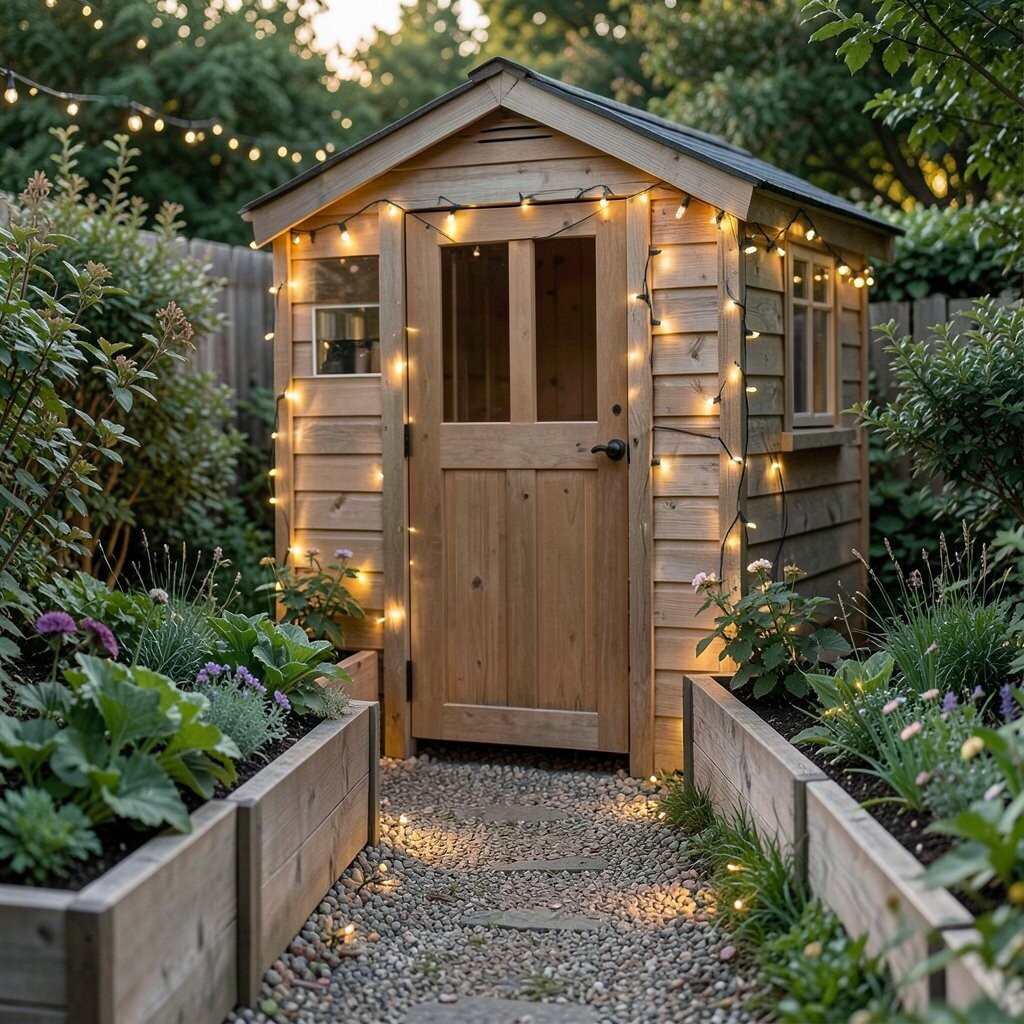
Planter frames at the shed base create a clean boundary between structure and soil. This helps the shed look intentional and keeps weeds from taking over the edges.
Imagine a neat ring of raised planters wrapping around the perimeter, filled with hardy flowers or low herbs. The visual effect is instantly tidy, and it also makes it easier to maintain because you don’t have to fight bare ground. You can choose plants that suit your sunlight, and that choice makes your shed area feel more stable and thriving.
For personalization, use different heights at corners to guide the eye toward the door. This is a trend that’s gaining popularity because it adds architecture to gardens without needing big landscaping projects. If you want a lighter budget, start with a narrow border using treated lumber or stone edging.
To keep it from turning into a messy project, plan your planting layout first. Leave room to access the shed for maintenance, and make sure drainage stays good so roots don’t sit in water. When the base looks dressed, the whole yard path feels brighter and more polished.
11. Tool Hooks and Pegboard With Color-Coordinated Bins
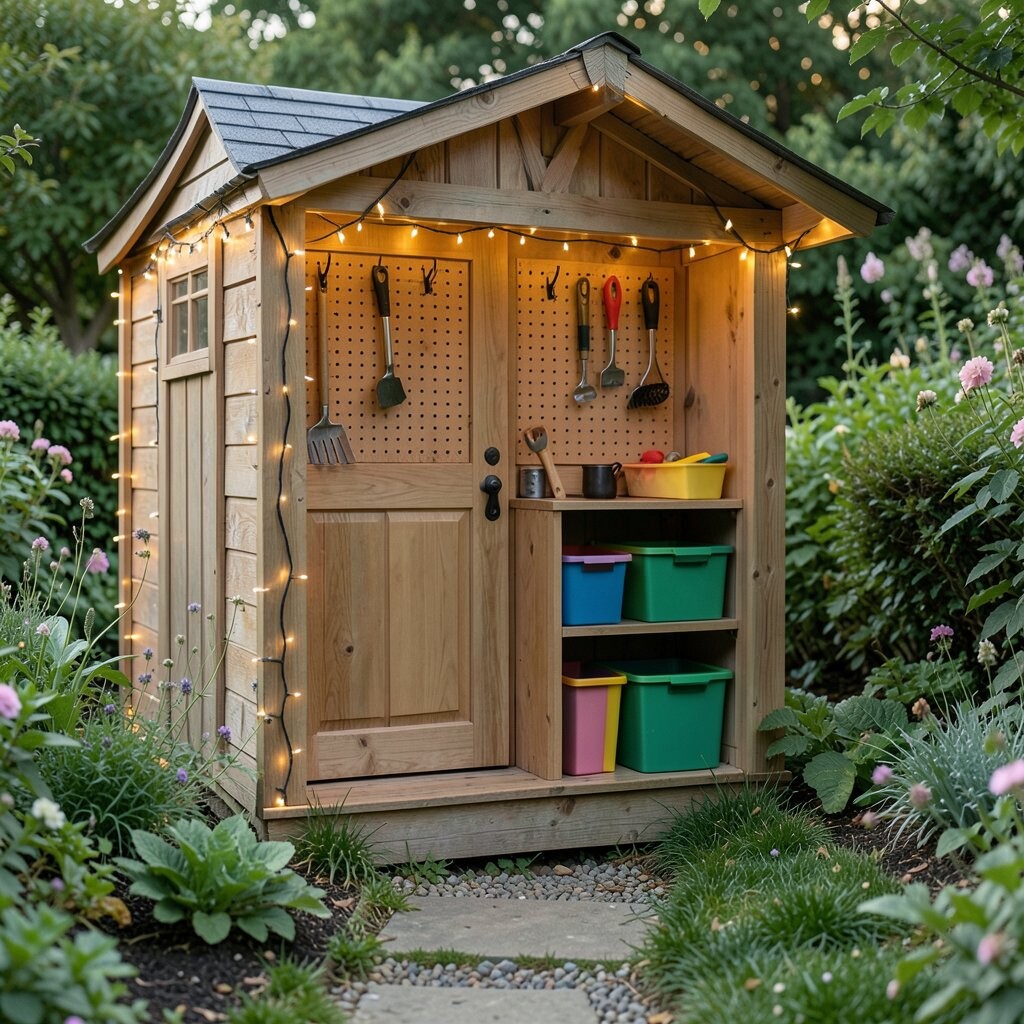
Pegboards make it easy to keep tools visible, so you don’t have to dig around. When you add matching bins, your shed becomes a system, not a jumble.
Picture a pegboard wall with hooks holding hand tools, and colorful bins below for seeds, twine, and spare parts. The benefit is speed, since you can find what you need in seconds. This also helps your shed stay safer because sharp or messy items are stored in tidy spots.
Unique style can come from painting the pegboard backing in a soft tone, like warm gray or sunny yellow. Many people are using color-coordinated storage now because it makes the workspace feel calm and fun. Choose bins that stack or slide easily to avoid clutter on rainy days.
Cost considerations are manageable since pegboards are often sold in standard sizes. Measure your wall space carefully, then pick hardware that fits common tool handles. Personalization can include small magnets or hooks for frequently used items like pruners and hand weeders.
12. Roofline Garden Boxes With Seasonal Blooms
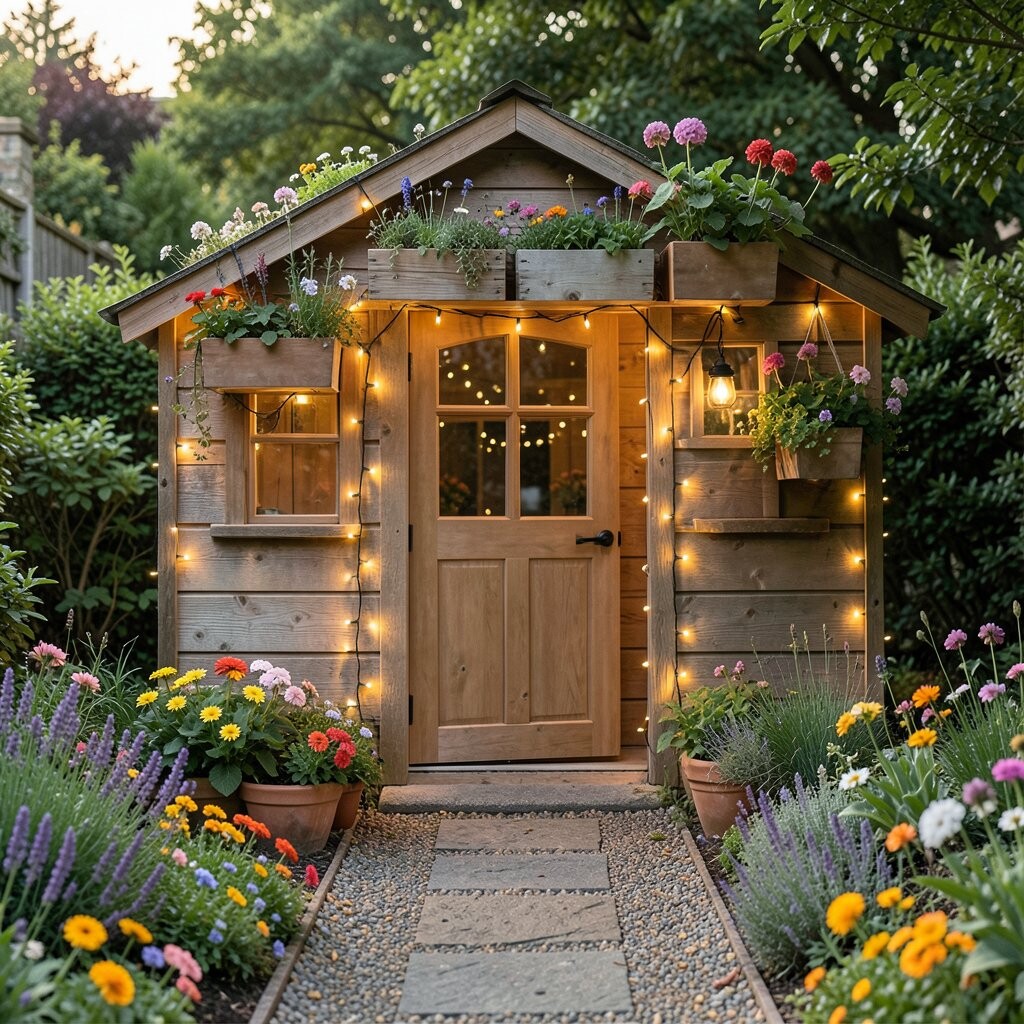
Adding garden boxes along the roofline turns the shed into a vertical flower stage. It brings extra color up where you can enjoy it while walking the path.
Imagine trailing blooms spilling gently near the top, with darker greens underneath to frame the shed. This design adds visual height, making small yards feel larger and more lively. You’ll also enjoy the benefit of better airflow for plants, since pots sit above the ground instead of soaking in moisture.
For practical setup, use sturdy brackets and make sure boxes have proper drainage holes. If you live in an area with windy weather, secure plants with light ties so stems don’t get tossed around. This approach fits current trends toward vertical gardening and “wow from the sidewalk,” since it looks great even at a distance.
Personalization is easy through seasonal changes, like bright spring pansies and bold summer zinnias. Cost-wise, you can start with one box on the most visible side and expand later. As your garden evolves, the shed becomes a living display that keeps your path cheerful all year.