The right textile pattern can make a room feel instantly warmer and more personal. It does not have to be expensive to look amazing.
1. Geometric Throw Pillow Fabric Gallery
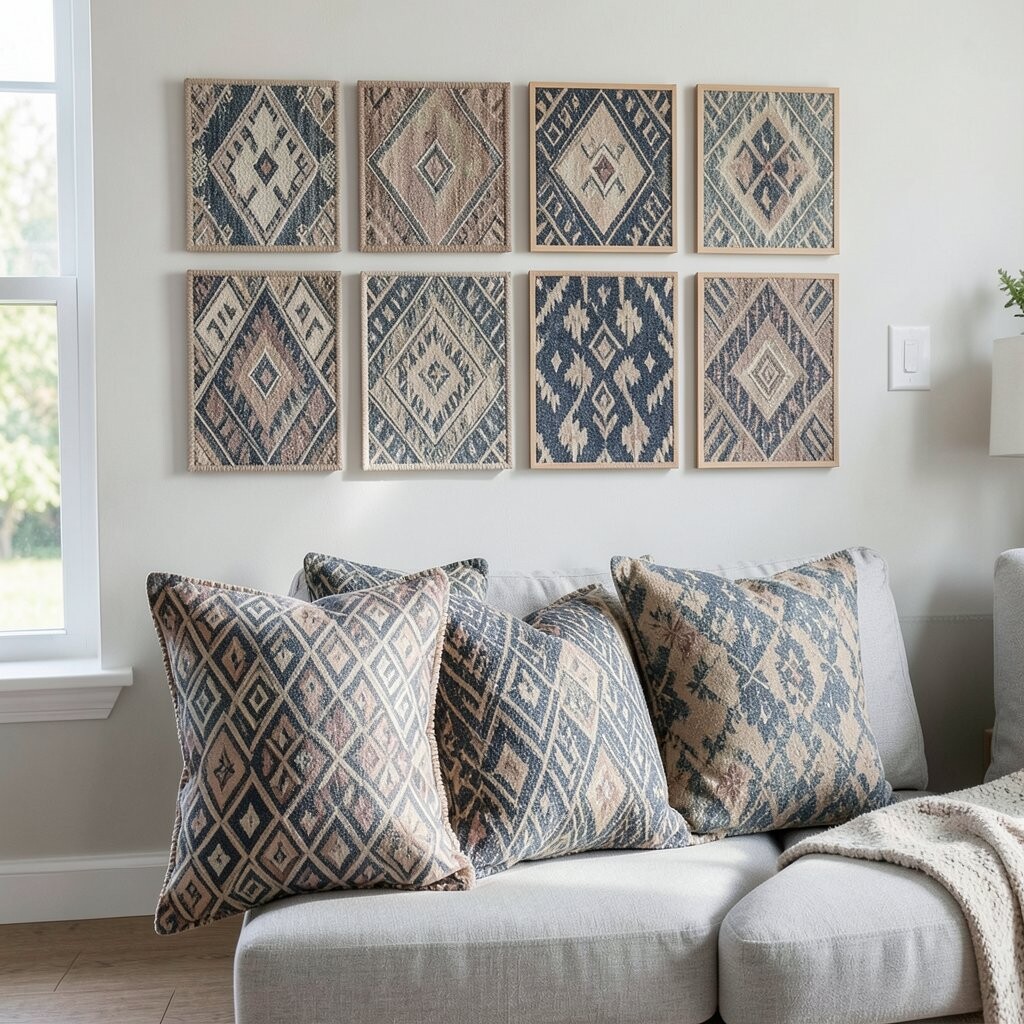
Pick a few bold geometric fabric prints you already love, then treat them like a mini art show. Cut rectangles in similar sizes and pin them to the wall with simple clips or removable tape. Keep the shapes crisp so they read clearly from across the room.
Because these panels are fabric, they hide small wall flaws and soften hard light. Choose one color family, like cream with navy or rust with sand, to keep the look tidy. For cost savings, use fabric scraps, thrifted pillow covers, or clearance remnant bolts. If you want a current feel, mix modern lines with one slightly vintage print so it looks collected, not random.
2. Patchwork Postcard Wall Using Scraps

Gather fabric scraps, old bedsheets, and even mismatched napkins, then stitch or tape them into postcard-sized squares. Arrange them in a patchwork pattern that moves from lighter shades to deeper tones. Let the wall show its “made by hand” charm with visible seams or stitched edges.
This works great because every piece is thin, easy to hang, and forgiving if you do not have perfect measurements. To keep it practical, use a backing of felt or a scrap of cotton so the pieces stay flat. Personalize it by choosing a theme such as florals, kid-friendly dots, or travel-inspired motifs. For a budget win, raid your linen drawer and swap in fabrics you no longer use.
To brighten the space, add a few high-contrast scraps that catch light, like white, sunny yellow, or mint. When you step back, aim for a balanced layout where no one color overpowers the rest. Use fabric glue sparingly or stick with hand stitching so you can adjust later without stress.
3. Ombre Fabric Strips Like Soft Sunset
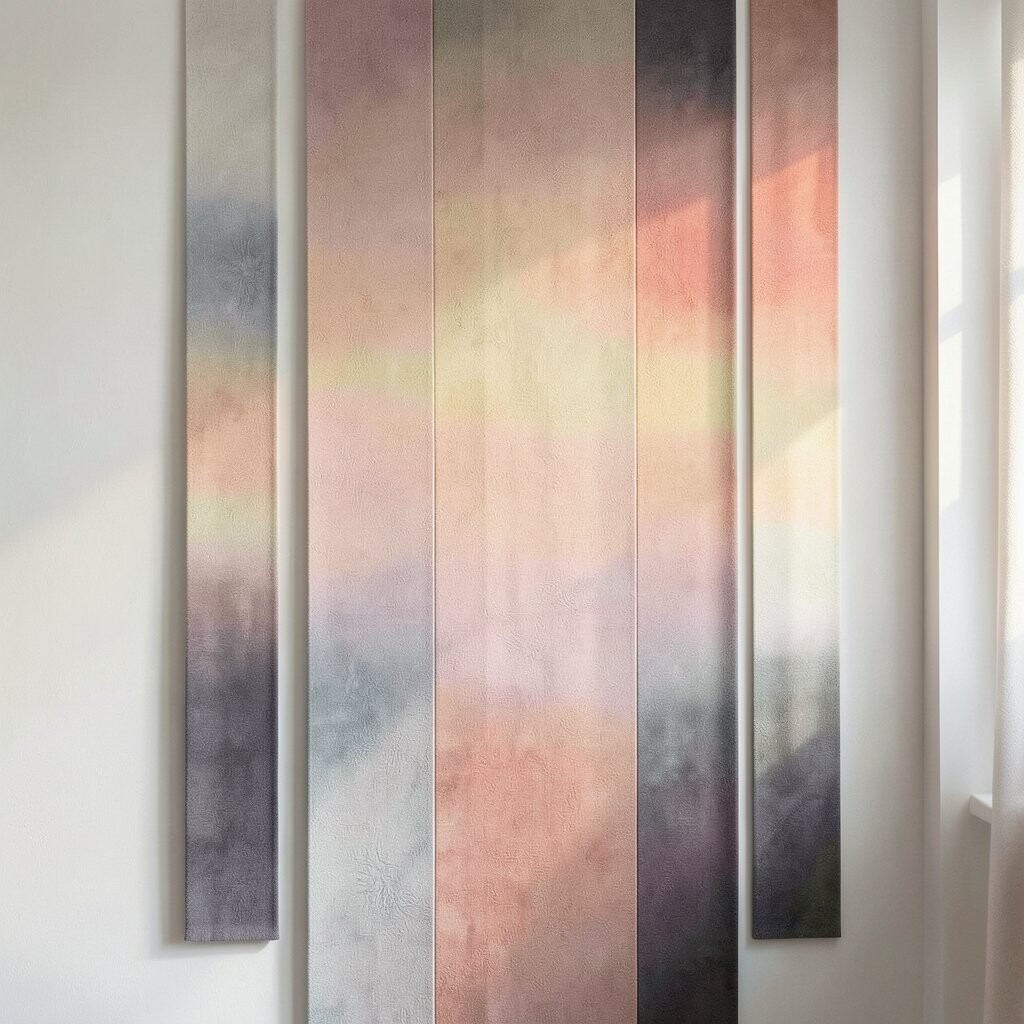
Cut long fabric strips and hang them in gentle waves that look like a sunset fading into the horizon. Start with a darker shade at the top and move toward lighter tones, then repeat with a second row for fullness. Use light-catching materials like cotton voile, knit jersey, or thin canvas so the wall feels airy.
This pattern idea brightens a room because the eye follows the color flow, and it makes even plain walls feel styled. Keep it budget-friendly by using one or two fabric bundles and cutting multiple strips from each. For practical hanging, use a tension rod, dowel pockets, or clip rings that slide onto a simple curtain rod bracket.
Make it unique by adding one strip in a shiny or textured fabric, like metallic thread or a subtle boucle weave. If you are working in a small space, keep the strips narrower so they do not overwhelm the wall. In a kid room, use playful colors and add a stripe that echoes the bedding palette for a pulled-together look.
Right now, soft gradient effects feel fresh because they look modern but still cozy. When you choose colors, look for shades already in your rug, curtain, or artwork so everything feels connected.
4. Woven Rattan-Style Panels with Budget Textiles
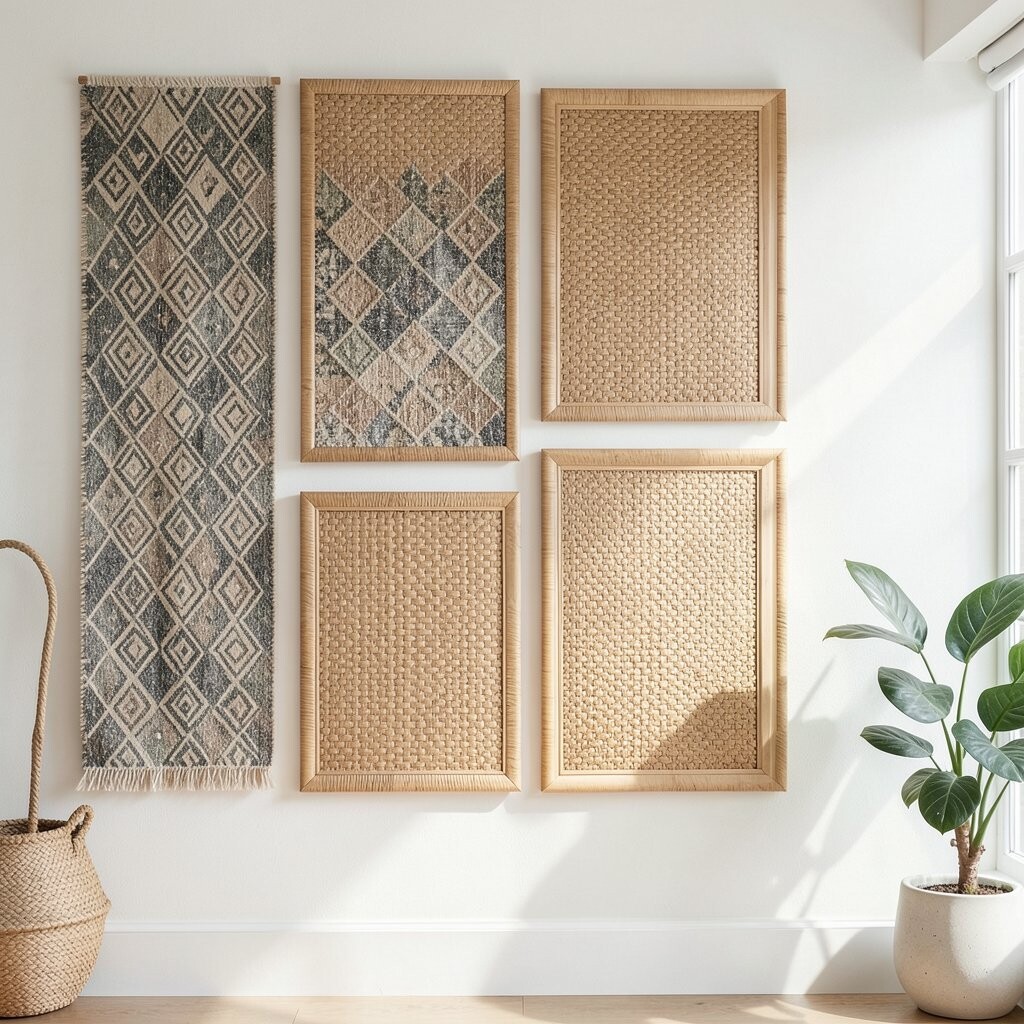
Search for budget weaves like jute, cotton rope, or textured fabric that mimics rattan and woven baskets. Stretch the textile over a simple frame made from inexpensive wood strips, then secure it on the back. The result looks like artisan wall decor, but you are using affordable materials.
These panels add instant warmth and a natural vibe, especially in living rooms and bedrooms. Keep the setup easy by using a ready-made picture frame as the base, then layering your woven textile inside. Personalize the pattern by choosing different weave densities, like tight loops next to looser fibers.
For cost considerations, buy one roll of textured fabric and cut multiple panels, rather than purchasing many separate items. If you love current trends, mix this woven look with one bold printed fabric panel so the room feels layered. Let the weave run vertically for a taller feel, or go horizontal if you want the wall to feel calm and grounded.
5. Vintage-Inspired Botanical Border Band
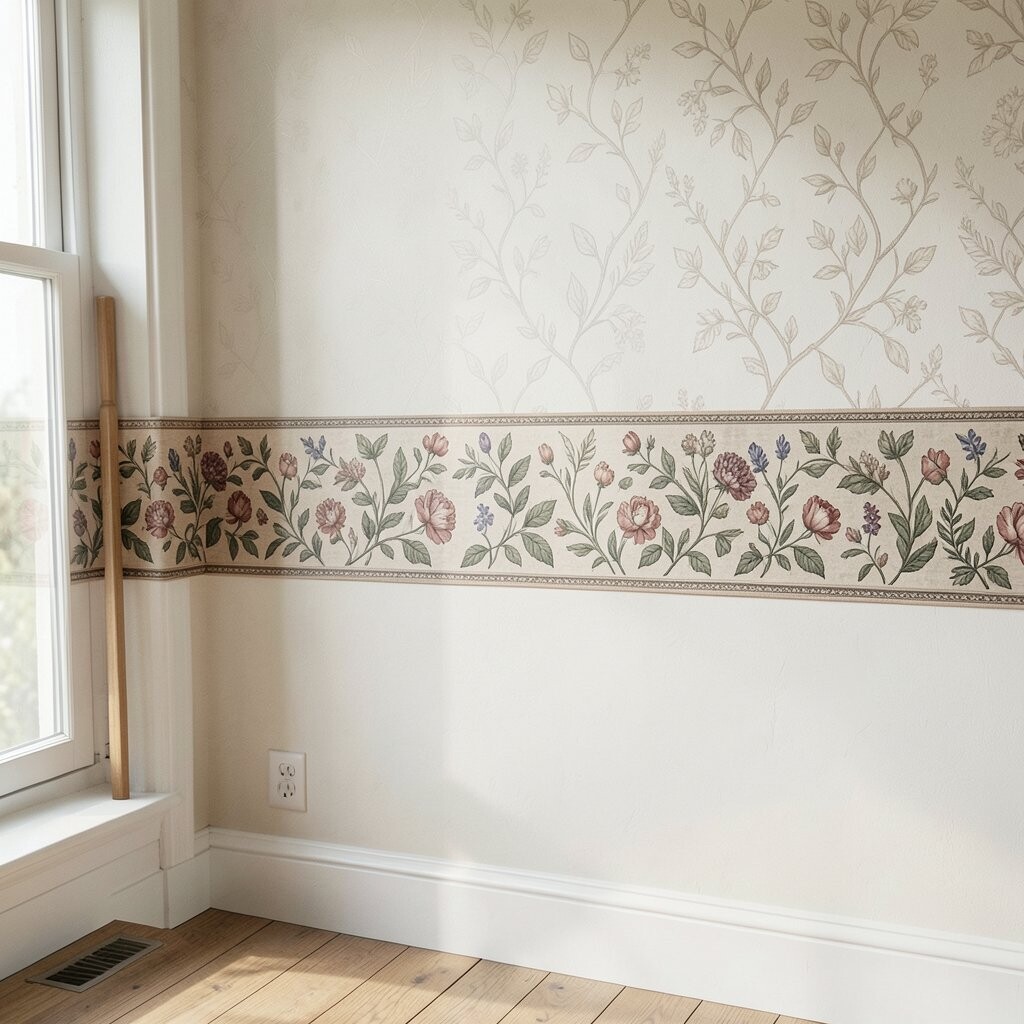
Choose a fabric print with leaves, vines, or small flowers, then cut it into a border band that runs along eye level. Hang it as a long strip, or layer it above a second solid band for extra depth. This creates a gentle, garden-like frame that looks classic and bright.
Botanical patterns are great because they add color without needing a full wall of prints. Use a fabric that matches your existing tones so it feels built-in, like a natural extension of your curtains or bedding. To keep costs low, use printed table runner fabric or repurpose a vintage scarf as your pattern source.
Make it unique by mixing scale, such as a small leaf print on the outer band and a bolder vine motif in the center. If you are hanging near a window, choose lighter fabric colors that let daylight reflect. For practicality, iron the fabric flat and use removable adhesive strips so you can adjust if you change your mind.
Right now, soft botanical touches feel popular because they blend with many styles, from modern to cozy farmhouse. You get the bright effect through color and contrast, not through expensive materials.
6. Starburst Fabric Fans with Paper-Quick Geometry
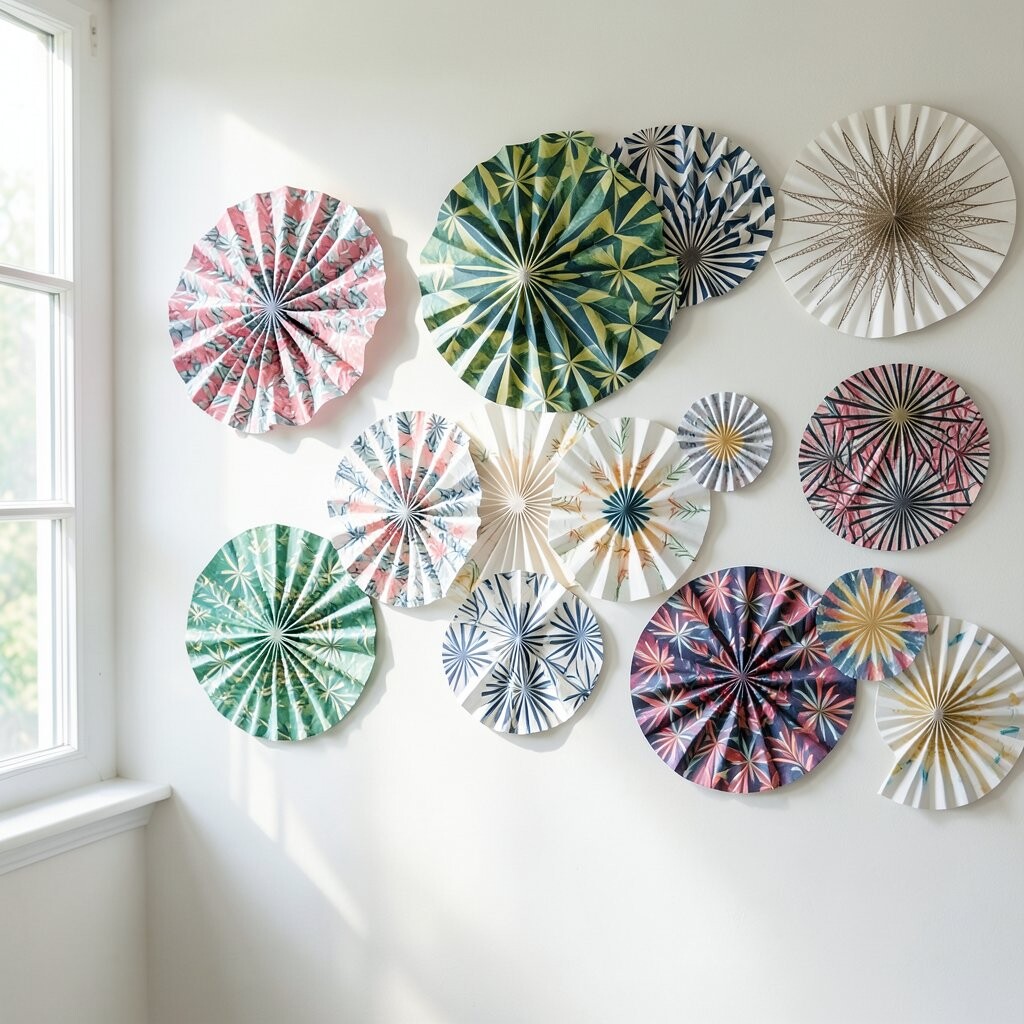
Cut triangular fabric wedges and arrange them like a starburst, then anchor the center using a small fabric circle or button. You can hang the star pattern on a board, or attach it directly to the wall using fabric mounting tabs. Choose two to three colors so the burst looks bold, not busy.
This idea brightens a room because the shape pulls attention upward and outward. Keep it practical by making the wedges from fat quarters, then reusing leftover fabric for a second burst in a smaller size. Personalize it by matching your starburst colors to paint tones, like warm beige, sky blue, or terracotta.
If you want a modern trend vibe, use sharp geometry and a limited palette, then add one textured fabric wedge for contrast. For cost savings, cut wedges from clearance fabric and avoid purchasing multiple prints. When you hang it, step back and adjust spacing so the points align and the center looks neat.
7. Tie-Dye Patch Wall Using Tea-Dyed Cotton
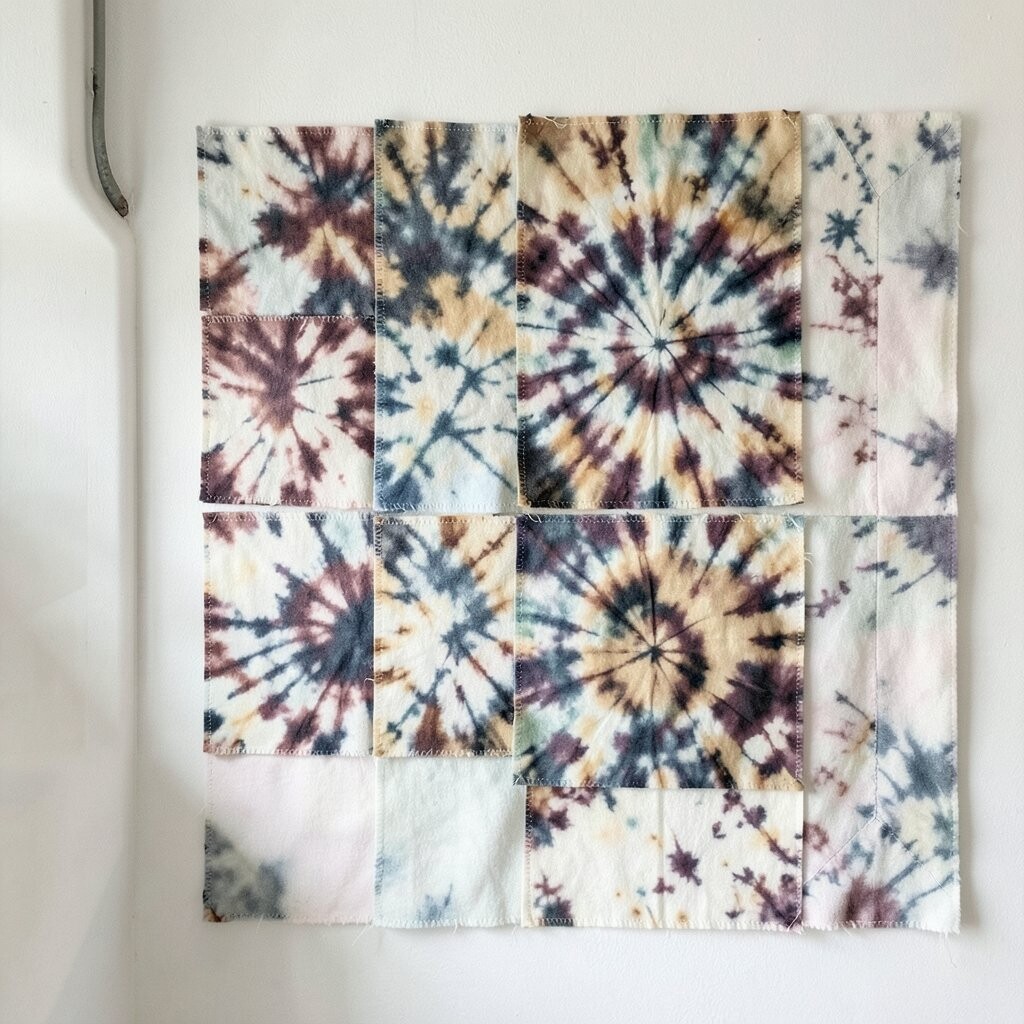
Tea-dye or use mild fabric dye on plain cotton and then cut it into irregular squares for a tie-dye patch wall. Arrange the patches so lighter and darker zones alternate like a watercolor map. The swirl look makes the wall feel playful and bright even with simple colors.
This is a fun budget-friendly option because you can dye thrifted bedsheets or inexpensive cotton fabric. Keep it safe and tidy by protecting the floor and washing thoroughly before hanging. Personalize it by choosing a color story that matches your room, like warm ochre tones or cool ocean shades.
To make it look more intentional, create a repeating pattern direction, such as all swirls leaning toward the same side. If you want extra brightness, include a few near-white pieces that catch light. For current trends, organic dye effects have stayed popular because they feel handmade and relaxed.
When you mount the patches, use a neutral backing so the dyed fabric looks uniform and flat. Iron the pieces gently and allow them to fully dry so the colors stay rich.
8. Silk-Screen Look with Simple Repeat Patterns
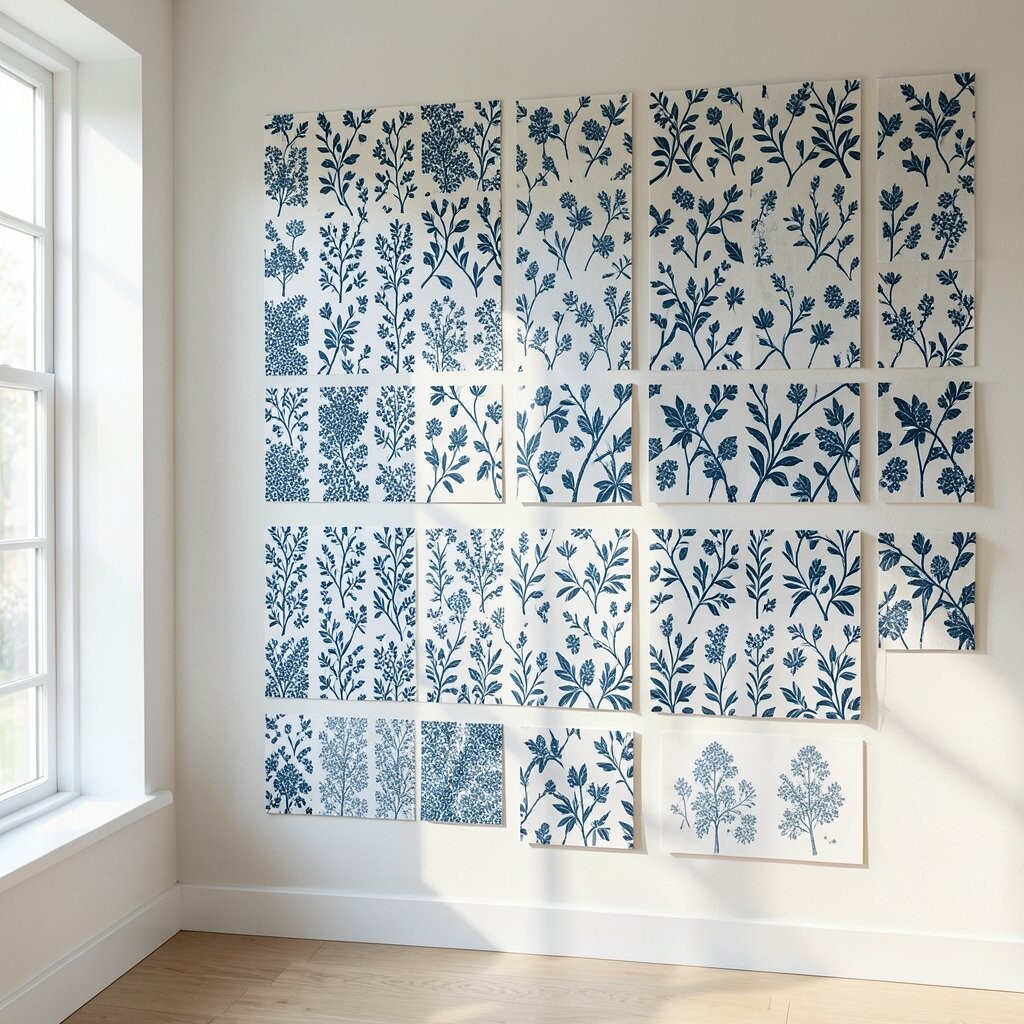
Find affordable repeating textile patterns like small dots, stripes, or repeating motifs, then hang them in a neat grid. Use fabric panels that are similar in size so the pattern reads clearly. The grid style makes the space look polished and bright without requiring a large art budget.
This works because repeating designs feel organized, and that helps small rooms look calmer. Choose a single hero color and one supporting color to keep the wall from feeling noisy. For personalization, swap one panel for a textured fabric with the same color so it adds depth.
Save money by using tablecloth fabric, curtain remnants, or even wrapping paper printed with fabric-like patterns on lightweight backing. When you hang it, use a straight measuring method and mark anchor points lightly so everything stays aligned. If you want a trend-friendly look, combine modern stripe prints with a warm neutral ground for a clean, contemporary vibe.
9. Quilted Wall Effect with No-Sew Fabric Panels

Create a quilt-like wall by layering simple fabric rectangles with a light batting or iron-on adhesive backing. Arrange them in rows so they resemble classic quilting, then secure edges with simple stitching by hand or just press-and-tape methods. The quilted texture adds coziness and makes light bounce around differently than flat fabric.
This is budget-friendly because you can use inexpensive cottons and scraps and still get a high-end look. To keep it practical, choose fabrics that are easy to press and do not fray too much. Personalize it by picking a consistent color palette, like sage with cream, or by repeating a signature motif in each row.
If you want uniqueness, add one “story patch,” such as a fabric with a special memory, like a souvenir print or a favorite pattern from a thrifted item. For current trends, cozy textured walls are popular because they make modern rooms feel lived in. When you mount the quilt effect, use a strong but removable hanging method so you can rehang if you rearrange furniture.
10. Monochrome Texture Wall with Mixed Knit Patterns
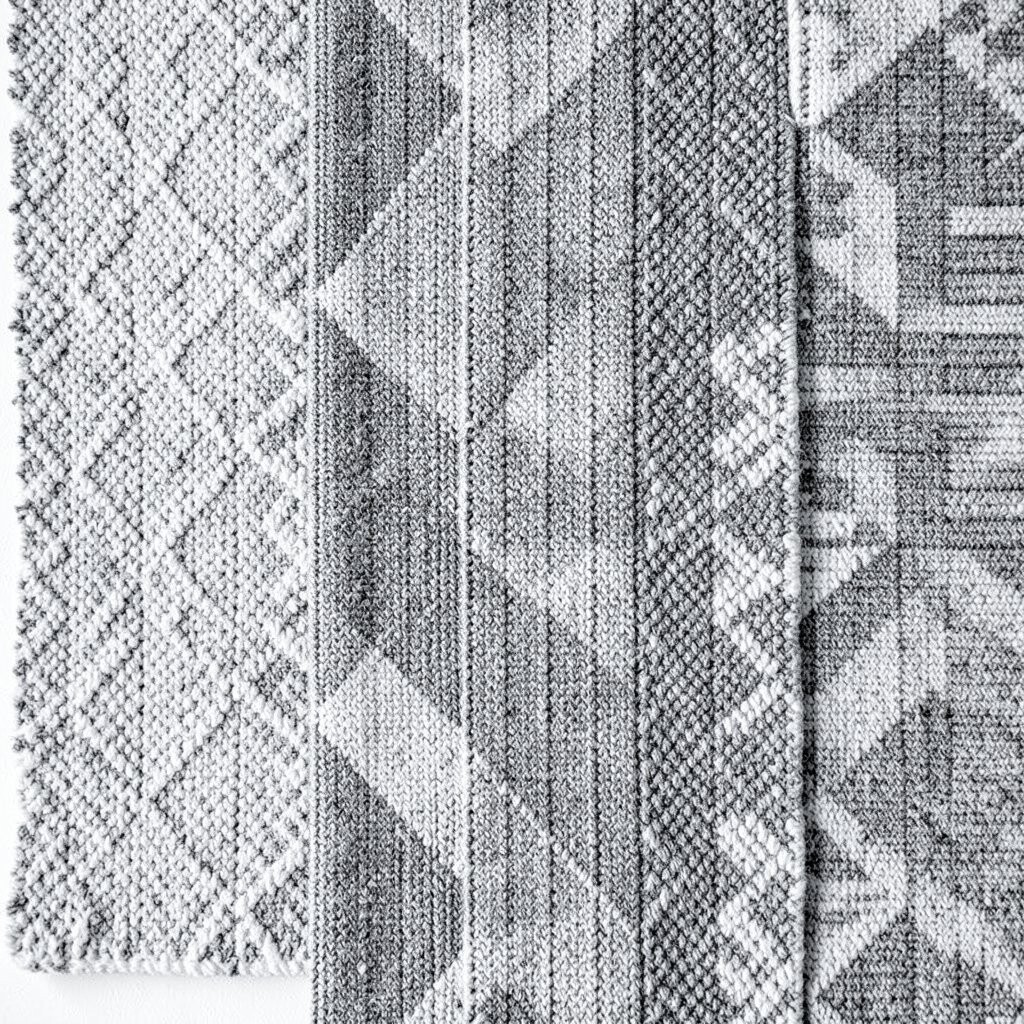
Choose a monochrome color and then mix knit textures such as ribbed cotton, waffle weave, and chunky jersey. Cut them into overlapping rectangles, then arrange them like layered tiles. The wall becomes bright through texture rather than through lots of colors.
This idea is great for people who want a calm look but still crave visual interest. It also helps hide uneven wall areas because the fabric has softness and depth. For personalization, vary the shapes, like add one long strip for movement or include a few circles to break up the edges.
Cost considerations are favorable because you can buy affordable knit remnants or repurpose old sweaters and T-shirts. Wash and stabilize stretchy knits before hanging so they do not sag. If you want a trend moment, focus on “quiet luxury” texture and keep everything in the same color family for a modern feel.
Use simple clips or Velcro tape for hanging so you can replace one piece if it gets damaged. When you step back, look for a balanced mix of textures so one fabric does not dominate the wall.
11. Geode-Look Fabric with Iridescent Thread Accents
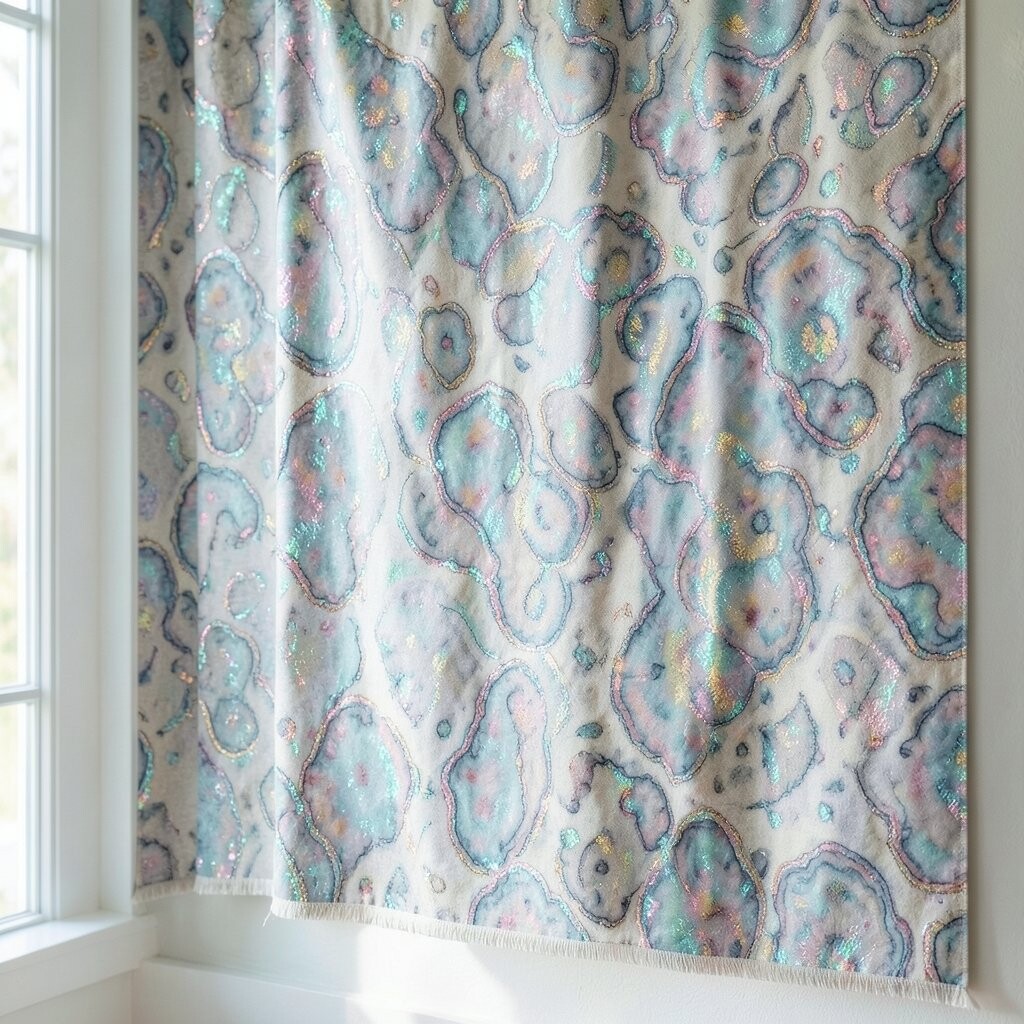
Pick a fabric that resembles stone, like marbled cotton or subtle speckle, then add geode-like accents using iridescent thread or shiny trim. Cut an angular shape that suggests a crystal opening, and line it with metallic fabric tape or reflective ribbon. The result feels magical under daylight and looks special in evening light.
This pattern idea brightens your space because the light catches the shimmer and creates small highlights across the wall. Keep it practical by using only a few shiny accents rather than covering everything. Personalize it by selecting colors like emerald with gold, amethyst with silver, or teal with warm bronze.
For cost savings, use a small amount of trim from a craft store and pair it with affordable cotton. If you want uniqueness, stitch thin lines inside the “geode” shape using contrasting thread to mimic natural stone veins. This look is currently loved because it blends nature vibes with a modern, glam touch.
When you hang it, mount the base fabric on a piece of stiff backing like foam board so it stays structured. Secure the corners well so the trim does not pull the fabric out of shape over time.
12. Bold Stripe Fabric Roll-Up Panels
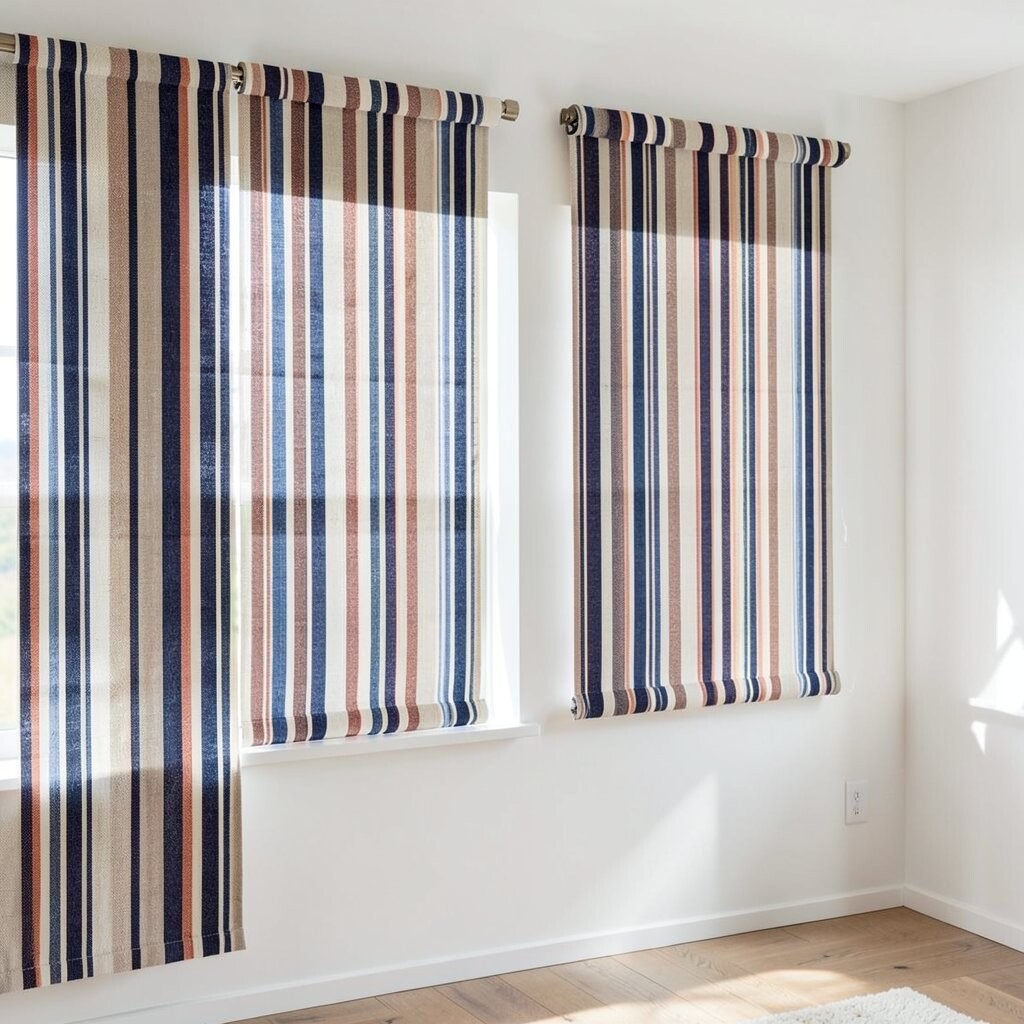
Create a bright wall moment with bold stripes by hanging them as roll-up panels using a simple curtain rod. Choose thick stripe fabrics in cheerful colors, then hang them slightly above eye level so they draw the gaze upward. Let the stripes align for a crisp look, or offset them for a playful, handmade vibe.
This works because stripes create a sense of movement and clarity, even when your room is small. Keep it budget-friendly by using one main stripe fabric and adding a solid coordinating backing behind it. Personalize the look by choosing stripes that echo your rug or curtains so everything feels coordinated.
If you want extra practicality, pick fabrics that are easy to wipe or that can be removed and washed. For current trends, bold graphic textiles have been showing up in more homes because they make everyday spaces feel designed. Use a neutral wall color if you want the stripes to pop, or use a similar tone if you want a softer effect.
When installing, measure rod placement carefully and use level tools so your stripes feel even. A small alignment adjustment can make the whole wall look more professional.
13. Monogrammed Fabric Letter Wall with Frame Swaps
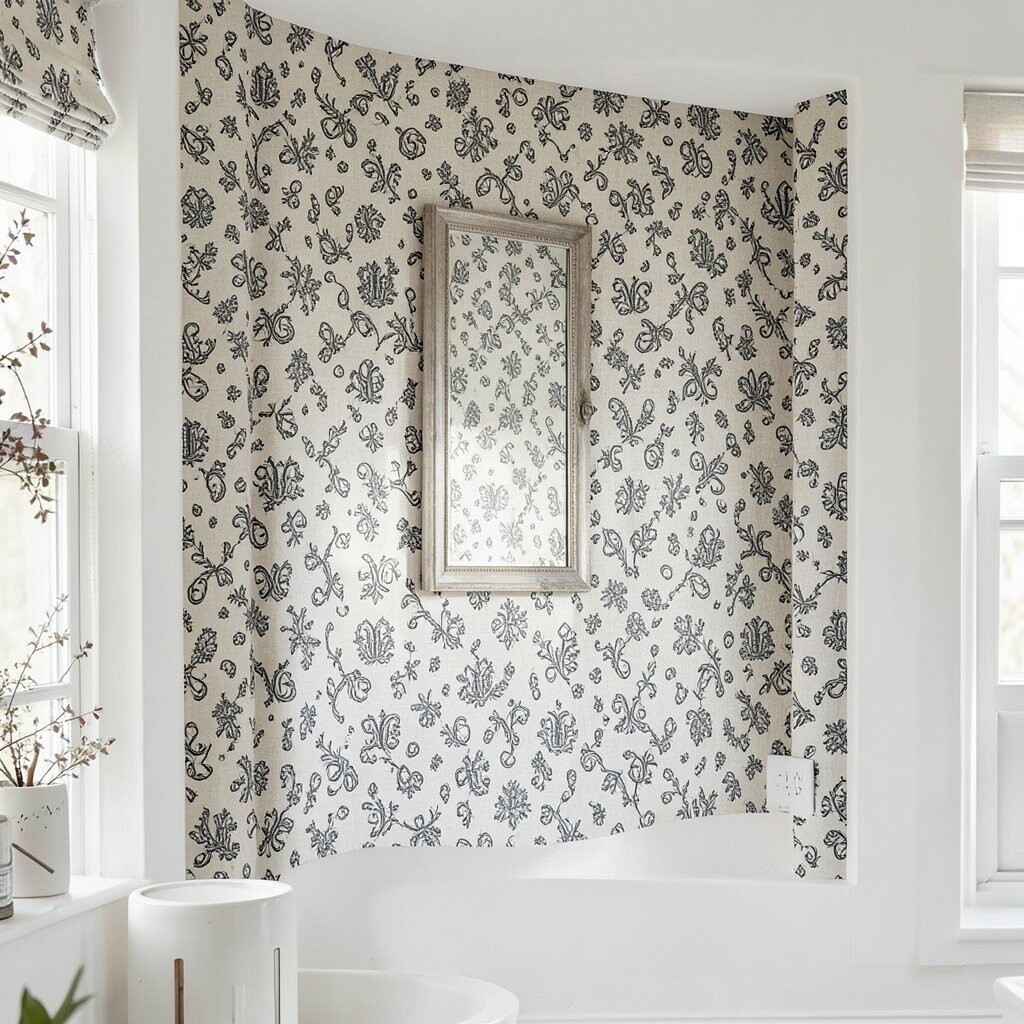
Turn a favorite textile pattern into a personal monogram by cutting a large letter from fabric and attaching it to a backing board. Frame it with a thrifted frame, or mount it on a simple canvas stretcher for a cleaner look. Choose a bold patterned fabric for the letter so it stands out like typography art.
This idea brightens your space because it adds meaning, not just decoration, and it gives your wall a focal point. Keep it practical by using removable adhesive or velcro so you can swap letters when seasons or styles change. Personalize it by matching the font style to your room vibe, like playful rounded letters for a bedroom or sharp letters for an office.
Cost considerations are friendly because you only need enough fabric to cut one or two letters. Thrift stores often have patterned linens or pillow covers that make perfect letter material. If you want uniqueness, combine one patterned letter with one solid letter in a matching tone to balance busy and calm.
For a current trend, consider mixing textile art with clean, minimal framing so the fabric becomes the hero. Hang it at eye level and adjust height so it looks intentional, especially near a bed or desk.