
The walls in your home can feel like the shore, even on a busy day. Coastal style brings calm colors, texture, and a sense of easy living.
From budget-friendly craft ideas to statement-making installations, these projects help you shape a look that feels personal. Use them to brighten a hallway, soften a living room, or add charm to a reading corner.
1. Driftwood Scrollwork Accent Wall
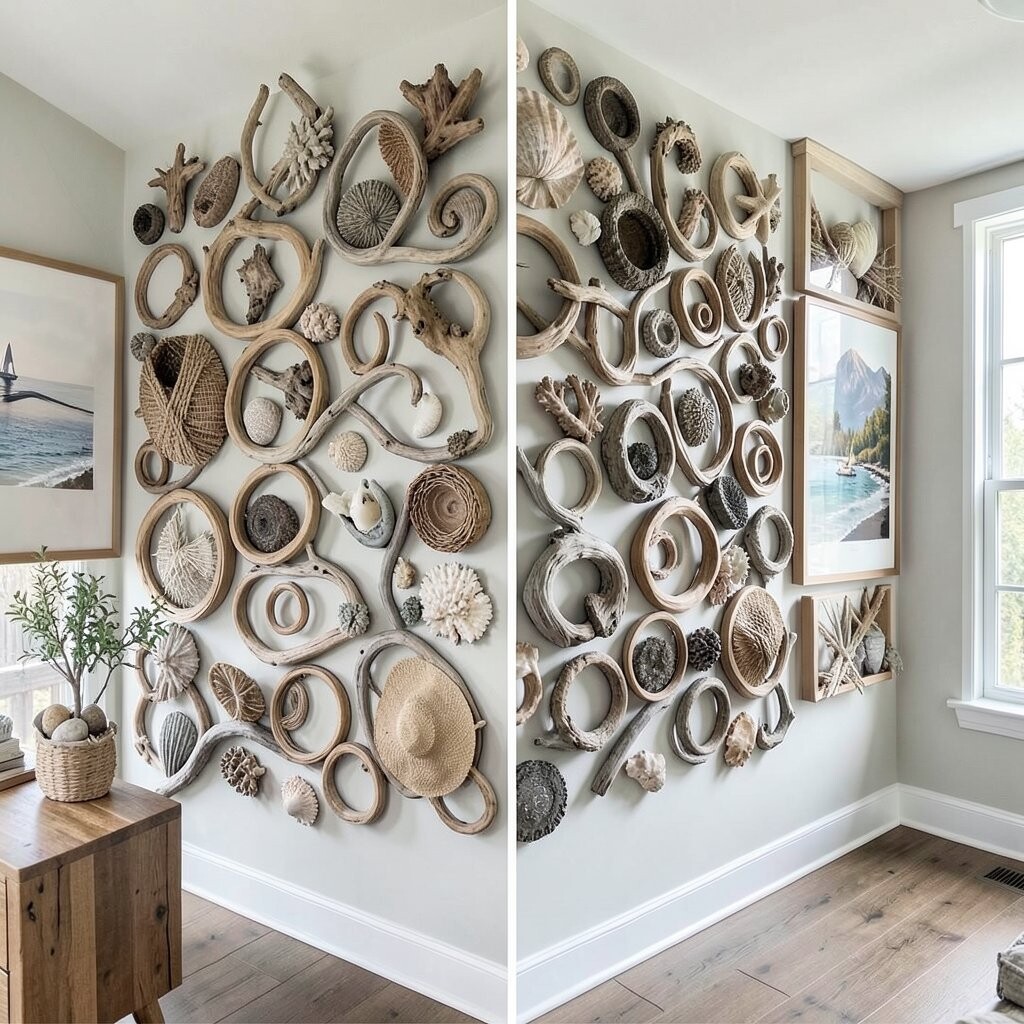
Picture a wall filled with warm, weathered wood shapes that curl like gentle waves. The grain catches light in tiny highlights, making the whole area feel more alive.
Use small driftwood pieces or faux driftwood for a lighter, cleaner option that still feels coastal. Place them in a loose scroll pattern around a center anchor, like a simple round mirror or a framed print. This style is unique because the flow can match your space, whether you like subtle movement or bold coverage. Try a dry layout first and step back often, so the spacing feels balanced. If you’re aiming to keep costs down, start with a smaller section and build outward after you see what looks right.
2. Seashell Mosaic With Misty-Grout Texture

Imagine a cluster of shell pieces set like tiny treasures in pale, airy grout. When sunlight hits, the wall looks speckled and soft, similar to wet sand after a morning tide.
Create your mosaic using a mix of small shells, sea glass, and smooth pebbles for extra sparkle. Choose a grout color that leans creamy or light gray so the shells stand out without looking too harsh. This project benefits from grout texture because it hides small gaps and makes the surface feel cohesive. For a practical finish, seal the final surface if your space gets humidity, like a bathroom or entry with moisture. You can personalize the pattern by using one dominant shape, such as scallops, and repeating it for a rhythm. Costs can vary based on shell sourcing, so consider thrifted shell collections or craft stores for consistent shapes.
Keep the design forgiving by leaving a border of solid color around the edges, which makes the mosaic look intentional. If you want a modern coastal vibe, use fewer materials but place them in thicker clusters. This trend leans toward “quiet sparkle,” where shine is present but never loud.
3. Vintage Map Wallpaper Gallery Wall
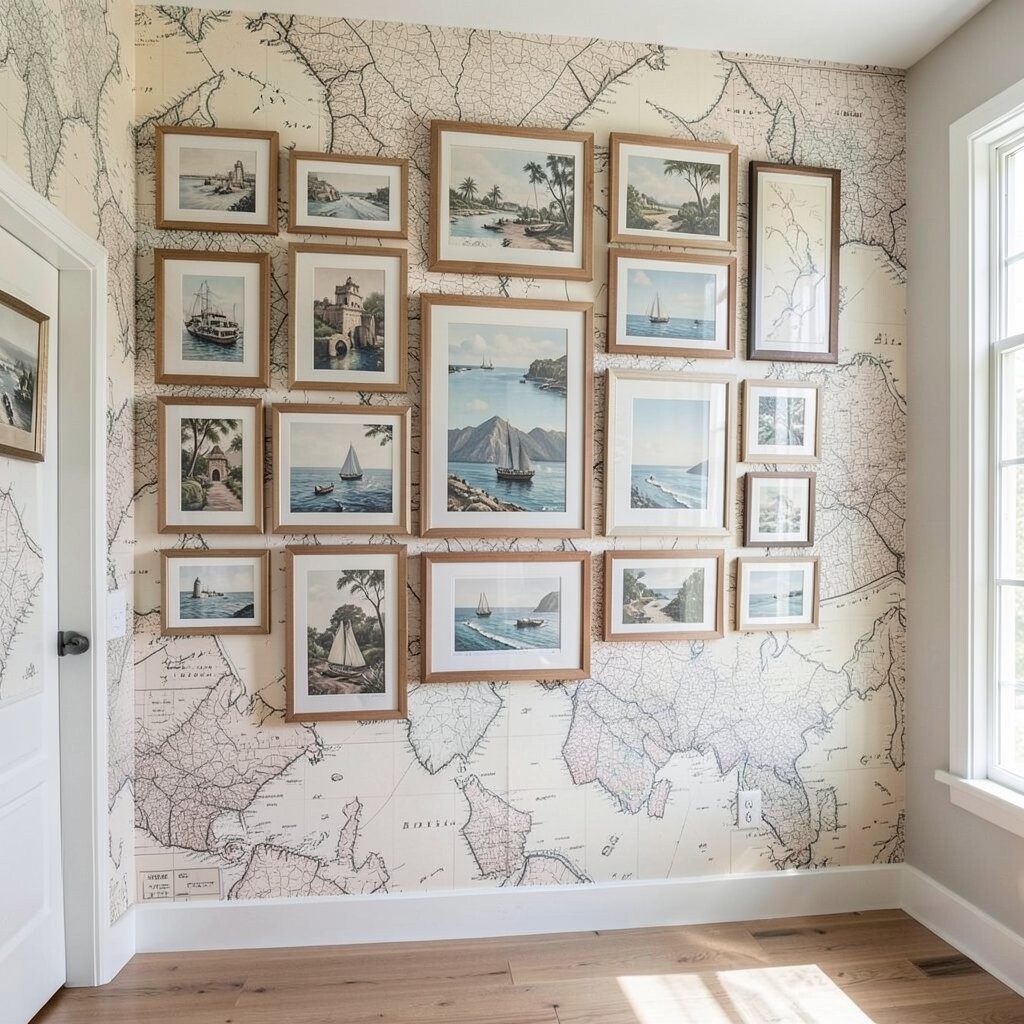
Think of paper map scenes framed like memories you can hang and enjoy daily. Colors of faded sea routes and coastal lines make the wall feel nostalgic and inviting.
Pick one or two map prints and repeat them in matching frames for an easy gallery look. You can mount them on the wall directly or use removable backing if you like flexibility later. This option is practical because wallpaper samples and printouts can be reused in different layouts. Personalize your wall by centering your favorite coastline or using map coordinates tied to a family story. Keep costs manageable by choosing a small set of frames and reusing thrift finds for the rest. This trend is showing up in homes as “story walls,” where everyday artwork carries meaning.
If your wall needs calm, use muted blues and parchment tones instead of bright navy. For extra texture, add one frame with a fabric mat or a linen background behind the map print. Arrange the frames so they form a gentle curve, echoing shoreline arcs.
4. Shiplap-Style Paneling in Ocean-Soft Colors
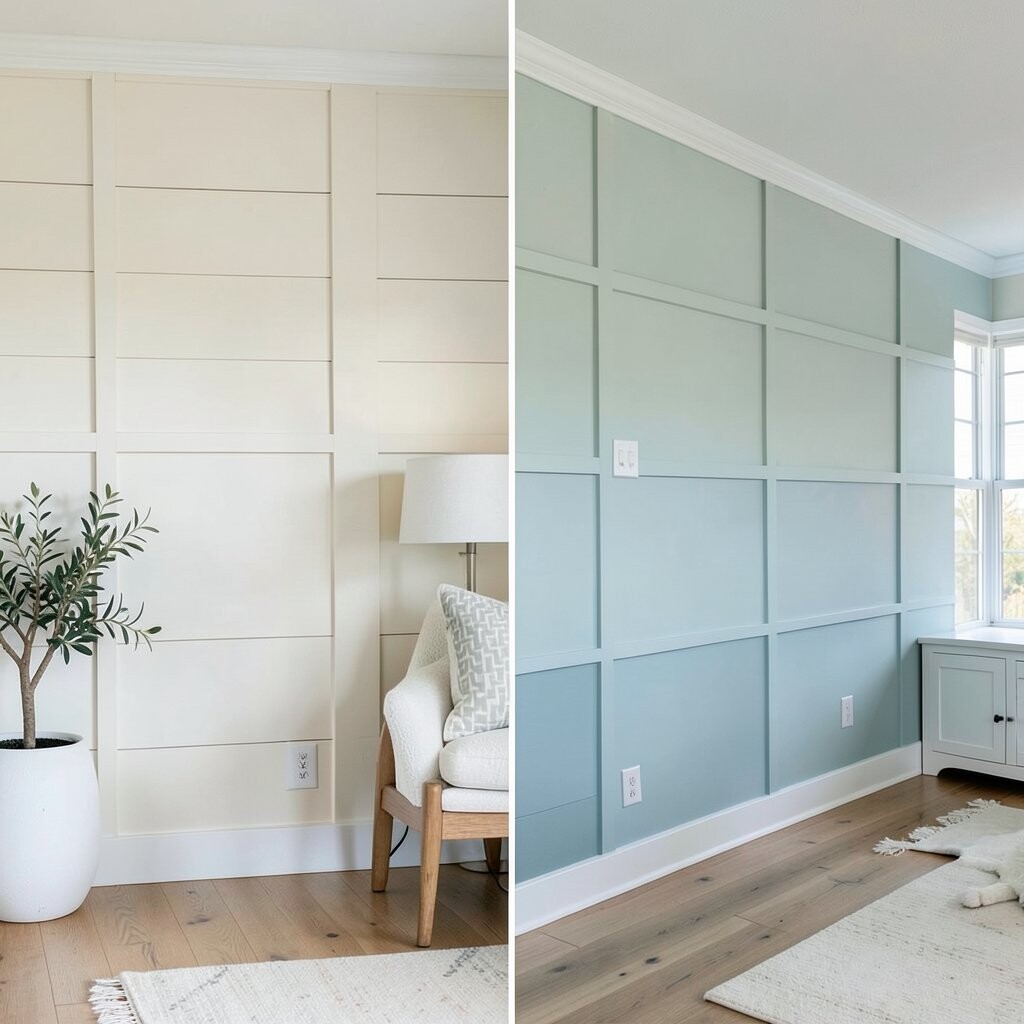
Picture clean, horizontal lines running along the wall like calm waves. The raised texture makes the room look cozy, even when the colors are light and airy.
Choose shiplap-style panels made for walls and paint them in soft seafoam, warm white, or pale sky blue. This project benefits from clear lines because it gives your space structure and makes furniture look neatly styled. For practicality, plan your panel layout with a level and mark your studs so installation feels steady. If you want personalization, add one accent panel section behind a shelf or mirror for a focal point. Cost considerations matter here, since materials and labor can add up, so compare pre-primed panels with DIY options. A current trend is “color-washed shiplap,” where the wood shows slightly through for a breezy, sun-faded feel.
5. Coastal Color-Block Wall With Linen Background

Imagine large blocks of ocean hues sitting on a calm linen-like backdrop. The result feels modern, relaxed, and bright without looking messy.
Start with a neutral wall color that feels warm, then tape off clean shapes in shades like driftwood beige and muted teal. Use satin or matte paint depending on how much light your room gets. This style is unique because it can look coastal and contemporary at the same time. A simple benefit is that it hides small wall imperfections, especially when you choose textured paint finishes. Personalize the pattern by copying the shapes from a beach photo, like curved sand lines or triangle dune marks. For cost control, use painter’s tape and a few paint samples, and do one wall only. Trends in coastal decor often include bold color fields, but still keep the palette soft so it stays restful.
If you’re worried about straight edges, practice on cardboard first or keep the shapes organic. Finish with a clear coat only if your paint type calls for it, and touch up quickly so the lines stay crisp.
6. Hand-Painted Wave Ridges in Subtle Ombre

Picture gentle wave lines stacked like ridges on a shoreline after rain. The ombre shading moves from deeper blue to near-white, creating a soothing gradient effect.
Use a stencil or freehand brushwork to paint wave ridges across the wall, then blend edges lightly so they look natural. Choose three paint tones that match your room, such as sea glass green, coastal gray, and soft cream. This project offers the benefit of easy personalization because you can scale the waves up or down for your space. Keep it practical by using painter’s tape to define the gradient direction, so every section stays consistent. Consider cost by using sample-size paint jars for small walls and painting in layers only where needed. A current trend is “waterline art,” where waves stop mid-wall and feel like a living skyline.
7. Rope and Wood Floating Shelf With Nautical Backdrop

Imagine sturdy rope-wrapped rails holding small treasures against a light coastal wall. The shelves feel functional, but the backdrop makes them look styled like a beach cottage.
Mount floating shelves with wood planks and wrap the supports with natural rope in a light tan. Paint the wall behind in a pale sea color so the rope looks warm and textured. This setup is beneficial because it gives you storage for books, seashell jars, and plants without crowding the floor. Personalization is simple since you can change shelf spacing, add hooks, or place themed objects by season. For cost, consider building shelves yourself using affordable lumber and basic hardware. A trend that keeps showing up is “warm nautical,” where rope and wood feel modern instead of overly themed.
To make it last, seal the wood and protect rope from dust by wiping it gently. Also, keep heavier items closer to the wall bracket for safe weight distribution.
8. Thrifted Frame Wall With Coastal Fabric Panels

Picture mismatched frames lined up like a gallery, each holding a soft piece of coastal fabric. The texture of linen or cotton makes the wall feel calm and cozy right away.
Choose fabric in beachy patterns such as stripes, subtle sand dunes, or tiny shell shapes. Stretch the fabric over frame backing or use removable adhesive backing so you can swap designs later. This project’s benefit is flexibility, since you can update the look without repainting. It’s also unique because fabric absorbs light and gives the wall a softer look than flat prints. Personalize it by mixing one meaningful fabric, like a souvenir scarf, with coordinating colors. For cost, thrift frame sets and update them with a quick coat of paint or stain. A current trend leans toward “textile wall art,” where walls gain warmth through soft materials.
9. Beach Stone Lettering or Initials Wall
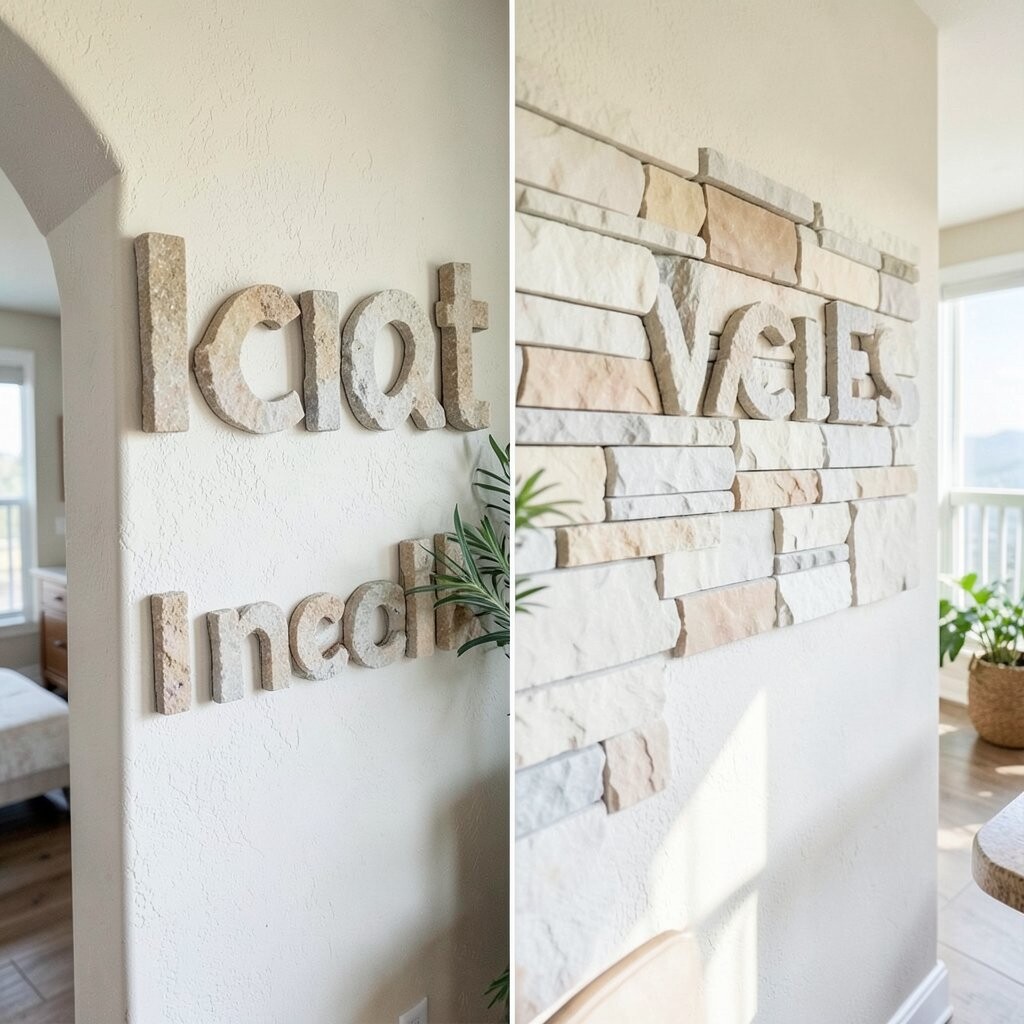
Imagine big initials covered with smooth stones in shades of white, gray, and warm sand. Up close, the wall feels like it holds a whole mini coastline.
Pick one wall spot as your centerpiece, then paint the letters in a sand-colored base before adding stones. Use a strong adhesive and press pieces firmly, leaving tiny spaces for a natural look. This is a unique project because it combines texture and meaning, especially if you use a family initial or your favorite vacation year. The benefit is that it creates a focal point even in a small room, like above a console table. Personalize by adding one accent color stone, such as sea glass blue, for a pop. For cost considerations, gather stones from craft stores or parks where permitted and fill the letters with a mix of sizes to reduce material. Trends often favor tactile art, and this fits perfectly with that style.
10. Coastal Stenciled Mural Border for Hallways

Picture a narrow hallway wall with a sea-inspired border that guides you forward. The design looks like a decorative shoreline line, neat and charming without taking over the room.
Use a stencil to paint a repeating pattern along the top third of the wall or around doorways. Try a color that matches your trim for a polished feel, like soft gray-blue or pale sand. This project benefits narrow spaces because it adds personality while keeping the room open. It’s also practical since stencils help you stay consistent, even if you’re not confident with freehand art. Personalize by matching the border to your decor, such as adding tiny anchors, waves, or shells. For cost, stencils and small paint amounts are usually budget-friendly compared with full murals. A trend you’ll see in coastal decor is “layering details,” where borders, frames, and textures create depth.
Seal the paint if the hallway gets frequent cleaning, and keep a small touch-up brush for quick fixes.
11. Upcycled Window Frame With Hanging “Tide” Planters
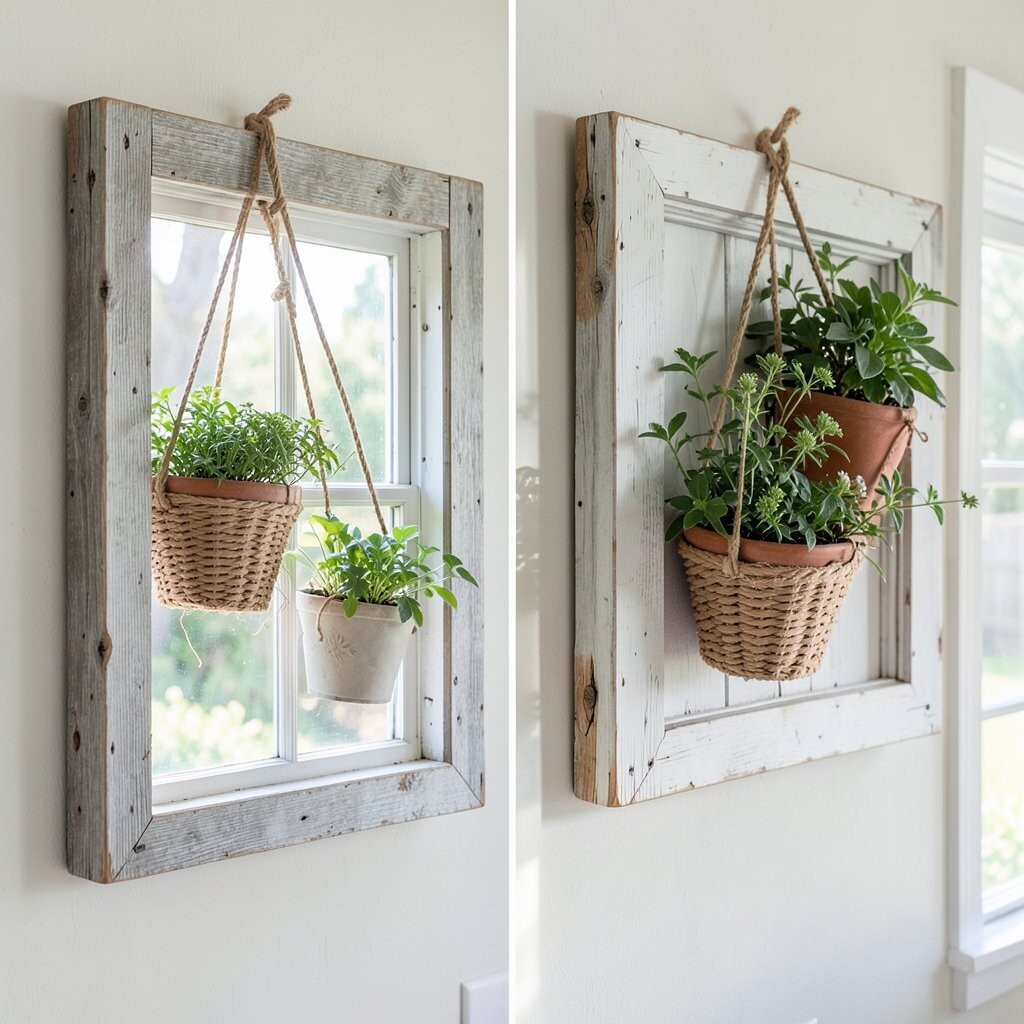
Imagine an old window frame mounted on a wall, holding small planters like a rotating tide. The greenery adds life and makes the coastal palette feel fresh and airy.
Paint the window frame in a weathered white or sand tone, then attach hooks or tiny shelves for planters. Use lightweight planters and choose plants that handle indoor light, like pothos, succulents, or herbs. This project’s benefit is practical because it creates vertical garden space while also acting as art. It’s unique since the frame structure already gives you a grid, making the design look intentional. Personalize by arranging planters by color, using blue ceramic pots, or adding small shells as accents. Cost considerations are usually great when you upcycle a thrifted window, but check for good mounting hardware. A current trend focuses on “coastal greens,” where beach style blends with plant care for a natural vibe.
To protect the wall, line plant containers to prevent soil leaks and ensure drainage. Keep the frame slightly off the wall if your planters need airflow behind the back edge.
12. Textured Sand-Tone Limewash With Stenciled Sea Life

Picture a wall finished with limewash that looks like sun-warmed sand. The surface has a soft, irregular texture that changes with light throughout the day.
Apply limewash in a sand or driftwood shade, then add sea life stencils in darker muted tones. Use simple shapes like small fish silhouettes, tiny shells, or curled seaweed marks. This project is unique because limewash creates variation naturally, so your wall never looks perfectly identical. The benefit is that the texture helps hide minor wall flaws and makes the room feel soothing. Personalize the design by choosing sea life you love and placing them where your eye naturally rests, like near a reading chair or sofa. For cost, limewash products can be affordable, and stencils plus paint samples are usually inexpensive. A trend in coastal style is “imperfect texture,” which adds realism and warmth rather than flat, glossy paint.
Test the limewash on a small corner first, since thickness and drying time affect the final look. Allow full cure time before touching up any stencil edges.
13. Ocean-Inspired Wood Slat Wall With Hidden Storage Hooks

Imagine vertical and horizontal wood slats forming a gentle geometric pattern like a beach boardwalk. Small hooks hide behind the slats, keeping coats, bags, or towels close but neat.
Build slats with affordable lumber, then arrange them in a grid or alternating rhythm for a subtle modern coastal feel. Paint or stain the slats in light driftwood tones, and mount hooks so they blend into the design. This project’s benefit is practical organization, especially in entryways, laundry rooms, or near a garage door. It’s unique because the wall becomes both art and function, without feeling cluttered. Personalize by choosing a hook style that matches your home, such as curved brass for warmth or matte black for contrast. Cost considerations vary based on wood choice, so compare plywood slats versus solid wood boards. Current trends lean toward “hybrid walls,” where decor includes storage and daily usefulness.
For best results, measure carefully, pre-drill mounting holes, and use a level for straight alignment. Finish with a protective topcoat so the slats handle dust and everyday wipe-downs.