
There’s something quietly magical about dried blooms that refuse to fade. A wall made from them can feel like a warm memory you get to live with every day.
When you plan it well, it looks intentional, not accidental. The key is knowing how to treat color, texture, and space so everything looks beautiful together.
1. Pick Flowers That Keep Their Personality
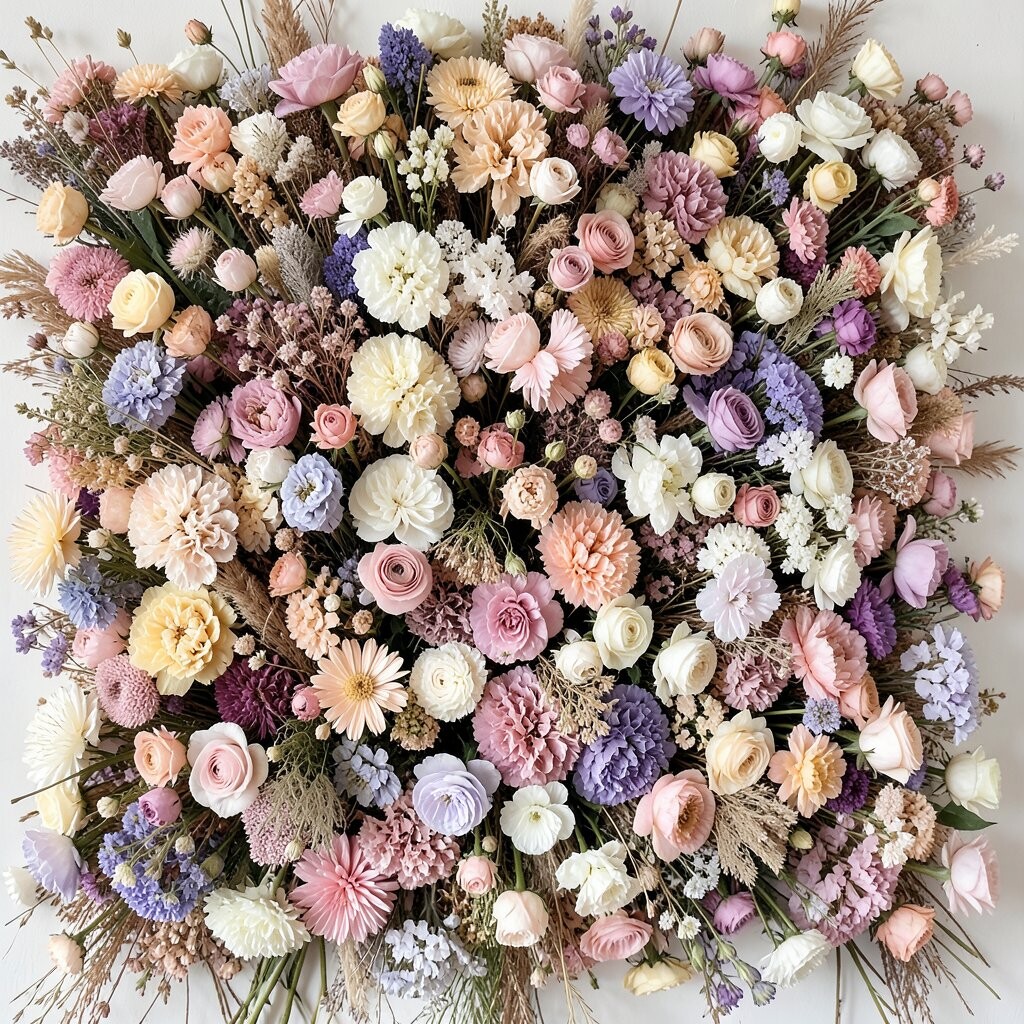
Start with flowers that hold their shape after drying, because fragile heads can look sad fast. Think about blossoms with sturdy petals, interesting silhouettes, and strong stems that won’t collapse.
For a wall, you want variety in texture, like airy baby’s breath beside fuller blooms and spiky elements. Choose colors that make you smile when you pass by them, since dried walls are daily decor, not a one-time project.
2. Dry With Care So Color Looks Alive
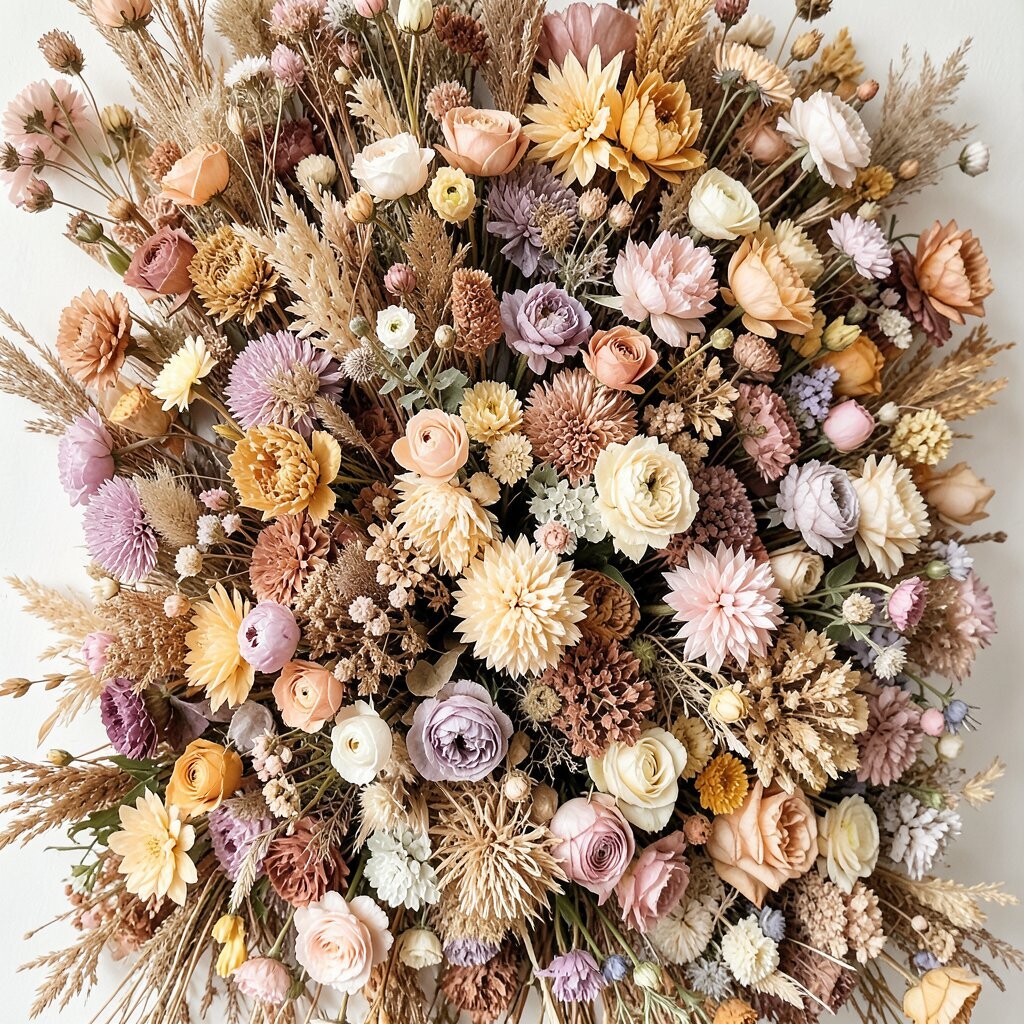
Timing matters, because flowers dry best when they’re just right, not too young and not already wilting. Choose a method that matches the flower type, then keep them out of harsh light during the drying process.
Air-drying in a dry, calm room helps many stems stay steady while preserving their natural tone. If your flowers tend to fade, you can mist with a tiny amount of color-safe protection later, but test it on one stem first.
Moisture is the enemy of lasting walls, so make sure everything is fully dry before you handle it. When the petals feel crisp and the stems feel firm, you’re ready to design.
3. Aim for a Balanced Mix of Shapes
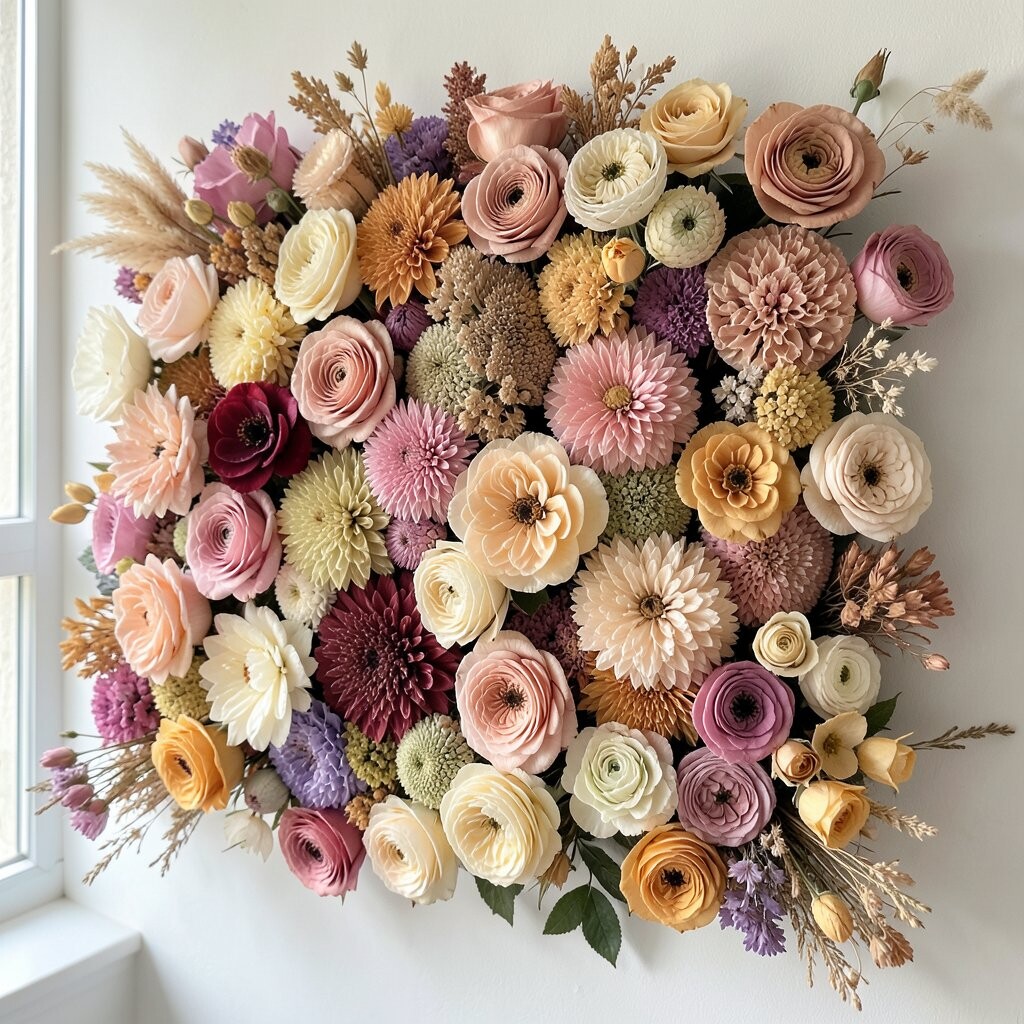
When you look at a dried flowers wall, your eyes should have places to rest. Pair rounded blooms with flat clusters, then add a few delicate sprays to soften the edges.
Try mixing tall elements with shorter ones so the wall doesn’t look like a flat carpet of flowers. Even if everything is dried, a little height difference can make the whole arrangement feel airy and fresh.
It also helps to repeat one or two shapes across the wall so it feels unified. That repetition can be as simple as using similar bud clusters in multiple spots.
Don’t worry about perfection; odd spacing often looks more natural than tightly packed petals. Let some stems breathe so the textures stand out clearly against the background.
4. Use a Background That Makes Colors Pop
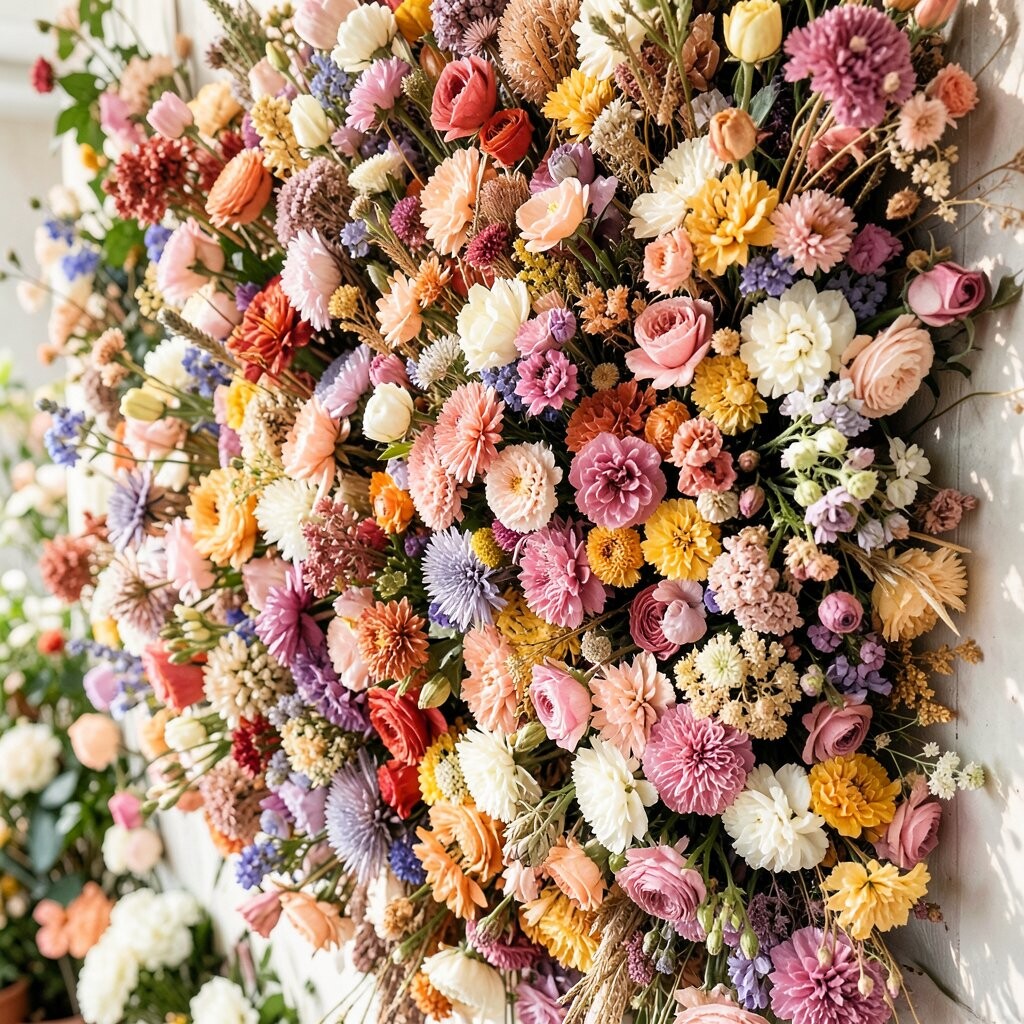
The easiest way to improve your wall is picking a background that flatters dried tones. Light neutrals make pastels feel gentle, while deeper colors can make warm oranges and browns look rich.
Matte paper, textured fabric, or a simple off-white backing can reduce glare and make petals look velvety. If you’re mounting on a wall, consider a removable board so you can adjust without damaging paint.
5. Plan Your Layout Before You Glue Anything
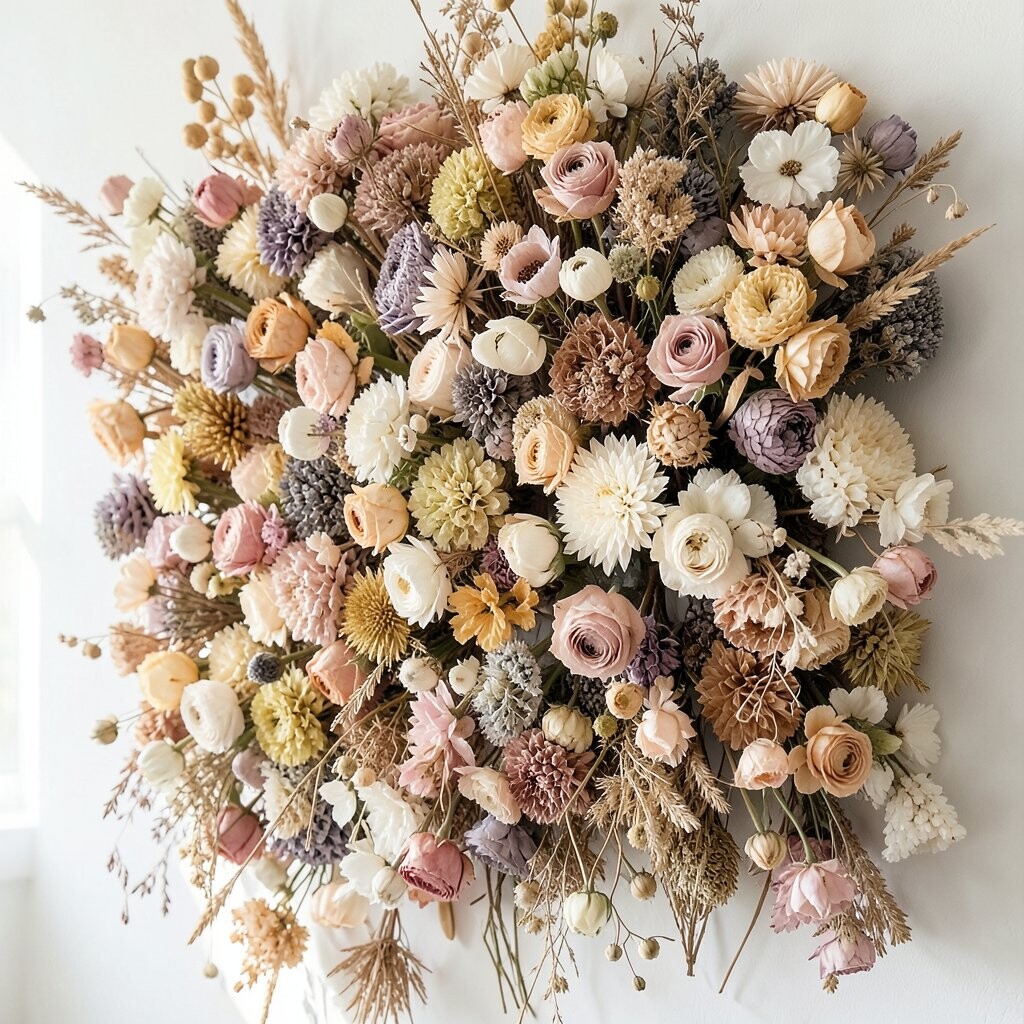
Lay your dried stems out on the floor or a large table so you can see the whole idea at once. Move pieces around like a puzzle until the spacing looks calm and intentional.
Decide where the focal area will be, then build outward from there. Usually the center cluster should have the most color contrast, while the edges can include lighter, airy sprigs.
Take a few steps back while you arrange, because details that look great up close can feel crowded from a distance. A simple phone photo can help you spot gaps before everything is stuck in place.
6. Choose Adhesives That Stay Put and Look Clean
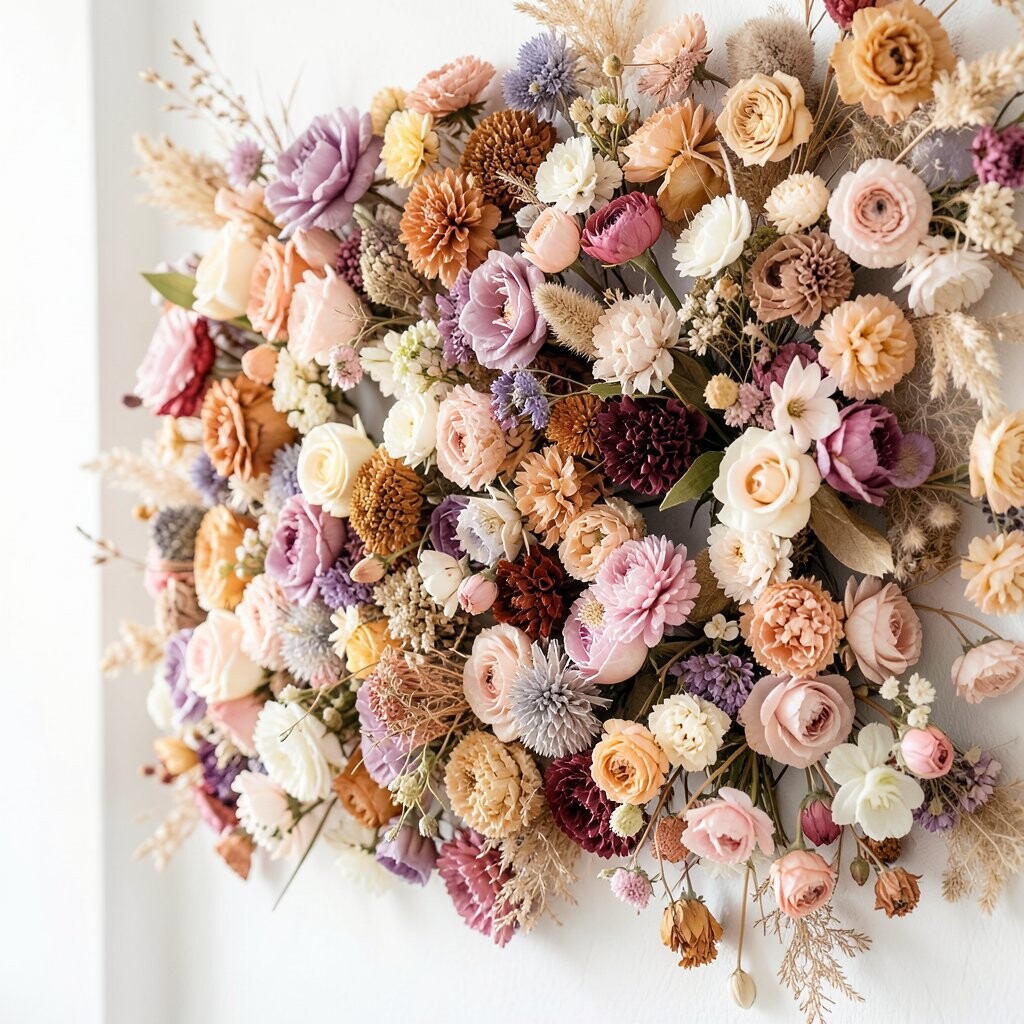
For dried flowers, you need strong hold without leaving sticky mess on delicate petals. Craft glue, hot glue in small amounts, or gel adhesives can work, but always keep the glue hidden under stems.
Consider using thin strips of removable mounting tape for lighter elements so you can replace them later. If you’re adding small details like leaves or tiny buds, use a precision applicator to avoid visible blobs.
7. Add Negative Space for a Gallery Feel
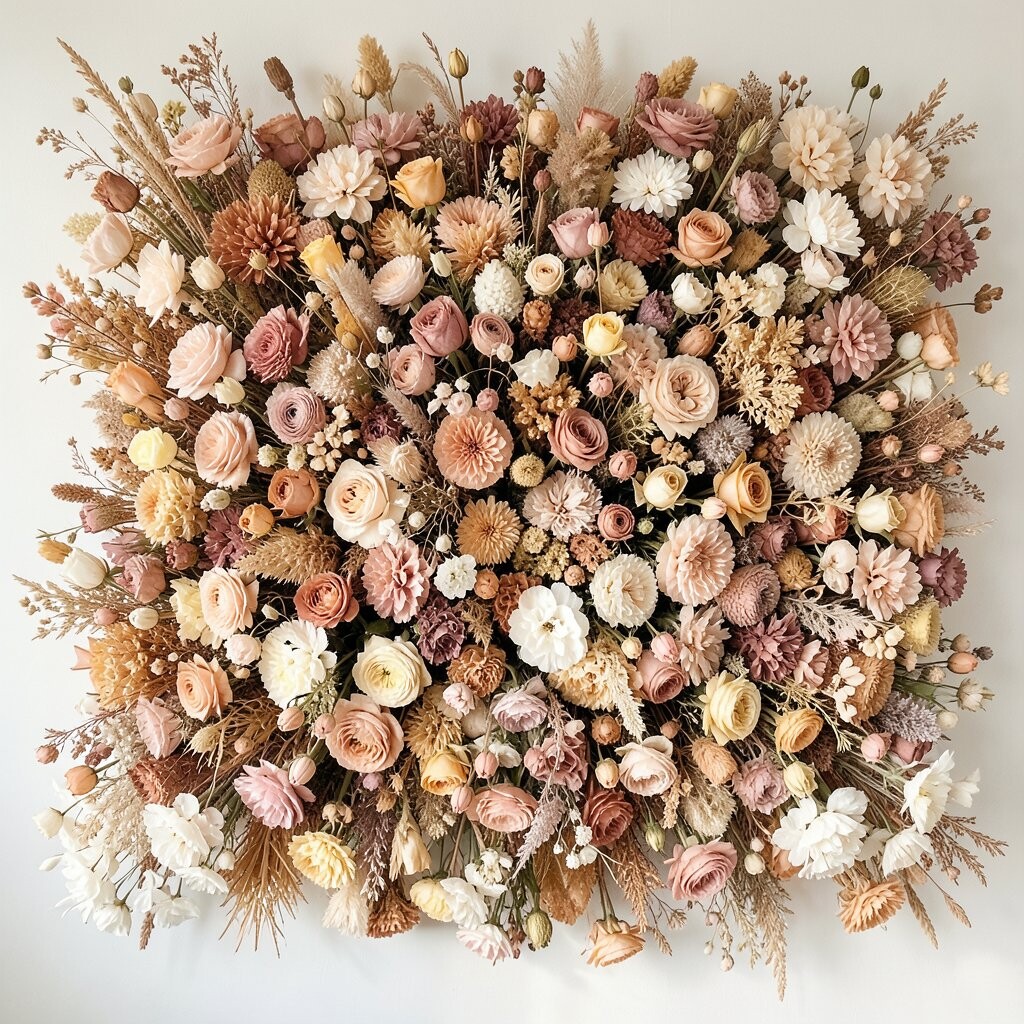
Not every square inch needs flowers, and leaving space makes everything look more elegant. Negative space gives your wall breathing room and helps the textures stand out.
Use that empty area to frame the blooms, like a calm border around a star-shaped cluster. When you keep one or two areas less crowded, the whole layout looks more like curated art.
It also makes future additions easier, since you won’t have to squeeze new stems into a fully packed scene.
8. Seal Carefully to Protect Against Dust
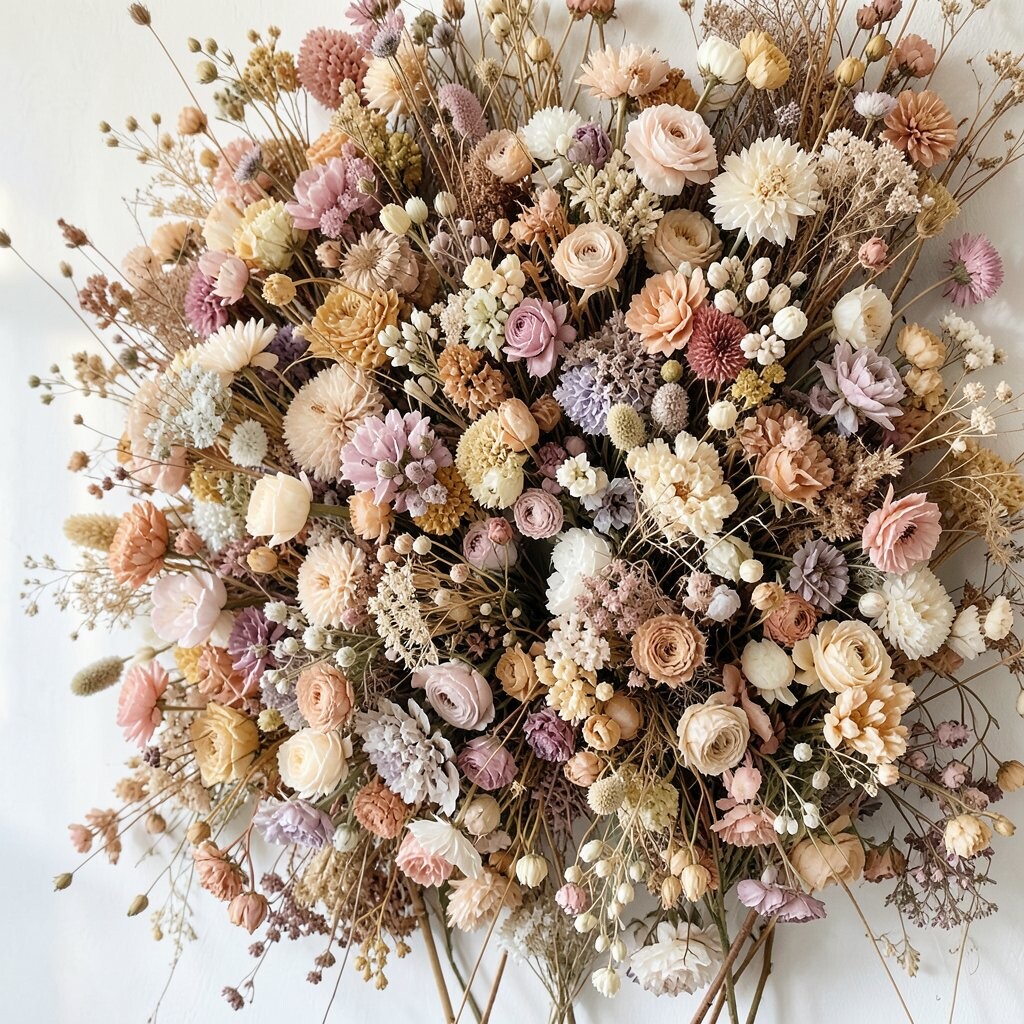
Dried flowers look charming, but they can collect dust, especially in bright rooms. Sealing helps them last longer and makes cleaning gentler.
Use a light, even coat of a clear spray made for dried florals, and apply in a well-ventilated area. Hold the can farther away than you think so the finish stays smooth instead of tacky.
If you’d rather avoid sprays, display behind glass or use a shadow box frame. That can keep dust off while still showing the textures clearly.
9. Blend Colors Like You’re Styling an Outfit
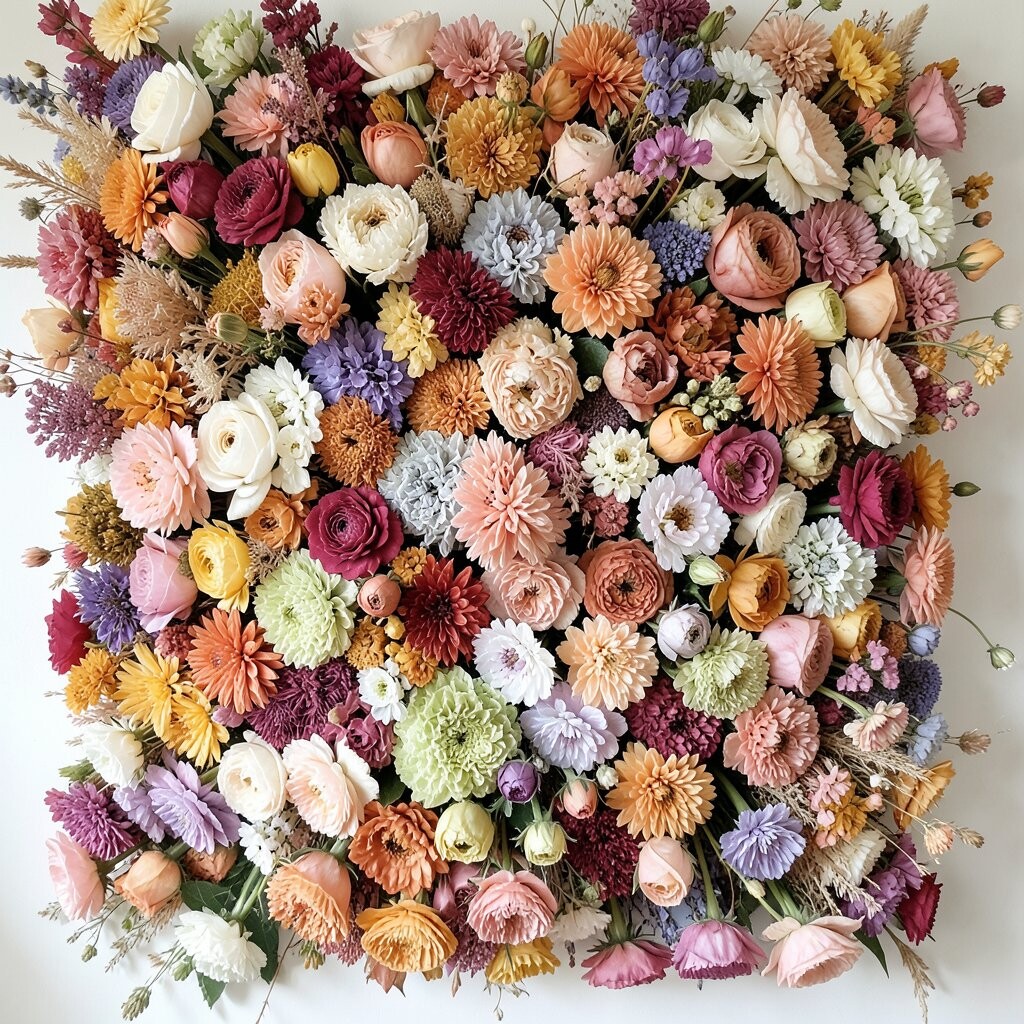
Think of your wall palette as a wardrobe, not a random mix. Choose one main color family, then add a supporting set that complements it, like creams, taupes, or soft greens.
Warm browns and golden yellows can look cozy when paired with blush or muted rose tones. Cool colors, like lavender or blue-gray dried blooms, can feel calm when you include crisp whites and soft silvers.
To keep things from feeling chaotic, limit the boldest color to a few key clusters. The rest can be quieter tones that let your favorite blooms shine.
10. Frame It So the Wall Looks Finished
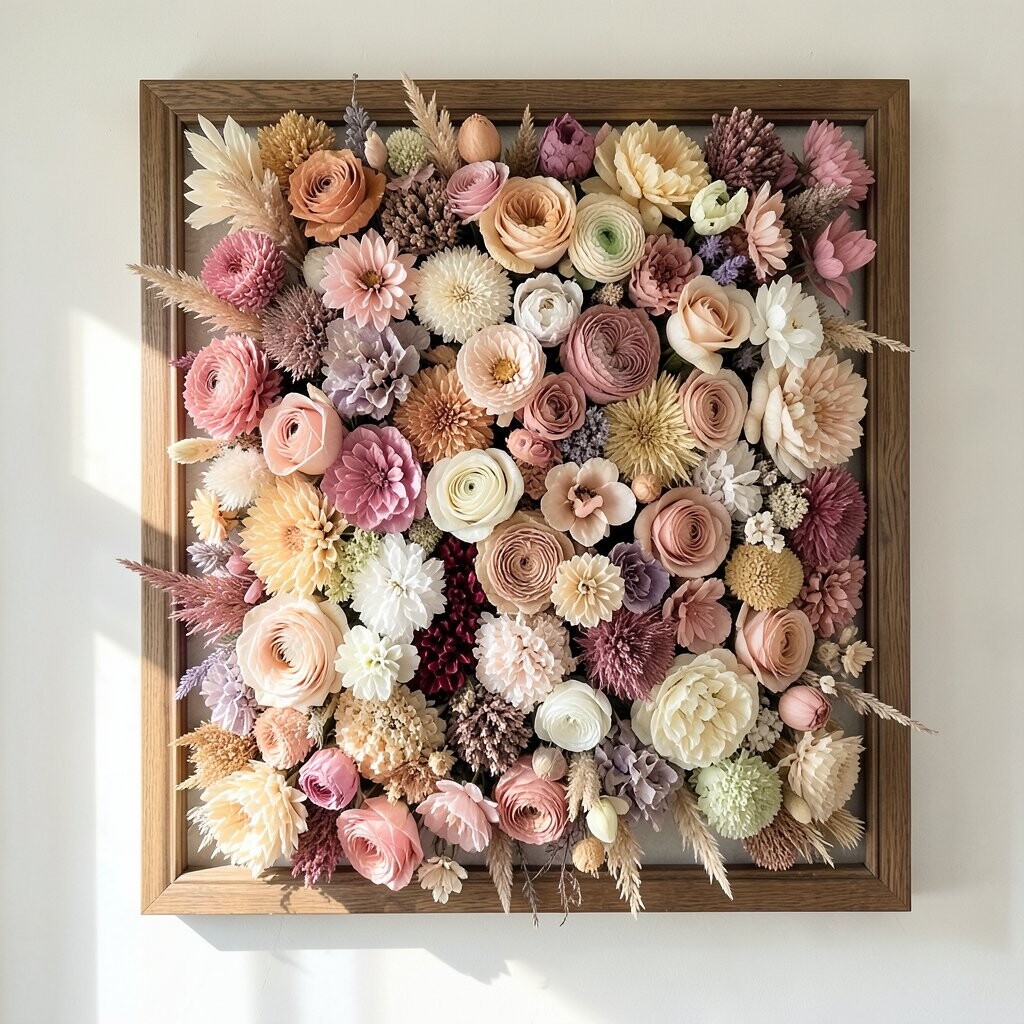
A framed arrangement instantly makes the whole display look intentional. Even if you’re using simple materials, a border can give your wall a polished, gallery-like feel.
Shadow boxes, wooden frames, and large framed cork boards are popular right now because they show texture while keeping stems supported. Pick a frame style that matches your home, from clean modern lines to rustic wood that warms up neutral rooms.
Keep the frame backing simple so it doesn’t compete with the flowers. If you love the look of vintage prints, a subtle background pattern can work, but keep it faint.
11. Add Small Elements for Extra Character

If your arrangement feels a little plain, tiny additions can bring it to life. A few pressed leaves, dried grasses, or small seed pods can add interest without overpowering the main blooms.
Ribbon strands, thin twine, or delicate lace can soften the look and help connect different flower types. Keep these extras light so the wall still reads as floral art.
You can also include a few curved stems that echo the natural shapes of petals. That gentle flow can make the wall feel more organic and less stiff.
When you add one special element, repeat it once or twice elsewhere so it feels like a design choice, not a one-off. The result looks thoughtful and personal.
12. Make It Personal With Meaningful Blooms
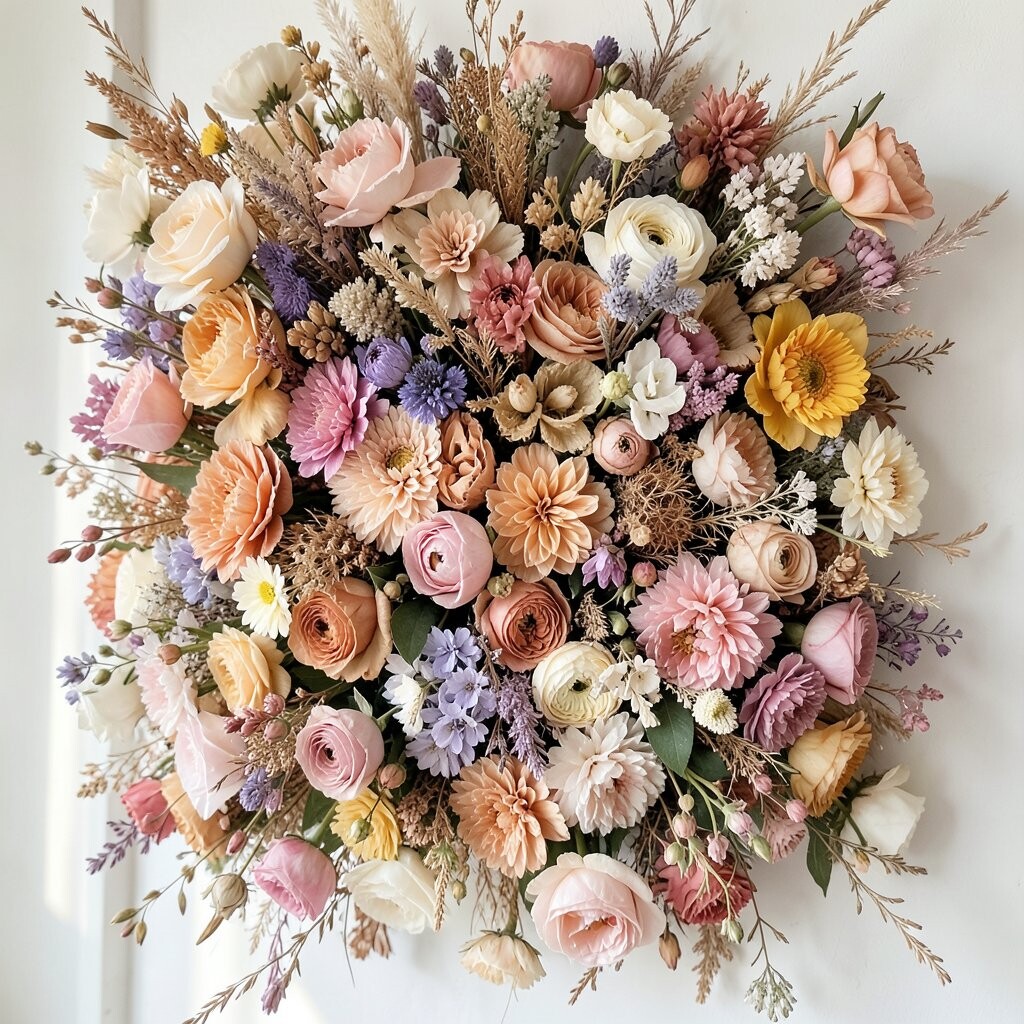
Your wall can tell your story if you include flowers tied to real moments. Maybe it’s blooms from a bouquet, a garden patch you cared for, or plants picked during a favorite trip.
Try matching the dried colors to a room’s theme, like warm tones for a living area or softer pastels for a bedroom. Personal touches make the display feel like yours, not something you copied from a photo.
If you have family favorites, include them even in small clusters. Those sentimental details are what people tend to remember when they admire the wall.
13. Keep Sizing Realistic for Your Space
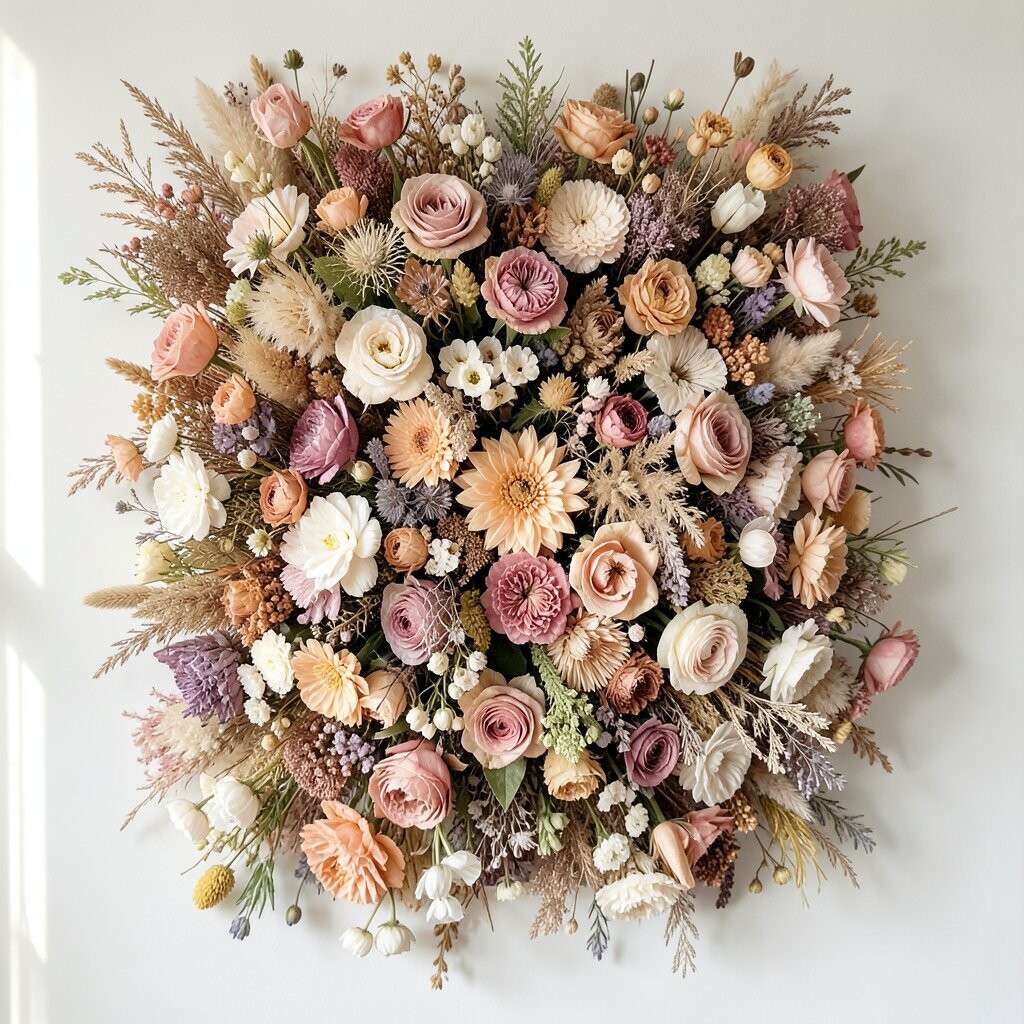
Scale can make or break a dried flowers wall. A tiny arrangement can get lost on a large wall, while an oversized layout can crowd a small room.
Measure the wall area and decide how wide your display should feel. Leave enough room around the edges so it looks like art, not an accident taped to the wall.
For small spaces, consider multiple medium panels instead of one giant piece. That layout can feel cozy and lets you group colors in a way that suits your room.
14. Go With Current Styles Like Modern Neutrals or Boho Softness
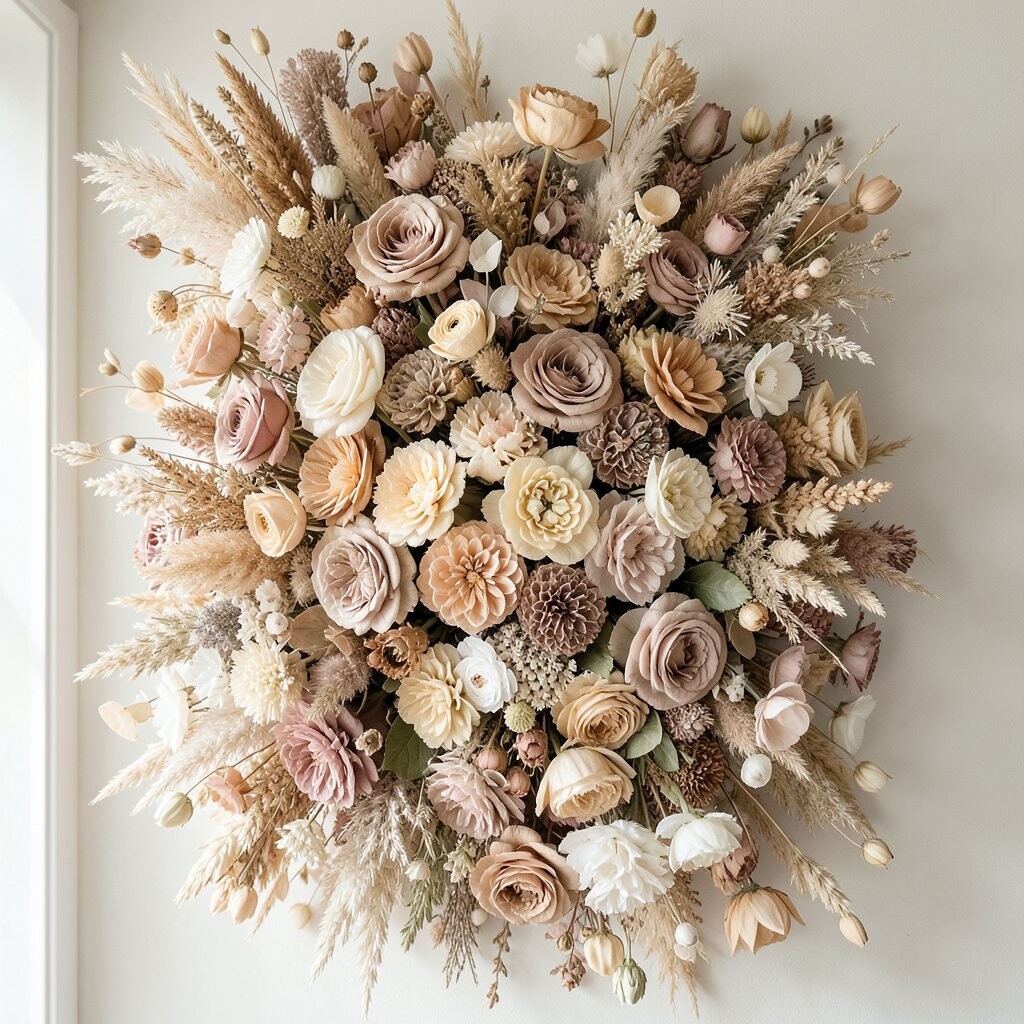
Right now, dried florals look especially good when they feel styled, not overly perfect. Modern neutral palettes are popular because they match everything and look calm in daylight.
Boho softness is also trending, with airy grasses and muted earthy colors that feel relaxed and lived-in. If you want a fresh look, mix in a few olive or eucalyptus-like tones, then keep the rest in gentle creams.
For a contemporary twist, arrange stems with more negative space and slightly cleaner edges. That balance keeps the wall feeling updated instead of nostalgic.
15. Budget Smarter Without Losing the Wow
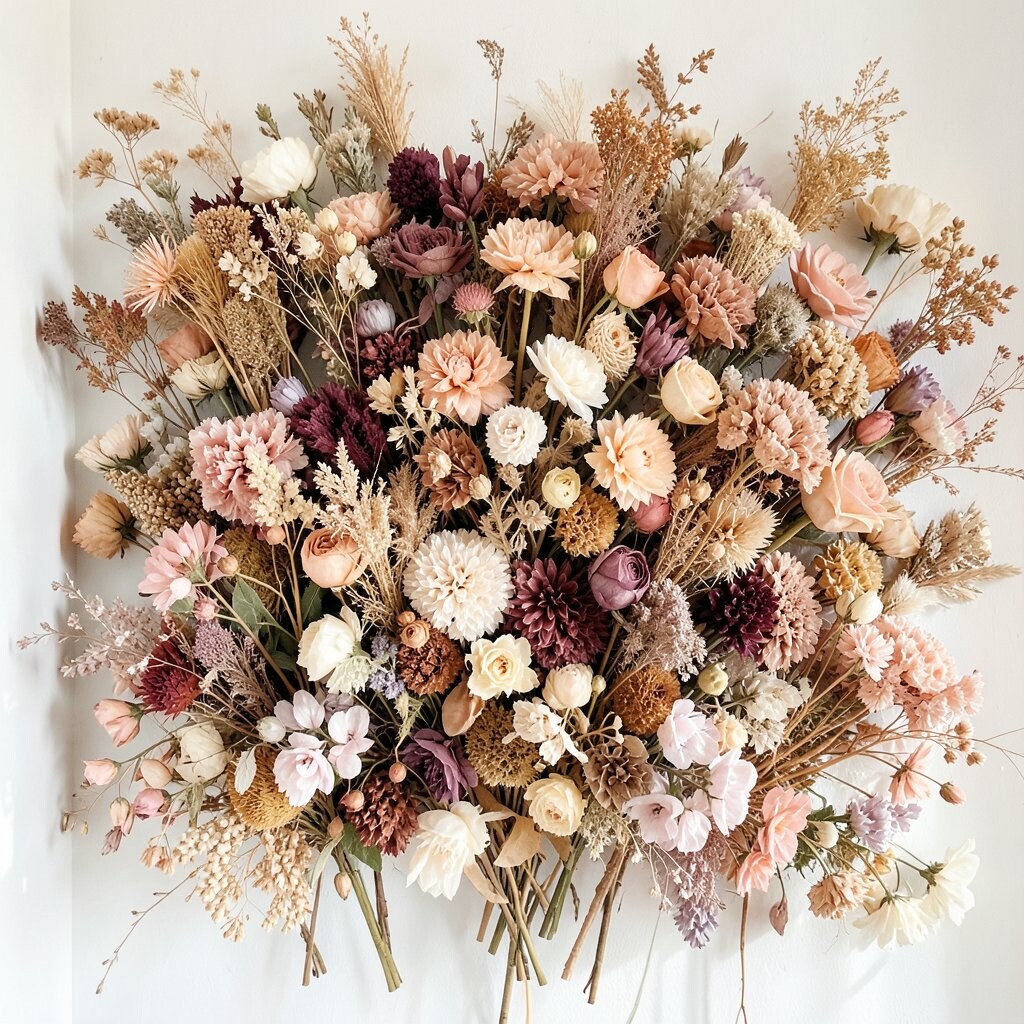
Dried flowers can be surprisingly affordable if you plan your sources. Buying mixed bundles can save money, and you can pick out the best stems for your focal sections.
Garden-foraged elements, like dried grasses or leaves from your yard, can add character for very little cost. Just make sure they’re clean and fully dried before you mount them.
If you’re using frames, consider reusing or repainting ones you already own. A thrifted frame with a fresh coat of paint can look high-end, and it keeps your project from feeling pricey.
16. Maintain the Wall So It Looks Beautiful Longer
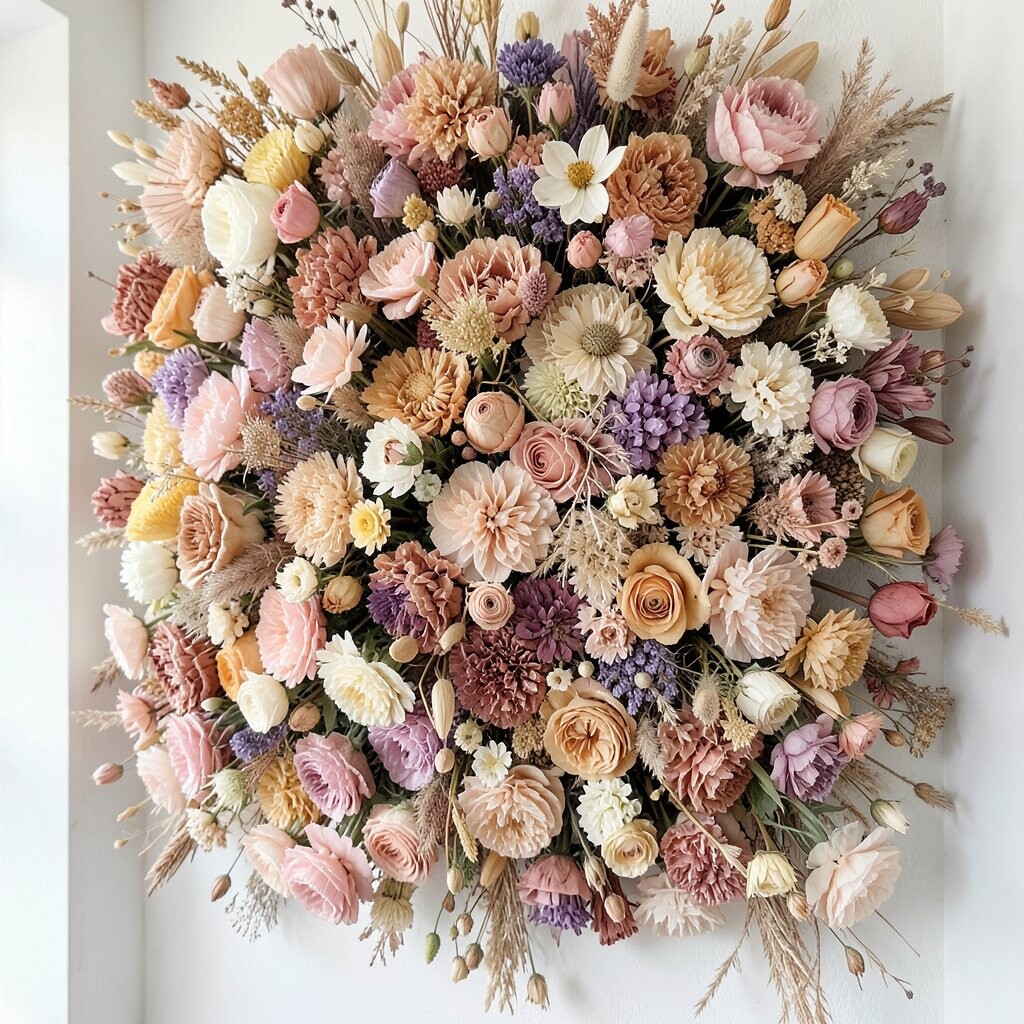
Once your dried flowers wall is up, treat it like delicate decor. Gentle dusting with a soft brush helps maintain the texture, and a quick check every so often prevents buildup.
Avoid placing it in direct sunlight for long hours, since light can fade even well-dried blooms. If your wall sits near a window, consider adding a UV-filtering layer behind glass.
Finally, keep a few extra stems saved in case you want to refresh a corner later. Small updates make the wall feel alive, even months after you finish it.
When something shifts or breaks, replace just one small section instead of redoing everything. That steady maintenance keeps your dried flowers wall looking like it belongs in your home.